
Sangha Posts
Uselessly Doing Nothing: Zazen without Techniques

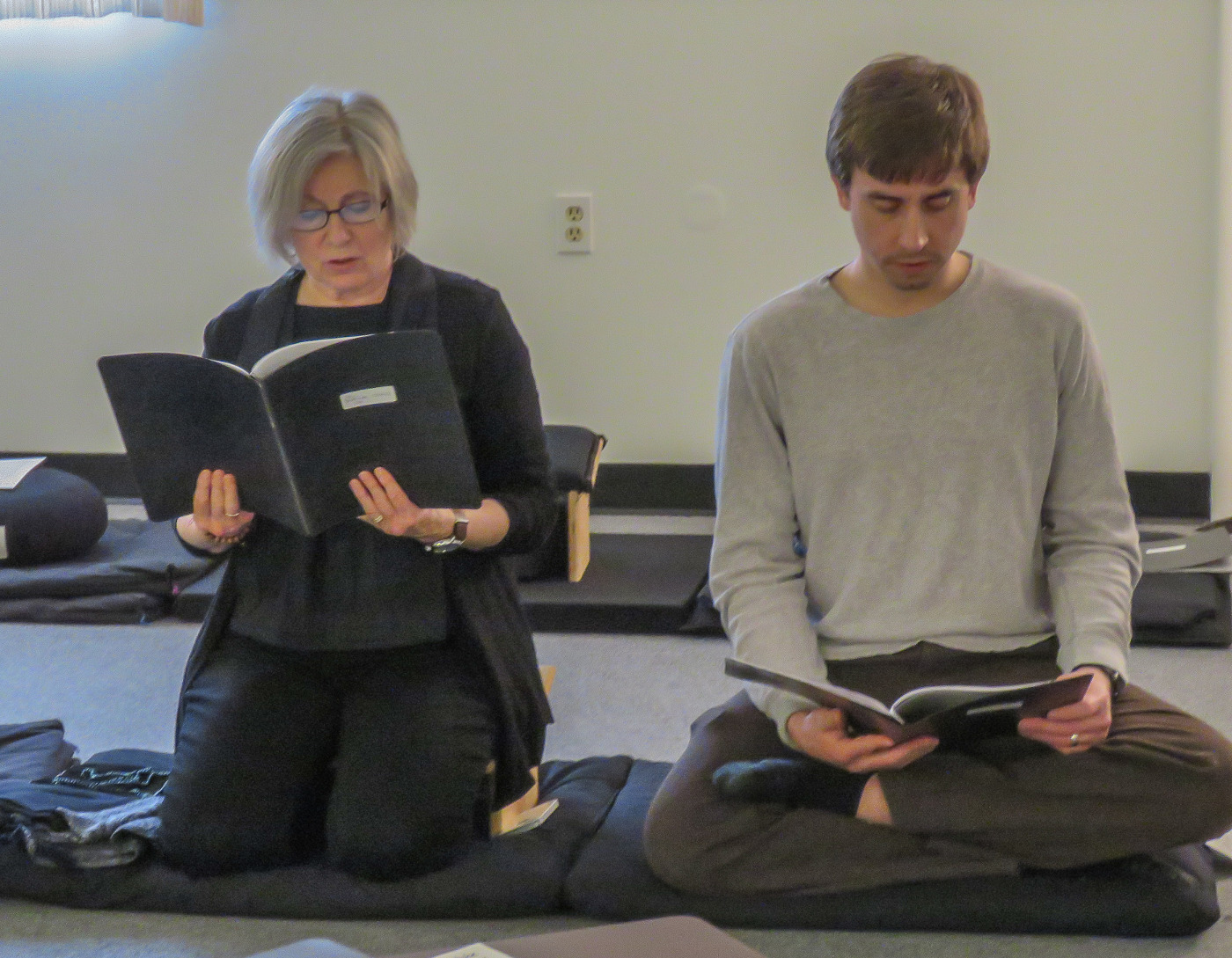
Last Tuesday we had a lively class discussion on zazen that went almost 30 minutes overtime!
First, we read the “Nothing to attain, Nothing to enlighten” chapter from Rev. Issho Fujita’s book Polishing a Tile.(1) Then we debated whether zazen should involve any techniques at all. Based on Fujita’s teachings (which are based on Dogen’s, as well as those of many great Soto Zen masters), I proposed that true zazen, or shikantaza, is letting go of doing anything. No breath counting or following. No attempt to control the mind, concentrate, be mindful, or “bring the mind back to the present.” Nothing but sitting there, which is the meaning of shikantaza: Nothing but (shikan) precisely (ta) sitting (za).
Fujita and Dogen emphasize that zazen is not “meditation practice.” In Japanese, “meditation practice” is shuzen (shu is “learning” and zen is meditation). Of course, technically zazen means seated (za) meditation (zen), but in Soto Zen zazen refers to much more than that. Zazen is the dharma gate of joyful ease, returning home and sitting in peace, and “intimately contacting the true self.”(2) Shuzen is engaging a practice with our usual, limited, gaining mind – something done with a goal. Zazen has no goal at all, which is why it is so beautiful and profound.
What about the “dharma gate of joyful ease?” Isn’t that a goal? And don’t we need to do something in order to make that happen? (On Tuesday, one of our members put it this way, “I’ve always heard Zen and zazen have no goal, but it sure seems like it’s ‘no-goal-wink-wink.'” Like we cleverly reach our goal by pretending not to have one…)
This is why zazen is such a profound teacher: We can’t bear the thought of doing nothing. We’re sure, if we don’t at least try to “be present,” our minds will wander the whole time we’re sitting and we’ll utterly waste our time. After all, it’s nice when the mind calms down and we appreciate the present moment for a while. Shouldn’t we try to make that happen?
No. Any effort to make anything happen is not zazen.(3)
But when we really let go of doing anything, things don’t necessarily unfold the way we expect. If you really give yourself complete freedom in zazen, what will you do? You won’t spend the whole time planning grocery lists or worrying about money. Part of you likes being calm and present. You’ll do some of that. Habit energy will take hold of you at times, but this is all contained within zazen. What matters is not the content of zazen but the space you’re creating for it by just sitting. It’s turning toward reality with graciousness instead of self-interest – even self-interest around your meditation experience.
Fujita sensei describes zazen more clearly and beautifully than any other modern writer I know of – I highly recommend following the link below to read some of his writings.
(1) Polishing a Tile has not been published but is available to download as a pdf here.
(2) The first description is Dogen, the second is Keizan, the quote is from Fujita sensei.
(3) Zen practitioners (both teachers and students) will disagree with one another passionately about this, even within Soto Zen. I was once at Soto Zen Buddhist Association conference where a bunch of us stayed up late talking and ended up on the topic of whether zazen should involve any techniques. The debate got so heated a couple people needed to go off and check in with each other to make sure no serious offense had been taken. It was great.
The Sangha Jewel: Community as a Medicine for Modern Ills

Over the last year, the Bright Way Zen community, our Sangha jewel, has grown significantly. This growth has not just been in terms of numbers (we now have 50 members), it’s been in terms of maturity, commitment, investment, and strength.
More and more people consider Bright Way Zen to be their community – a group of people with whom they find social connection and support, a sense of being seen and appreciated, and a feeling of being needed. Belonging to a community can sometimes ask a lot of us – our time, energy, commitment, money, patience – but the knowledge that we’re a vital part of something can give meaning to our lives.
What does maintaining a vibrant, healthy, warm community have to do with Zen? At first it may seem like community is just a side benefit (or necessity) to maintaining a center of Zen practice. We come together to meditate and study, and sometimes we get to know people a little. Volunteers and donors are needed to make possible the practice place and schedule, so people have to work together. The important thing is our personal practice in our daily life, and we just come to the Zen center to strengthen that, right?
But loving community is absolutely central to our practice. Although we value our independence and privacy, as human beings it’s also essential we connect with others and have a sense of ourselves as being valued in relationship. We certainly can get some of our social needs met through intimate partnerships, immediate family, coworkers, and personal friends. However, for many people those personal relationships are lacking or not very close or supportive. We often live at a distance from family, and relationships with people we work with can be fairly superficial and limited to the workplace. Personal friends are great – but in modern society, our friends are rarely in same place at the same time, so we need to set aside considerable time and energy to maintain each friendship separately.
Sangha is different than our other relationships. It’s like family in that you don’t get to choose who’s in it, but it’s unlike family in that it’s a voluntary association of at least somewhat like-minded people with a common aspiration. It’s like our personal friendships in that, over time, we end up being known, seen, understood, listened to, and appreciated, but it’s unlike personal friendships in that our belonging has nothing to do with preference or whether we find one another fun or entertaining, or share hobbies or interests. You show up with sincerity and treat others with basic respect, and you belong. Period. As much as anyone else – regardless of your life circumstances, intelligence, social skills, financial situation, opinions, personality, etc.
Sangha’s like your social environment at work in that it requires you to interact and cooperate with all kinds of different people, some of whom inevitably challenge your ability to be patient, generous, honest, or kind. But Sangha’s unlike your work relationships in that we consciously aspire to do more than just tolerate one another; we strive to recognize the buddha-nature in each and every person, and create a harmonious and loving community. Like all relationships, Sangha can be frustrating, confusing, and disappointing – but, like all relationships, it can also help us know ourselves, progress on the path of practice, and put our growing wisdom and compassion to the test.
It’s difficult to prove, but it seems fairly obvious the fractured nature of our society and increasing isolation contribute to the current opioid crisis and other modern ills. In a fascinating study in the 1960’s or so, researchers placed rats alone in a cage and offered them two water bottles, one with plain water and one with water laced with heroine or cocaine.(1) The rats developed heavy addictions, choosing to drink primarily the drugged water, and most of them continued to do this until they died. A follow-up study in the 1970’s tried placing rats in cages with rich environments – fellow rats, toys, tunnels, good food – and again offering them the two types of water. These rats tried both the drugged and drug-free water, but very few ended up with an addiction and none of them died. Humans aren’t rats, but I think we all recognize how our behavior is incredibly affected by how supportive our environment and relationships are.
You personally may or may not need your Zen center to serve as your place of loving community. If you don’t need it, presumably (and hopefully) you find community elsewhere, and that’s wonderful! But if you recognize – or just want to explore – your need for community, and you’re fortunate enough to live near a Zen center, you have a great opportunity. Communities are what their members make of them, and there’s really no limit what we can do together.
(1) The Likely Cause of Addiction Has Been Discovered, and It Is Not What You Think, Huffington Post, 1/20/2015
How Important Is It to Study Buddhist Teachings?

If you want to have a strong Buddhist practice, how important is it to study Buddhist teachings? A library consisting solely of classic Buddhist and Zen teachings and texts would still contain hundreds of volumes. It’s difficult to know where to begin studying, let alone hope to read and understand even a fraction of what’s available! Is study really necessary, and if so, how much?
I’m going to answer this question from a Zen point of view. Zen had its beginnings in China, where it was called Chan, and it quickly claimed it was a lineage tradition involving a “special transmission outside the scriptures.” An ancient Zen saying puts it this way:
A special transmission outside the teachings,
do not depend on written words,
directly point to the human mind,
see one’s nature and become Buddha.[1]
So, that’s the good news! You don’t have to study in order to get Zen.
However… (isn’t there always a “however” in Zen?) study is a powerful, traditional, and possibly indispensable practice tool – but not in the way many of us might think. Study in Zen or Buddhism isn’t about acquiring knowledge. We study in order to challenge the ideas we already have.
This means we can engage Zen and Buddhist study in a very immediate, personal, and open-handed way. Unless we want to teach Buddhism someday, there’s no need to retain anything. We can just explore the teachings we come across, or the ones that intrigue or challenge us, let them do their work on us, and move on. Any time a teaching makes you question your views, opens your mind or heart, humbles you, or inspires you, it’s doing its job.
Also, Zen and Buddhist teachings are holographic, in that every individual teaching, at least to some extent, contains all of the other teachings. So there’s no need to gain an encyclopedic knowledge of all of them; just going deeply into a few that particularly attract you, or that your teacher recommends for you, is enough. Follow your nose through the Zen and Buddhist teachings, creating your own path.
[1] This is a widely quote poem but few people give any sources for it. Here’s one that discusses its origins: http://dharmafarer.org/wordpress/wp-content/uploads/2013/04/40b.5-Transmission-outside-the-scriptures.pdf
The Practice of “Not-Knowing:” Relief of Stress, Ground for Effective Action

What’s your response when I say, “The best way to respond to the great suffering in the world is with the practice of ‘not-knowing’?”
Maybe you react to that statement with suspicion and aversion. Part of me does, because I care deeply about the suffering, destruction, and injustice in the world and want to do something about them. Responding with “not-knowing” sounds like retreating into complacency – doing nothing to change the world, and using the excuse like, “You can’t know what to do, it’s all too complex and confusing.”
Fortunately, the Zen practice of “not-knowing” is not like this. It’s not an excuse or a cop-out. It’s not clinging to ignorance or passivity. It’s not at odds with the bodhisattva path. It’s actually an incredibly intimate response, in touch with reality, which provides the ground for effective action.
Quicklinks to Content:
Some Ancient Chan Teachings on Not-Knowing
Practicing Not-Knowing in the Moment
Recognizing Versus Knowing
Not-Knowing Is Most Intimate – and How That Helps
How to Know When Your Not-Knowing Is a Cop-Out
To be honest, the teaching of “not-knowing,” also called “don’t-know mind,” can be easily misunderstood and therefore misused. All potent spiritual teachings are rather like knives: Very effective for certain tasks, but potentially dangerous if used recklessly, incorrectly, or in the wrong circumstances. The Zen teaching of don’t-know mind can be easily twisted into a near-enemy – in this case, refusing to take a stand even when the situation calls for it.
You might argue that we shouldn’t teach something like don’t-know mind because of the chance it will be misunderstood and do great damage. However, that would be like saying we should never use knives because occasionally people cut themselves with them, or use them as weapons. It’s better if we learn how to properly use and store knives, and to clearly identify when they’re being misused. I’ll try to do that, here, with the Zen teaching of not-knowing.
Some Ancient Chan Teachings on Not-Knowing
The teaching of acknowledging not-knowing as a profound practice seems to have appeared early on in the Chan (later the Zen) school of Buddhism in China. According to the second koan in the Book Equanimity,[1] the Indian master Bodhidharma invoked not-knowing in his response to the emperor of China:
“Emperor Wu of Ryo asked the great master Bodhidharma, ‘What is the ultimate meaning of the holy truth of Buddhism?’ Bodhidharma replied, ‘Vast emptiness. No holiness.’ The Emperor asked, ‘Who stands here before me?’ Bodhidharma replied, ‘I don’t know.’ The Emperor was baffled. Thereafter, Bodhidharma crossed the river, arrived at Shorin and faced the wall for nine years.”
On the surface, it may seem like the Emperor’s question stumped Bodhidharma, and he subsequently had to go sit in meditation for a long time in order to deepen his understanding. However, this probably wasn’t the case.
By the time he met the Emperor, Bodhidharma had already been practicing a long time, and he carried the lineage tradition. His “I don’t know” isn’t the same as our ordinary “I don’t know.” Our meaning would typically be: “I’m wracking my brains for an answer but can’t come up with one for you.” Or, “I’ve been trying to figure that out but the answer eludes me.” Or, even worse, “I feel separate from my true self, my true nature, so I feel alienated from who I really am. Your question has exposed my inadequacy.”
If Bodhidharma didn’t mean these kinds of don’t know, what did he mean? And how could his response be a teaching, as opposed to an admission of insufficient understanding? Before I go into that, I’ll share another ancient story about not-knowing from the Book of Equanimity. This is Case 20:
“Master Jizo asked Hogen, ‘Where have you come from?’ ‘I pilgrimage aimlessly,’ replied Hogen. ‘What is the matter of your pilgrimage?’ asked Jizo. ‘I don’t know,” replied Hogen. ‘Not knowing is the most intimate,’ remarked Jizo. At that, Hogen experienced great enlightenment.”[2]
Hogen awakens at Master Jizo’s comment not because he suddenly realizes why he’s been wandering so long and practicing hard, and not because he finally conceives of what he’s been searching for. Rather, he momentarily drops all of his preconceived notions, and at that moment there is only his body-mind, Master Jizo’s compassion, the Buddha Way, the sandals on his feet, the cicadas buzzing in the trees. There, in his direct experience of his life, the meaning of it all becomes clear – without conception, definition, description, or “knowing” of any kind.
As soon as Hogen thinks about it, as soon as we think about it, knowing creeps in again, creating a sense of separation. And yet – to always have the refuge of not-knowing, how wonderful!
Practicing Not-Knowing in the Moment
To bring this discussion back to our time and place: the practice of don’t know mind, or of not-knowing, is immensely practical, and serves the bodhisattva well.
How? How can this kind of thoughtless, immediate, not-knowing be useful when you’re facing a neo-Nazi? When you need to decide how resist the environmental destruction and degradation that’s threatening all life on this planet? When you have to find a way to defend democracy, or truth, or compassion? Or when you need to claw your way out of a hole of suffering in your personal life?
The key is that not-knowing isn’t clinging to a state of indecision or ignorance. It’s not a fixed position you take. Instead, it’s a way you engage the next moment: fresh, open, unbiased. You let go of clinging to fixed views, of your sense of knowing. It’s grounded in reality, because in reality, you don’t know what’s going to happen next. You don’t know for sure what’s going to work. You don’t know the person standing in front of you – at least, not completely, and maybe hardly at all. You don’t know who you are, as if you could sum yourself up in a sentence or paragraph.
You practice not-knowing in this very moment – not in the abstract. As soon as you make not-knowing into a position, it’s not actually not-knowing anymore, it’s refusing to know or decide. It becomes a position you hold for your own convenience, comfort, or ego, and lacks compassion.
The point is not to be attached to anything – neither knowing, nor not-knowing. When it’s time to have a conversation with someone about what needs to happen, you take your best stab at knowing. When you have to make a decision or take an action, you make your best call, based on your best knowledge. But then, in the next moment, you let it go and take a breath in not-knowing – which completely and utterly changes your relationship to knowing. When you see that your best knowing comes and goes, that your “best calls” sometimes work out and sometimes they don’t, it actually frees you up to get more creative and take more risks with your knowing. There is no one, fixed, absolute truth you’re eventually going to arrive at; instead, it’s a crazy balancing act all along the way.
Recognizing Versus Knowing
Let’s say you read about a terrible injustice somewhere in the world – maybe not that far away. People are suffering and dying – and the worst thing is, they’re suffering and dying needlessly, because of exploitation, fear, and greed. (And if you read the papers, of course, this is more or less a daily experience.) When we read about this, we have reactions. We know this wrong. We know this suffering and injustice needs to be ended.
But this knowing should perhaps better be called recognizing. We recognize sadness, pain, empathy, grief, frustration… we feel a basic human response to the suffering of others (at least, this response is basic to people who have a healthy, functional body-mind). This is a bodhisattva’s natural response. We also recognize the contraction and darkness of greed, hate, fear, and delusion, just as we recognize warmth, coolness, ease, and pain.
And yet, very quickly, most of us are going to take our basic recognition further, willfully crafting it into knowing. In our efforts to understand, and therefore exert some measure of control over our experience or over the world, we speculate on why this is happening, who is to blame, the systems that are to blame, what needs to change. If at the very least we figure out what our opinions are, we know what kind of actions we should take – or at the very least, what kind of attitude we should carry around. Even if we’re at a loss for how to help, we can take solace in the fact that we’re opposed to what’s going on.
If we know, we can predict and plan. We can imagine an alternative future, where things have been fixed according to what we know, and suffering has decreased. When we start to feel overwhelmed or stressed, we can rely on our righteous stances and thereby insulate ourselves in some subtle way from what’s happening right now.
Of course, with new facts, complexity, arguments, opposition from others, our knowing needs to be constantly revised and maintained. It can get quite stressful, establishing a moral world order in our minds!
Not-Knowing Is Most Intimate – and How That Helps
Some of this thought is good, of course. We should consider what’s happening, our opinions about it, and look for things we can do in response.
But at some point, when our thoughts get repetitive, when we’re trying to impeach the president in our minds, or create a plan to end world hunger, or when we’re stuck on a terribly sad or traumatic fact or image, or imagining the many forms in which doom could come…
Then it’s time for balance – a time for the medicine of not-knowing. This takes courage. We have to be willing to become intimate with our fears, our sorrows, and our sense of overwhelm – exactly the kinds of feelings we try to keep at bay with our knowing. (And even “negative knowing” has this effect. For example, you may be convinced the world is going to hell in a handbasket – but in some ways it easier to be prepared for the devil you (think you) know, then to open up to the vast possibilities of reality.)
For a time, we let go of the stress of having to figure everything out, of maintaining our positions and opinions, of identifying everything we encounter as right or wrong. This helps our body-minds to settle, and become more relaxed, healthy, and clear.
How do we heal our country and our world? Lots of ideas may spring into our minds. But if we momentarily let them go and say quietly, humbly, compassionately, “I don’t know…” Such sadness! Such grief! Such concern! Such intimacy!
How do we end racism? Again, let go ideas, however good they might be. It’s not the time for ideas. It’s time for listening. “I don’t know…” Notice how the reality of the struggles of people of color, momentarily, comes closer to your heart?
How do we radically redirect the entire human way of life on this planet away from limitless exploitation toward long-term sustainability? Let go of ideas… “I don’t know.” Do you see how this practice of “I don’t know” includes, “I want to help. I love. I ache for suffering beings. I ache for myself. I’ll do my best. How? What?”
Then, when we’re ready, we engage our discriminating mind again, and know when we need to. But the open, intimate space of not-knowing gives us more effective ground on which to stand when we take action.
How to Know When Your Not-Knowing Is a Cop-Out
Of course, sometimes we cling to not-knowing instead of knowing. We just take a breath and enjoy each day, one moment at a time, aware that ideas are abstractions and you can only deal with what’s right in front of you. But clinging to not-knowing is not intimate. You can tell because you need to turn away from suffering in order to maintain it. It’s a cut-off, limited position that feels somewhat deadened or numb. It’s not an open, responsive, other-focused way of operating; when we cling to not knowing, our world becomes self-centered and small.
When I thought about writing about the practice of not-knowing, I considered calling it the “refuge” of don’t-know mind, because of the relief it provides from stress… but the term “refuge” implies you can hide out there and avoid responsibility, so I didn’t want to use it.
Then I thought about the term “stance,” as in a posture or position, which maximizes the effectiveness of your response to challenge, as in a martial art. This is a pretty good word, because although it may imply something static, in practice an effective stance is dynamic, open, and responsive. It also contains the truth that really employing don’t-know mind is complementary to taking a stand or being open to action. But “stance” does summon an oppositional image…
Perhaps it’s best to discuss the “ground” of don’t-know mind. This term points to the fact that this mind reflects an aspect of reality – it’s not an attitude or view we adopt for utilitarian purposes. We really, actually, don’t know. We have to decide and act, but within the groundless reality of emptiness. This way of looking at it is described in the Prajna Paramita Sutra in 8,000 Lines:
“The Leader [Buddha] himself was not stationed in the realm which is free from conditions,
Nor in the things which are under conditions, but freely he wandered without a home:
Just so, without a support or a basis a Bodhisattva is standing.
A position devoid of a basis has that position been called by the Jina.”[3]
So, a Bodhisattva is standing. She is free, and she is devoted to the deliverance of all beings. But she stands without a support or a basis. How is that possible? Intellectually it makes no sense, but it describes the reality of our lives and our functioning. “Knowing” is an abstraction that we use to make decisions, so it has it’s uses, but if we can recognize knowing is also empty of inherent self-nature, we aren’t overly attached to it. We don’t mistake it for reality itself. We are free from the compulsion to maintain a fiefdom of knowing, and we can be directly informed and touched by the world – which means our responses will be more on-point, and therefore more effective.
Sources
Conze, Edward, trans. The Perfection of Wisdom in Eight Thousand Lines & its Verse Summary. San Francisco, CA: Four Season Foundation, 1973
Wick, Gerry Shishin. The Book of Equanimity: Illuminating Classic Zen Koans. Boston, MA: Wisdom Publications, 2005.
Endnotes
The Importance of Sangha Part 5 of 5 – Sangha As Service

Part 5 of the Importance of Sangha (see Part 1, Part 2, Part 3 and Part 4):
There are many, many more benefits of Sangha I could go into, but I’ll end this series of posts with how Sangha can become a practice of generosity and service to others. Let’s say you’ve been part of a Sangha for many years and your Zen or Buddhist practice is strong. You have a pretty good understanding of the Dharma, you can see your Dharma friends outside of Sangha events, and you’ve experienced a fair amount of polishing from potato practice (whether within Sangha or elsewhere in your life). Why keep participating in Sangha?
A short answer is this: as a strong practitioner, you strengthen the Sangha with your mere presence, and thereby make it a better refuge for others. Putting aside the relatively superficial differences between Sanghas in terms of overall flavor and style, healthy, mature Sanghas tend have a certain energy or tone. They feel stable and resilient as a group – and therefore able to accept new members and endure upsets and changes without fracturing. Strong Sanghas have a clear sense of their purpose and their commonly-held practice or tradition, so newcomers are less likely to be able to hijack Sangha discussions or events (this sometimes happens when new people bring particular agendas with them).
A strong Sangha will also feel – and this is a little difficult to describe – sane. Individuals struggling with anxiety, depression, and other mental health issues can sometimes feel to others, energetically, as if they’re vibrating at a higher or a discordant frequency, or, alternatively, as if they’re a drain on the energy of others. The more sane, strong practitioners there are in a room, the more the overall energy of the Sangha will feel sane – grounded, tuned in to reality and the experience of others, and able to behave appropriately.
This is why it’s important us to keep participating in Sangha even if we don’t feel so much of a personal need to do so: our sane presence grounds and strengthens the Sangha so it can hold people even when they’re new, uncertain, anxious, neurotic, on a soapbox, oblivious, obnoxious, or struggling with tragedy or mental illness. In other words, people who are really suffering need our support. A teacher or priest can’t provide a wholesome, stable, safe container for vulnerable or vibrating individuals all by themselves, so – ironically – the stronger and older your practice is, the less you may feel you need Sangha, but the more you have to offer the Sangha – the more Sangha needs you. Even when you don’t have a special role to play at a given practice event – or even especially when that is that case – you make a substantial contribution with your steady and enthusiastic participation.
I’ll close with some words about Sangha from revered Vietnamese teacher Thich Nhat Hanh:
“Taking refuge in the Sangha means putting your trust in a community of solid members who practice mindfulness together. You do not have to practice intensively – just being in a Sangha where people are happy, living deeply the moments of their days, is enough. Each person’s way of sitting, walking, eating, working and smiling is a source of inspiration; and transformation takes place without effort. If someone who is troubled is placed in a good Sangha, just being there is enough to bring about a transformation.”
– Zen Teacher Thich Nhat Hanh, from Cultivating the Mind of Love
The Importance of Sangha Part 4

Part 4 of the Importance of Sangha (see Part 1, Part 2 and Part 3):
Potato Practice: Benefiting from Friction with Others
Being asked to include everyone in the Sangha with an open heart is a very, very different scenario than “out in the world,” where for the most part everyone picks and chooses who they want to spend time with based on their preferences, without feeling the slightest need to look any deeper than that. In Sangha – ideally, at least – everyone belongs as long as they have a sincere interest in the Dharma, behave with a basic level of consideration and respect, and don’t pose a threat to others. This means an open Sangha of any significant size is inevitably going to include people who annoy you or even who trigger negative karmic reactions in you.
You may experience a negative reaction to someone as soon as you walk through a Sangha’s door, or only after many years, but it’s important to recognize this as an opportunity and not as sign that the Sangha treasure isn’t working for you. It’s tempting when we feel negatively about someone to take off, or ask the other person to change, or try to maneuver things so you don’t have to encounter the person much. However, if you stick around and face your interpersonal friction or conflict instead, you may be able to resolve major issues that would otherwise follow you for a lifetime!
The value of learning from interpersonal friction is actually so central to Zen practice, we have a term for it: potato practice. If you ever need to wash a whole bunch of potatoes, float them all in a big sink full of water and then tumble them against one another with your hands. By bumping into one another, the potatoes become amazingly clean! Another commonly-used analogy is that practicing in Sangha is like being a sharp-edged rock tossed in a rock tumbler with a bunch of other sharp-edged rocks: Eventually, we polish one another until we’re shiny and smooth (or, put in practice terms, self-aware, humble, authentic, compassionate, etc.).
This benefit from interpersonal friction within Sangha happens whenever interactions between people provide a “mirror” of sorts for one or more of the people involved, allowing them to become more aware of their behavior and views. For example, potato practice happens when an overbearing Sangha member eventually notices no one wants to work with them, and they finally get some gentle but honest feedback about their behavior. It happens when a new person arrives and you feel a powerful negative reaction based on some aspect of their personal appearance or manner of speaking, revealing a “sharp edge” of yours that may be tied to past experiences or an insecurity of your own. You don’t get to exclude someone from the Sangha just because, when you’re around them, you feel annoyed, judgmental, defensive, inferior, needy, etc. As long as you don’t exclude yourself from the Sangha, you have a chance to experience some spiritual polishing!
Note: The fact that potato practice is valuable doesn’t mean anything goes in terms of Sangha behavior – that no matter how outrageously someone acts, it’s just an opportunity for you to examine your own karma and learn not to be reactive. Taken to extremes, potato practice can result in abusive and dysfunctional situations in Sangha. (This has happened, particularly in Zen communities, so watch out for it.) Sometimes what you need to learn from potato practice is how to skillfully and appropriately speak up and ask for what you need, or to point out how harm is being done.
On the other hand, the vast majority of human interactions that cause friction or conflict are not actually serious matters. Most people – including myself – could benefit from erring on the side of acceptance, non-reactivity, and inclusiveness about 99 times out of 100 when we feel a negative reaction to someone or their behavior.
Resolving Lifelong Karma through Relationship
If you’re part of a Sangha for many years, you will probably get a chance to experience an even more significant aspect of the “potato practice” discussed above. Chances are, you’ll encounter at least one other long-term Sangha member you just can’t get along with to save your life. They may bug others as well, or just you, but once again you’re faced with an opportunity for deep practice and transformation. When we have powerful, negative karmic reactions to certain people, it’s usually because our unresolved issues are butting up against their unresolved issues. It can be an uncomfortable process, but as long as both of you remain in the Sangha and do your best, eventually you may be able to help one another recognize and overcome significant inner obstacles.
To illustrate what I mean, I’ll share an example from my own practice. My monastic Dharma brother and I had to live and practice together at a very small Zen center for many years – we’re talking about encountering each other just about 24-7 for meditation, work, meals, everything. I triggered him in ways that made it difficult for him to trust me, probably in part because of my extroverted habit of demanding responses from him that would validate me in some way. This made him withdraw, which only made me more insecure and desperate for approval. All of our interactions felt to me like complete misunderstandings at best, and stressful struggle at worst. In order to mitigate the tension, our teacher mercifully assigned us daily work that would minimize the amount we had to interact.
Eventually, I recognized my lifelong pattern of gravitating toward people who I felt judged and rejected me, in order to impress them and ingratiate myself with them. I tended to judge myself on how well I was able to anticipate what would generate disapproval in the person, and then adapt my behavior in order to shift the reaction to approval. Recognizing this tendency at last, I decided I didn’t want to do it anymore. Instead, I began reminding myself, whenever I perceived disapproval (real or not) from my Dharma brother, it was his responsibility to tell me if he had a problem with me. I would try to act respectfully and kindly, but not twist myself in knots over someone else’s reactivity to me. This helped a lot; it let me relax, and therefore it helped my Dharma brother relax!
Eventually I took practice with this problematic relationship one step further: I realized I wanted my Dharma brother to love and respect me, but even more than that, I wanted him to assure me that was the case. I wanted him to address and overcome my doubts. Sadly, he took my barely-camouflaged demand for reassurance as a sign that I didn’t trust him! So, one day, I decided to recklessly act as if he loved and respected me. I mean, if I really thought about it, I had to admit he probably did. Doing this felt a little scary, but heck, I was really tired of my old way of operating. Beautifully, miraculously, my relationship with my Dharma brother opened up and blossomed. Mutual trust grew, and we remain deeply grateful for the valuable interpersonal lessons we taught each other.
0 Comments
Submit a Comment
You must be logged in to post a comment.
The Importance of Sangha Part 3
Part 3 of the Importance of Sangha (see Part 1 and Part 2):
Forming Dharma Friendships
Most of us also find social connection within a Sangha. It’s very precious to end up with friends who share your aspirations and the language of your spiritual practice. Personally, I find it very rare to have conversations outside of Sangha that are as deep and meaningful as the ones I regularly have with what I call “my dharma sisters and brothers.” I remember being amazed when I first joined a Sangha that adults anywhere would get together, admit they weren’t perfect, and sincerely discuss their aspirations to work toward greater wisdom and compassion. I continue to be amazed that I can talk with people in the Sangha about the profound bliss that can be found gazing mindfully at a spot of sunlight on the carpet… and have them understand!
Practice in the midst of everyday life is challenging, and it can be valuable to have a trusted friend – or two, or three – to talk to about it. Friends can give us inspiration, encouragement, and comradery – and sometimes they’re the ones who can ask us the most useful questions. A teacher may be of some support to us, but sometimes it’s easier to be totally honest with friends – we let them hear us complain or despair or express anger. A good Sangha friend will hold what we say in confidence, without judgement, but also without entirely believing us, either. They know our aspirations and encourage us to remember them. In the Mitta Sutta, Shakyamuni Buddha described a good friend:
“He gives what is beautiful,
hard to give,
does what is hard to do,
endures painful, ill-spoken words.His secrets he tells you,
your secrets he keeps.When misfortunes strike,
he doesn’t abandon you;
when you’re down & out,
doesn’t look down on you.”[1]
Another profound aspect of Dharma friendship within Sangha is that gradually, over time, the people in Sangha get to know us. If we allow it to happen, we end up being seen for who we really are – including our strengths as well as our weaknesses. It can be incredibly healing and encouraging to find we’re still accepted by the Sangha despite the end of our anonymity, and regardless of the fact that – eventually – we let our guard down or fail to keep our act up. Many people carry around the fear that they will be rejected if others find out what they’re really like – but wonderfully, that fear tends to be unfounded because we’re our own worst critics.
Taking Responsibility for Our Social Issues and Reactions
Of course, while it’s lovely to think about Dharma friendships and healing acceptance, few people find social interactions easy. In fact, the realm of interpersonal relationships and communication is one of the most challenging places to practice! It brings up all kinds of issues for us: the need for validation and approval, sensitivity to criticism, judging others, competition for popularity, fear of rejection, avoidance of intimacy… you name it. Whatever social neuroses, habits, and conditioning you had before encountering Sangha, you’ll bring with you when you participate in one.
For all their aspirations, I don’t know that Zen and Buddhist practitioners are, on average, any more socially skillful that anyone else. In fact, Zen in particular tends to attract introverts because the central practice involves silent meditation – so it’s not at all uncommon for people new to a Sangha to end up standing awkwardly by themselves during informal social breaks! The introverts who have been in the Sangha longer have finally managed to find friends, and the last thing they want to do is try to chat up a stranger. If you find yourself feeling socially awkward or isolated in a Sangha, the best thing to do is find someone who looks even more awkward and isolated and offer a friendly word.
What’s beautiful is that, within the Sangha, we have a wonderful opportunity to examine and work through our social issues. The basic premise of Buddhism is that we’re responsible for what happens within our own minds and hearts – that we’re touched and influenced by the world around us, but ultimately nothing outside of us has to make us feel or react in a certain way. When we’re practicing, we look within ourselves for the cause of a negative feeling or response before we place the blame outside.
Therefore, it’s not enough just to say you don’t like someone; you need to ask yourself what within your own mind causes that reaction. It’s not enough to say you don’t like a certain social environment, you need to explore what makes you uncomfortable about it. Once people have been doing Sangha practice for a while, they’ll be asking themselves the same thing, about their reactions to you.
The result is an environment where, for the most part, people aspire to accept and embrace all Sangha members equally, and then take responsibility for their own negative feelings and reactions. Naturally you’re going to gravitate toward particular people, but the background aspiration, based in Buddhist practice, is learning to let go of our attachments and preferences, and to treat all beings with openness and compassion. Particularly if you struggle with social anxiety, this invites you to relax, because if someone has a negative reaction to you, that’s their practice. If their reaction is about something you’ve said or done that needs to be addressed, it’s their practice to let you know. You can stop worrying about others, and focus on what you can influence: your own mind.
[1] “Mitta Sutta: A Friend” (AN 7.35), translated from the Pali by Thanissaro Bhikkhu. Access to Insight (Legacy Edition), 4 July 2010, http://www.accesstoinsight.org/tipitaka/an/an07/an07.035.than.html.
0 Comments
Submit a Comment
You must be logged in to post a comment.
The Importance of Sangha Part 2
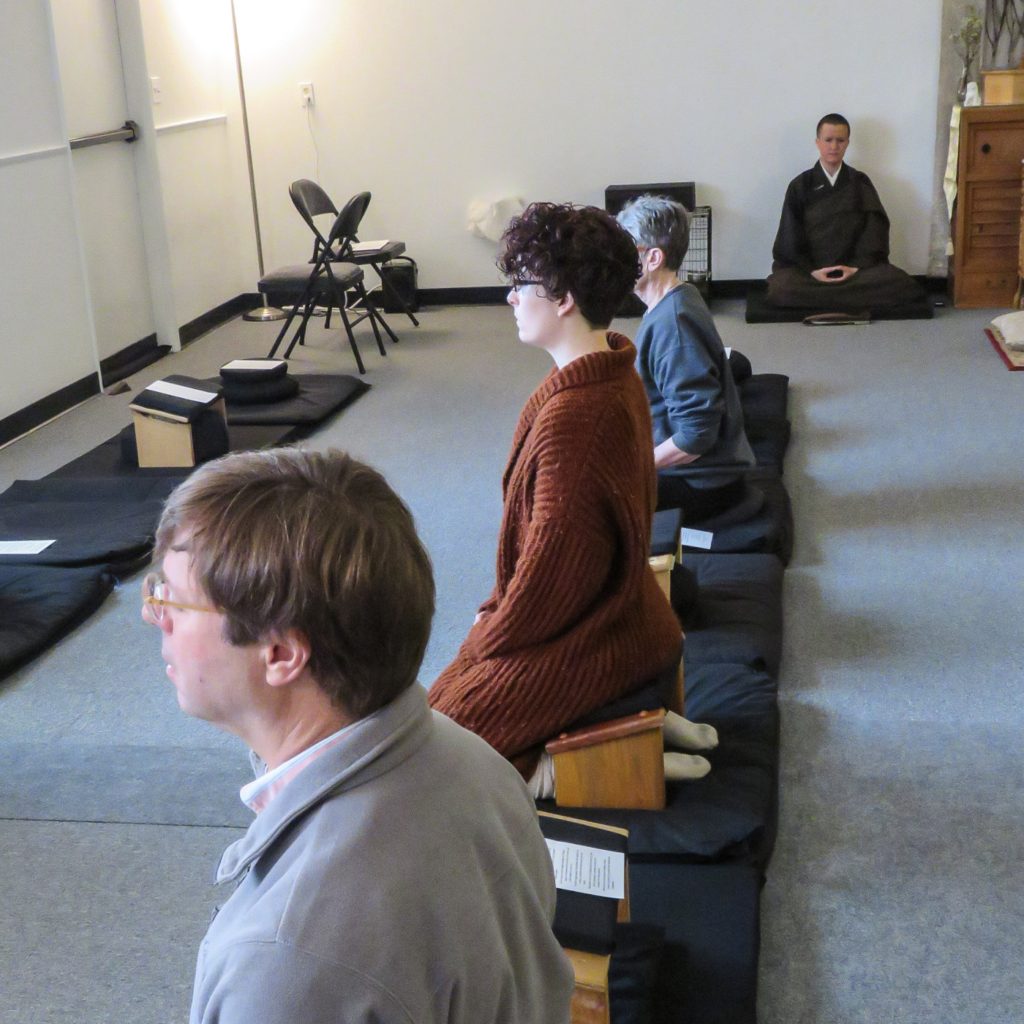
We learn from sangha when our ideas are challenged – and the most important ideas that get challenged in the midst of Sangha are ideas about Sangha.
Challenging and Clarifying Our Understanding
Even if you’re a really self-disciplined person and don’t need others to keep your practice strong, and even if you feel you can learn everything you want to know about Buddhism from books, there are still important reasons to practice with Sangha. The first of these is that our ideas about practice get challenged when we encounter teachers, peers, and people who have been practicing longer or more intensively that we have. It’s like attending a class on something; through the interactions with others and by engaging the material in a social situation, we’re exposed to new ways of looking at things.
We may think we’ve understood a teaching or practice but then find out our ideas are incorrect or incomplete. When we’re questioned by a teacher or Sangha member and try to give an answer that reflects our understanding and experience, we may struggle for words and realize we haven’t clarified something for ourselves as much as we thought we had. Even coming up with a question is a valuable process, as we have to look inward and find the edge of our understanding.
Frequently, the questions and experiences of others in the Sangha – whether seniors, peers, or newcomers – helps us realize something. It’s amazing how often I say something over and over as a teacher, but a student won’t really get it until another Sangha member says more or less the same thing, but in different words and from a different perspective. Overall, participating with other people in Buddhist study and practice can teach us a lot.
Accepting We’re All Just Ordinary Beings
However, in case you hear this and expect Sangha discussions to always be deep and edifying, I should point out that the most important ideas that get challenged in the midst of Sangha are ideas about Sangha. That is, ideas about how Buddhist practitioners should think and act – including ourselves. Sometimes people feel disappointed when they first participate in Sangha because these supposed Buddhists don’t seem to have very deep understanding, or they’re still rather opinionated, rude, or oblivious when they communicate. Sangha members may reveal weaknesses, mistakes, problems, confusion, and doubt – and these things can make us doubt the efficacy of the Buddhist path, or deflate the hope we had that Buddhism would solve all of our problems and quickly make us into gracious, enlightened beings.
I had been part of a Sangha for a year or two and was hard-core into Zen when I overheard someone ask one of the senior practitioners, “How have you been?” The senior was a woman I admired who had practicing for 10 years or so, and she responded, “I’ve been awful!” I was surprised, confused, and disappointed – how could someone who had been practicing for 10 years feel awful?!
After many years, I realized and accepted the fact that Buddhist practice doesn’t relieve us of our humanity. We still make mistakes, have weaknesses, and encounter problems. We still feel, from time to time, sad, depressed, confused, and discouraged – but practice lets us see that we are larger than these experiences; they come and go, and don’t define who we are. We learn to face our issues head-on rather than distract ourselves or live in denial. We become more honest with ourselves and others. We accept ourselves and our humanity, and ironically taste enlightenment as we do so.
In the context of Sangha, this is what we should look for: Humble people who are working hard, not people who are already perfect. As the 18th century Japanese Zen master Hakuin wrote, “As with water and ice, there is no ice without water; apart from sentient beings, there are no Buddhas.”[1] We may hold an ideal of Buddhahood that contrasts greatly with the imperfect, fallible people we encounter – but Buddhas are nothing other than imperfect, fallible people who have awakened!
[1] “The Song of Zazen” by By Hakuin Ekaku Zenji (http://dharmamind.net/readings/the-song-of-zazen/)
0 Comments
Submit a Comment
You must be logged in to post a comment.
The Importance of Sangha (the Buddhist Community) Part 1

When I first got interested in Zen Buddhism and meditation, I did some reading and learned about the so-called “Three Treasures” of Buddhism: Buddha, Dharma, and Sangha. (I talked about the Three Treasures in Episode 2 of the Zen Studies Podcast.) The “Buddha” made sense to me – the teacher Shakyamuni who lived 2,500 years ago, and at another level the wisdom inside of us. The “Dharma” made sense too: That’s the teachings and practices of Buddhism, or truth itself.
What about the “Sangha,” though? That’s the community of Buddhist practitioners. Was the treasure of Sangha really necessary? Was it important to get together with others to practice Buddhism? I associated groups of spiritual or religious people – fairly or not – with all kinds of negative things: prejudice, conformism, judgementalism, cults… Just a few years before I got into Zen, I had told a friend, “If I ever get into an organized religion, shoot me!”
Still, because I found the teachings of Buddhism so fascinating and helpful, and because I really liked meditation, I decided to give Sangha a shot. I looked up “Buddhist Churches” in the phone book (I realize this dates me!) and visited a couple local groups. The third one I attended felt like home, and despite my prior biases I have been intimately involved with Sanghas ever since.
In this series of blog posts, I’ll try to explain why Sangha is so important in Zen or Buddhist practice.
To begin:
The Full Buddhist Tradition Is Conveyed Through Sangha
The existence of Sangha is what makes Buddhism a living, applied spiritual tradition rather than a mere philosophy. I encountered all kinds of inspiring concepts, ideals, and philosophies before I became a Buddhist. As a teen, I read and re-read Thoreau’s Walden, and in college I was impressed with the Stoic philosophers. However, what was I supposed to do with these ideas other than just think about them? I could try to apply them to my life, I suppose, but translating them into action wasn’t so easy.
When I encountered Buddhism, it was different. After I read about Buddhist ideas and philosophy, I could try the practices of meditation and mindfulness and see what changes they made in my life. Even further, I could attend a local Sangha where I could learn from and question a real, live, trained teacher – someone who put Buddhist teachings into modern language, and could recommend how to apply them to everyday life. I could encounter other people who aspired to the same thing I did, and learn from their experience.
There’s only so much you can learn from books, especially when you’re talking about a spiritual practice that has the potential to transform your life. The Buddhist tradition has countless aspects that can’t be conveyed in a book, including the personal and dynamic interactions between teacher and student, learning how to move your body according to traditional forms that are meant to foster mindfulness and concern for others, and the emotionally nurturing power of ritual. This is the first important function of Sangha: it carries and conveys the many components of the Buddhist tradition that can’t be shared through writing.
Sangha Provides Positive Peer Pressure
Even apart from the Buddhist teachings and practices a Sangha can expose you to, participating with a Sangha is valuable. Why? Human beings are social creatures – even the introverts and misanthropes among us! We depend on and influence one another. The presence and positive support of other people is what helps us fulfill our aspirations – and form those aspirations to begin with. I like to call this kind of beneficial social influence on one another “positive peer pressure.”
For example, the course of your life was deeply affected by whether your parents were your greatest fans, or your greatest critics. If you’re surrounded by positive, healthy people, it’s whole lot easier to avoid negative behaviors like abusing drugs or wallowing in depression. No matter how convinced we are that more exercise would be good for us, most of us find it easier to actually do it if we attend a yoga class or join a gym.
Over 2,500 years ago, the Buddha emphasized that associating with what he called “admirable people” was essential to our success in practice. He defined “admirable people” as wise practitioners who are firm in their conviction spiritual practice is important, and are strong in virtue, generosity, and discernment.[i] The following is a famous passage from the Pali Upaddha Sutta (note: in this passage, the Buddha is called “the Blessed One”):
“…Ven. Ananda went to the Blessed One and, on arrival, having bowed down to the Blessed One, sat to one side. As he was sitting there, Ven. Ananda said to the Blessed One, ‘This is half of the holy life, lord: admirable friendship, admirable companionship, admirable camaraderie.’
“‘Don’t say that, Ananda. Don’t say that. Admirable friendship, admirable companionship, admirable camaraderie is actually the whole of the holy life. When a monk has admirable people as friends, companions, & comrades, he can be expected to develop & pursue the noble eightfold path.”[ii]
You may or may not relate to needing the support of others in order to do a challenging practice or change your habits. Maybe you’re an unusually self-disciplined person. However, if you do find that your spiritual aspirations wane when you try to fulfill them on your own, know you’re not the only one! Modern Zen teacher Thich Nhat Hanh says that, in his tradition, people say “when a tiger leaves the mountain and goes to the lowland, it will be caught by humans and killed. When practitioners leave their Sangha, they will abandon their practice after a few months.”[iii] Thich Nhat Hanh and many other teachers and practitioners maintain that it’s much easier to practice with a Sangha than by yourself.
Keep the value of positive peer support in mind if you find yourself wondering whether your presence in a particular Sangha matters! Even if you value Sangha, it’s easy to figure it will go on without you if you’re busy and don’t attend for a while. That assumption is probably true, but your presence with Sangha is an act of generosity even if you don’t have a special role there. It supports others by adding energy and momentum to the collective experience, inspiring others through positive peer pressure. [more to come…]
[i] “Dighajanu (Vyagghapajja) Sutta: To Dighajanu” (AN 8.54), translated from the Pali by Thanissaro Bhikkhu. Access to Insight (Legacy Edition), 30 November 2013, http://www.accesstoinsight.org/tipitaka/an/an08/an08.054.than.html.
[ii]“Upaddha Sutta: Half (of the Holy Life)” (SN 45.2), translated from the Pali by Thanissaro Bhikkhu. Access to Insight (Legacy Edition), 30 November 2013, http://www.accesstoinsight.org/tipitaka/sn/sn45/sn45.002.than.html.
[iii] From Friends on the Path: Living Spiritual Communities (2002) by Thich Nhat Hanh, reprinted with permission of Parallax Press, Berkeley, California, www.parallax.org. at https://www.lionsroar.com/the-practice-of-Sangha/
0 Comments
Submit a Comment
You must be logged in to post a comment.
Instructions for Zazen in Eight Verses – Explained
Sit in a balanced, stable position with your spine erect.
Body and mind are one and posture is dynamic; proper sitting requires your full attention.
Instructions for physical posture may seem uninteresting or elementary because we conceive of our minds and bodies being separate. To meditate, we figure all we need to do is to get our body into some relatively comfortable position, and then leave it there like a lump of clay while we engage some “meditative technique” with our minds.
However, our practice is shikantaza, which means “nothing but precisely sitting.” Wholehearted sitting is our meditative technique. It challenges us to drop artificial, conceptual distinctions between the “I” who is meditating, the “mind” I am disciplining, and the “body” I am paying attention to in order to discipline the mind. I, mind, and body are all experiential aspects of one Being, who is taking a profoundly significant posture: upright, still, dignified, ready, open, and forgoing either grasping or aversion.
When we sit wholeheartedly, it is actually a rich experience. The appropriate posture can only be maintained with gentle, continued awareness of the body. Sights, sounds, smells, inner sensations, thoughts, and feelings are all part of our sitting. However, we try to keep our awareness on our experience as a whole, instead of being caught up in one aspect of it.
Be alert and appreciative, because your life may end tomorrow and everything you love is changing.
Imagine how you would feel if you really knew your life was going to end tomorrow. You’d probably pay alert, appreciative attention to whatever you were experiencing, even if all you were doing is sitting still and breathing! Even when you encountered things you would ordinarily find annoying or unpleasant, you’d probably be happy simply to be alive to experience them.
Contemplating impermanence is a traditional Buddhist way of motivating yourself to pay attention to the present moment, and it’s not meant to be depressing or anxiety-producing. If this line of the Eight Verses causes these reactions in you, just skip it. However, see if you can contemplate the implications of impermanence in this moment, as opposed to worrying about when and how the inevitable changes will come. You will not always have this opportunity to breathe, to hear the sound of the rain, to see the face of your friend…
Energized by not-knowing, devote yourself to the sacred act of being present for each moment without agenda.
We think we know. We know what’s going to happen next, who we are, who our partner is, what we like, and what the world is like. Our sense of knowing is based on conclusions we have drawn based on past experience. These conclusions allow us to predict things, make sense of things, and maintain a sense of control over our lives. This knowing also cuts us off from engaging our experience in an open, fresh, intimate, curious way.
Imagine you were sitting zazen and knew that at some point during your meditation period, someone might burst into the room and deliver news you were eagerly (or nervously) awaiting. Wouldn’t you be energized by the natural inclination to listen to each sound and ask, “Is that it? Are they coming?”
Challenge your habit of tuning out your present experience because you think you know what’s going to happen, or because what’s happening isn’t entertaining, pleasurable, or directly relevant to your plans. Your life, just as it is, is precious. Each day that passes is one you will never experience again. Motivated by your deep love of life, make an effort to be present for each moment, regardless of how it serves your self-interest. Because life itself is sacred (that is, worthy of reverence and respect), zazen can be an act of devotion.
Do not brace yourself against thoughts or feelings; simply sit wholeheartedly and they will come and go like clouds in a clear sky.
When we are caught up in thoughts and feelings, we are not doing zazen. At the same time, we can’t avoid getting caught up in thoughts and feelings by employing ordinary means. We are only further caught as soon as we latch on to conceptual divisions and tensions: “me” (trying to meditate) versus “my mind” (chasing thoughts), “good me” (aiming for spiritual growth) versus “lazy, stupid me” (who just wants to rehash the plot of a TV show during meditation), or “holy activity” (such as being present this moment) versus “mindless activity” (being caught up in thoughts).
Zazen asks us to adopt a radical stance of nonviolence, nonjudgment, and loving acceptance. The practice is to let go not just of our previous thoughts, but also any reaction we might have to having been caught up in thinking. As we return to “nothing but precisely sitting,” forgetting about everything that came before, there is an extremely precious moment of stillness before we get carried off into thought again. The more completely and wholeheartedly you forget about the previous moment and return to sitting, the longer and deeper the precious moment of presence will become.
Do not struggle against forgetfulness; the instant you awaken, be grateful and throw away past and future.
The forgetfulness referred to in this verse is not the act of forgetting (or letting go) talked about above. Forgetfulness is getting so caught up in thoughts and feelings you completely forget that you’re even doing zazen. You lose the thread of your intention entirely, and follow a train of thought so long that whatever you’re thinking about takes on much more an air of reality than your immediate physical surroundings.
How can you stop this from happening? You can’t, at least not directly. After all, how do you remember when you’ve totally forgotten? How do you wake up when you’re asleep? You just do. Things run their course, change, and you suddenly realize, “Oh yeah, I’m sitting zazen.” It’s important to make this instant of awakening as positive and fruitful as you can: Be grateful that it happened and just return to sitting, as described in the comments on the previous verse. If you respond to your instant of awakening with frustration, disappointment, judgment, or by evaluating your zazen, you will only make moments of waking up less likely to happen!
How can you get better at zazen if you’re not supposed to do anything about mind wandering and forgetfulness except forget about them and return to just sitting? You arouse greater passion for being present, as described in the third and fourth verses, or you explore the next two verses with great curiosity and determination.
Sink below the level of thinking and be aware of your direct experience, realizing it can never be grasped, but flows endlessly.
We can’t fight getting caught up in thinking directly, but we can turn our attention to our faculty of awareness. We are aware of our direct experience in a way that is utterly independent of discriminative thinking. Below your mental efforts to parse things out, describe, differentiate, understand, predict, and judge, you are aware of your body, sensations, perceptions, and thoughts. This awareness is ever-present, silent, and intimate. It is the medium within which we navigate as living beings, even when we’re preoccupied with our mental chatter. When we remember what’s below the level of thinking, we recognize we’re much bigger than we think we are.
It’s important to remember, though, that being “aware of your direct experience” is not a place to stop, or something to be achieved because it will deliver a reward. “Ah, I’m aware of my direct experience, now what?” Our direct experience – our life – is a flow, and “being aware of our direct experience” is the way to be intimately alive, moment after moment. It is its own reward.
Settle into your true nature: boundless, selfless, joyous, and ready to respond with wisdom and compassion.
At the same time, once you really, truly stop looking for anything else – once you stop expecting anything else to happen, once you’re really doing “nothing but precisely sitting” – the whole universe opens up to you. This is not because zazen is a method by which you work yourself into a special state where it’s possible to achieve insight. Rather, this is because when you’re doing zazen, you’re no longer separating yourself from reality and you can see it clearly.
If you know, from personal experience, that your true nature is boundless, selfless, joyous, and ready to respond skillfully to whatever happens, this verse serves as a reminder not to forget. If you don’t yet have a sense of being boundless, selfless, joyous, and ready, this verse is not meant to discourage you by pointing out spiritual goodies you don’t yet have. Instead, it’s meant to inspire you to summon the courage and passion to look beyond what you think you know, and surrender yourself more completely to the practice of zazen.
Click here for a printable copy of the Instructions for Zazen in Eight Verses, along with instructions for how to use them in your meditation.


0 Comments