
Sangha Posts
Two Sides of Practice Part 3: When We Neglect Samadhi Power, and How the Two Sides are Complementary

When We Neglect Samadhi Power
What about neglecting samadhi power, and overemphasizing karma relationship? This is when we try to get free from our suffering, be a good and wholesome person, have harmonious relationships, and/or aspire to greater wisdom and compassion – and then we struggle in our efforts in same way we struggle with the rest of our ordinary tasks. Approaching things only from the relative perspective, we set goals or adopt ideals, work hard, notice when we’ve fallen short, devise another way, and try harder. Chances are good we also criticize ourselves, compare ourselves to others, and experience a mixture of frustration, pride, and shame. Caught up in the drama of the relative, we fail to see things from a larger perspective, and may succumb to arrogance, depression or despair.
Alternatively, we may think we’re fine just the way we are, and we don’t have much karma relationship or samadhi power work to do, but this is another trap. When we don’t have personal and profound conviction about absolute truth, our sense of self remains front and center – and most of our worldly problems stem from ignorance or neglect of what we touch in samadhi. Unaware of the sense in which we are empty of inherent, enduring self-nature, and how things just-as-they-are participate in one luminous, seamless reality, it’s easy to give in to our greed, fear, anger, judgmentalism, low self-esteem, etc.
Samadhi Power Supports Karma Work
Samadhi power complements, supports, and strengthens our karma relationship work.
First, our meditation practice teaches us to sit still and face reality, not run away or turn away – and this kind of stillness is necessary in order to do karma work. In the spaciousness of meditation, where we let go of all agendas and judgments, we have a chance of seeing our life clearly. Our discriminating mind only helps so much; if we’re facing a complicated life problem, our thoughts will often end up spinning – going over and over the same material, conceiving a million different plans, endlessly weighing pros and cons without coming to a conclusion. In meditation, or in the midst of a daily life supported by regular meditation, an answer, resolution, or way forward will sometimes arise out of our deeper intelligence and intuition.
Second, strengthening our samadhi power gives us a growing appreciation of absolute truth, and that larger perspective keeps us from getting too down on ourselves as we work on our karma relationship. A sense of the absolute balances and sustains us as we do the hard work of facing our karma, changing habits, and learning to take care of others. Over time, we find it easier and easier to remember that Buddhist practice is not a self-improvement project, but an awakening to our true nature, which lacks nothing.
Fake It ‘Til You Make It
From a Buddhist point of view, a fully enlightened person has no need for moral restraints imposed by will. Having freed themselves from grasping, aversion, and delusion, they naturally act selflessly and skillfully. Beware of anyone claiming to be fully enlightened, though, especially if they seem to be acting selfishly and immorally. The Buddhist precepts, as I have discussed in the episodes on the precepts, can be said to describe enlightened behavior – so, bad behavior is a sign of incomplete understanding and integration.
Until we gain a direct and personal understanding of reality – of absolute truth, as well as how relative and absolute are not two separate things – the practice is to “fake it ‘til we make it.” In other words, we act as much like a buddha – or a fully enlightened person – as we can, even though it takes some effort to do so. Through our karma relationship work, we put the relative aspect of our lives in harmony with the absolute aspect. This gets things in order for the integration of insight, so we can quickly manifest whatever we learn. It also makes insight more likely to happen, because our lives are more peaceful, and our minds and hearts more open.
Ultimately, when we “make it,” we recognize how all of our efforts around both samadhi power and karma relationship, all along, have been the manifestation of enlightenment. No practice is wasted. It’s nice to consciously awaken to reality and have your doubts resolved, but even before that point enlightenment is there. In a moment of realization, you can look back at your struggles as confirmation of your awakened nature.
The Practice of “Not-Knowing:” Relief of Stress, Ground for Effective Action

What’s your response when I say, “The best way to respond to the great suffering in the world is with the practice of ‘not-knowing’?”
Maybe you react to that statement with suspicion and aversion. Part of me does, because I care deeply about the suffering, destruction, and injustice in the world and want to do something about them. Responding with “not-knowing” sounds like retreating into complacency – doing nothing to change the world, and using the excuse like, “You can’t know what to do, it’s all too complex and confusing.”
Fortunately, the Zen practice of “not-knowing” is not like this. It’s not an excuse or a cop-out. It’s not clinging to ignorance or passivity. It’s not at odds with the bodhisattva path. It’s actually an incredibly intimate response, in touch with reality, which provides the ground for effective action.
Quicklinks to Content:
Some Ancient Chan Teachings on Not-Knowing
Practicing Not-Knowing in the Moment
Recognizing Versus Knowing
Not-Knowing Is Most Intimate – and How That Helps
How to Know When Your Not-Knowing Is a Cop-Out
To be honest, the teaching of “not-knowing,” also called “don’t-know mind,” can be easily misunderstood and therefore misused. All potent spiritual teachings are rather like knives: Very effective for certain tasks, but potentially dangerous if used recklessly, incorrectly, or in the wrong circumstances. The Zen teaching of don’t-know mind can be easily twisted into a near-enemy – in this case, refusing to take a stand even when the situation calls for it.
You might argue that we shouldn’t teach something like don’t-know mind because of the chance it will be misunderstood and do great damage. However, that would be like saying we should never use knives because occasionally people cut themselves with them, or use them as weapons. It’s better if we learn how to properly use and store knives, and to clearly identify when they’re being misused. I’ll try to do that, here, with the Zen teaching of not-knowing.
Some Ancient Chan Teachings on Not-Knowing
The teaching of acknowledging not-knowing as a profound practice seems to have appeared early on in the Chan (later the Zen) school of Buddhism in China. According to the second koan in the Book Equanimity,[1] the Indian master Bodhidharma invoked not-knowing in his response to the emperor of China:
“Emperor Wu of Ryo asked the great master Bodhidharma, ‘What is the ultimate meaning of the holy truth of Buddhism?’ Bodhidharma replied, ‘Vast emptiness. No holiness.’ The Emperor asked, ‘Who stands here before me?’ Bodhidharma replied, ‘I don’t know.’ The Emperor was baffled. Thereafter, Bodhidharma crossed the river, arrived at Shorin and faced the wall for nine years.”
On the surface, it may seem like the Emperor’s question stumped Bodhidharma, and he subsequently had to go sit in meditation for a long time in order to deepen his understanding. However, this probably wasn’t the case.
By the time he met the Emperor, Bodhidharma had already been practicing a long time, and he carried the lineage tradition. His “I don’t know” isn’t the same as our ordinary “I don’t know.” Our meaning would typically be: “I’m wracking my brains for an answer but can’t come up with one for you.” Or, “I’ve been trying to figure that out but the answer eludes me.” Or, even worse, “I feel separate from my true self, my true nature, so I feel alienated from who I really am. Your question has exposed my inadequacy.”
If Bodhidharma didn’t mean these kinds of don’t know, what did he mean? And how could his response be a teaching, as opposed to an admission of insufficient understanding? Before I go into that, I’ll share another ancient story about not-knowing from the Book of Equanimity. This is Case 20:
“Master Jizo asked Hogen, ‘Where have you come from?’ ‘I pilgrimage aimlessly,’ replied Hogen. ‘What is the matter of your pilgrimage?’ asked Jizo. ‘I don’t know,” replied Hogen. ‘Not knowing is the most intimate,’ remarked Jizo. At that, Hogen experienced great enlightenment.”[2]
Hogen awakens at Master Jizo’s comment not because he suddenly realizes why he’s been wandering so long and practicing hard, and not because he finally conceives of what he’s been searching for. Rather, he momentarily drops all of his preconceived notions, and at that moment there is only his body-mind, Master Jizo’s compassion, the Buddha Way, the sandals on his feet, the cicadas buzzing in the trees. There, in his direct experience of his life, the meaning of it all becomes clear – without conception, definition, description, or “knowing” of any kind.
As soon as Hogen thinks about it, as soon as we think about it, knowing creeps in again, creating a sense of separation. And yet – to always have the refuge of not-knowing, how wonderful!
Practicing Not-Knowing in the Moment
To bring this discussion back to our time and place: the practice of don’t know mind, or of not-knowing, is immensely practical, and serves the bodhisattva well.
How? How can this kind of thoughtless, immediate, not-knowing be useful when you’re facing a neo-Nazi? When you need to decide how resist the environmental destruction and degradation that’s threatening all life on this planet? When you have to find a way to defend democracy, or truth, or compassion? Or when you need to claw your way out of a hole of suffering in your personal life?
The key is that not-knowing isn’t clinging to a state of indecision or ignorance. It’s not a fixed position you take. Instead, it’s a way you engage the next moment: fresh, open, unbiased. You let go of clinging to fixed views, of your sense of knowing. It’s grounded in reality, because in reality, you don’t know what’s going to happen next. You don’t know for sure what’s going to work. You don’t know the person standing in front of you – at least, not completely, and maybe hardly at all. You don’t know who you are, as if you could sum yourself up in a sentence or paragraph.
You practice not-knowing in this very moment – not in the abstract. As soon as you make not-knowing into a position, it’s not actually not-knowing anymore, it’s refusing to know or decide. It becomes a position you hold for your own convenience, comfort, or ego, and lacks compassion.
The point is not to be attached to anything – neither knowing, nor not-knowing. When it’s time to have a conversation with someone about what needs to happen, you take your best stab at knowing. When you have to make a decision or take an action, you make your best call, based on your best knowledge. But then, in the next moment, you let it go and take a breath in not-knowing – which completely and utterly changes your relationship to knowing. When you see that your best knowing comes and goes, that your “best calls” sometimes work out and sometimes they don’t, it actually frees you up to get more creative and take more risks with your knowing. There is no one, fixed, absolute truth you’re eventually going to arrive at; instead, it’s a crazy balancing act all along the way.
Recognizing Versus Knowing
Let’s say you read about a terrible injustice somewhere in the world – maybe not that far away. People are suffering and dying – and the worst thing is, they’re suffering and dying needlessly, because of exploitation, fear, and greed. (And if you read the papers, of course, this is more or less a daily experience.) When we read about this, we have reactions. We know this wrong. We know this suffering and injustice needs to be ended.
But this knowing should perhaps better be called recognizing. We recognize sadness, pain, empathy, grief, frustration… we feel a basic human response to the suffering of others (at least, this response is basic to people who have a healthy, functional body-mind). This is a bodhisattva’s natural response. We also recognize the contraction and darkness of greed, hate, fear, and delusion, just as we recognize warmth, coolness, ease, and pain.
And yet, very quickly, most of us are going to take our basic recognition further, willfully crafting it into knowing. In our efforts to understand, and therefore exert some measure of control over our experience or over the world, we speculate on why this is happening, who is to blame, the systems that are to blame, what needs to change. If at the very least we figure out what our opinions are, we know what kind of actions we should take – or at the very least, what kind of attitude we should carry around. Even if we’re at a loss for how to help, we can take solace in the fact that we’re opposed to what’s going on.
If we know, we can predict and plan. We can imagine an alternative future, where things have been fixed according to what we know, and suffering has decreased. When we start to feel overwhelmed or stressed, we can rely on our righteous stances and thereby insulate ourselves in some subtle way from what’s happening right now.
Of course, with new facts, complexity, arguments, opposition from others, our knowing needs to be constantly revised and maintained. It can get quite stressful, establishing a moral world order in our minds!
Not-Knowing Is Most Intimate – and How That Helps
Some of this thought is good, of course. We should consider what’s happening, our opinions about it, and look for things we can do in response.
But at some point, when our thoughts get repetitive, when we’re trying to impeach the president in our minds, or create a plan to end world hunger, or when we’re stuck on a terribly sad or traumatic fact or image, or imagining the many forms in which doom could come…
Then it’s time for balance – a time for the medicine of not-knowing. This takes courage. We have to be willing to become intimate with our fears, our sorrows, and our sense of overwhelm – exactly the kinds of feelings we try to keep at bay with our knowing. (And even “negative knowing” has this effect. For example, you may be convinced the world is going to hell in a handbasket – but in some ways it easier to be prepared for the devil you (think you) know, then to open up to the vast possibilities of reality.)
For a time, we let go of the stress of having to figure everything out, of maintaining our positions and opinions, of identifying everything we encounter as right or wrong. This helps our body-minds to settle, and become more relaxed, healthy, and clear.
How do we heal our country and our world? Lots of ideas may spring into our minds. But if we momentarily let them go and say quietly, humbly, compassionately, “I don’t know…” Such sadness! Such grief! Such concern! Such intimacy!
How do we end racism? Again, let go ideas, however good they might be. It’s not the time for ideas. It’s time for listening. “I don’t know…” Notice how the reality of the struggles of people of color, momentarily, comes closer to your heart?
How do we radically redirect the entire human way of life on this planet away from limitless exploitation toward long-term sustainability? Let go of ideas… “I don’t know.” Do you see how this practice of “I don’t know” includes, “I want to help. I love. I ache for suffering beings. I ache for myself. I’ll do my best. How? What?”
Then, when we’re ready, we engage our discriminating mind again, and know when we need to. But the open, intimate space of not-knowing gives us more effective ground on which to stand when we take action.
How to Know When Your Not-Knowing Is a Cop-Out
Of course, sometimes we cling to not-knowing instead of knowing. We just take a breath and enjoy each day, one moment at a time, aware that ideas are abstractions and you can only deal with what’s right in front of you. But clinging to not-knowing is not intimate. You can tell because you need to turn away from suffering in order to maintain it. It’s a cut-off, limited position that feels somewhat deadened or numb. It’s not an open, responsive, other-focused way of operating; when we cling to not knowing, our world becomes self-centered and small.
When I thought about writing about the practice of not-knowing, I considered calling it the “refuge” of don’t-know mind, because of the relief it provides from stress… but the term “refuge” implies you can hide out there and avoid responsibility, so I didn’t want to use it.
Then I thought about the term “stance,” as in a posture or position, which maximizes the effectiveness of your response to challenge, as in a martial art. This is a pretty good word, because although it may imply something static, in practice an effective stance is dynamic, open, and responsive. It also contains the truth that really employing don’t-know mind is complementary to taking a stand or being open to action. But “stance” does summon an oppositional image…
Perhaps it’s best to discuss the “ground” of don’t-know mind. This term points to the fact that this mind reflects an aspect of reality – it’s not an attitude or view we adopt for utilitarian purposes. We really, actually, don’t know. We have to decide and act, but within the groundless reality of emptiness. This way of looking at it is described in the Prajna Paramita Sutra in 8,000 Lines:
“The Leader [Buddha] himself was not stationed in the realm which is free from conditions,
Nor in the things which are under conditions, but freely he wandered without a home:
Just so, without a support or a basis a Bodhisattva is standing.
A position devoid of a basis has that position been called by the Jina.”[3]
So, a Bodhisattva is standing. She is free, and she is devoted to the deliverance of all beings. But she stands without a support or a basis. How is that possible? Intellectually it makes no sense, but it describes the reality of our lives and our functioning. “Knowing” is an abstraction that we use to make decisions, so it has it’s uses, but if we can recognize knowing is also empty of inherent self-nature, we aren’t overly attached to it. We don’t mistake it for reality itself. We are free from the compulsion to maintain a fiefdom of knowing, and we can be directly informed and touched by the world – which means our responses will be more on-point, and therefore more effective.
Sources
Conze, Edward, trans. The Perfection of Wisdom in Eight Thousand Lines & its Verse Summary. San Francisco, CA: Four Season Foundation, 1973
Wick, Gerry Shishin. The Book of Equanimity: Illuminating Classic Zen Koans. Boston, MA: Wisdom Publications, 2005.
Endnotes
Five Ways to Make Your Work Spiritual Practice
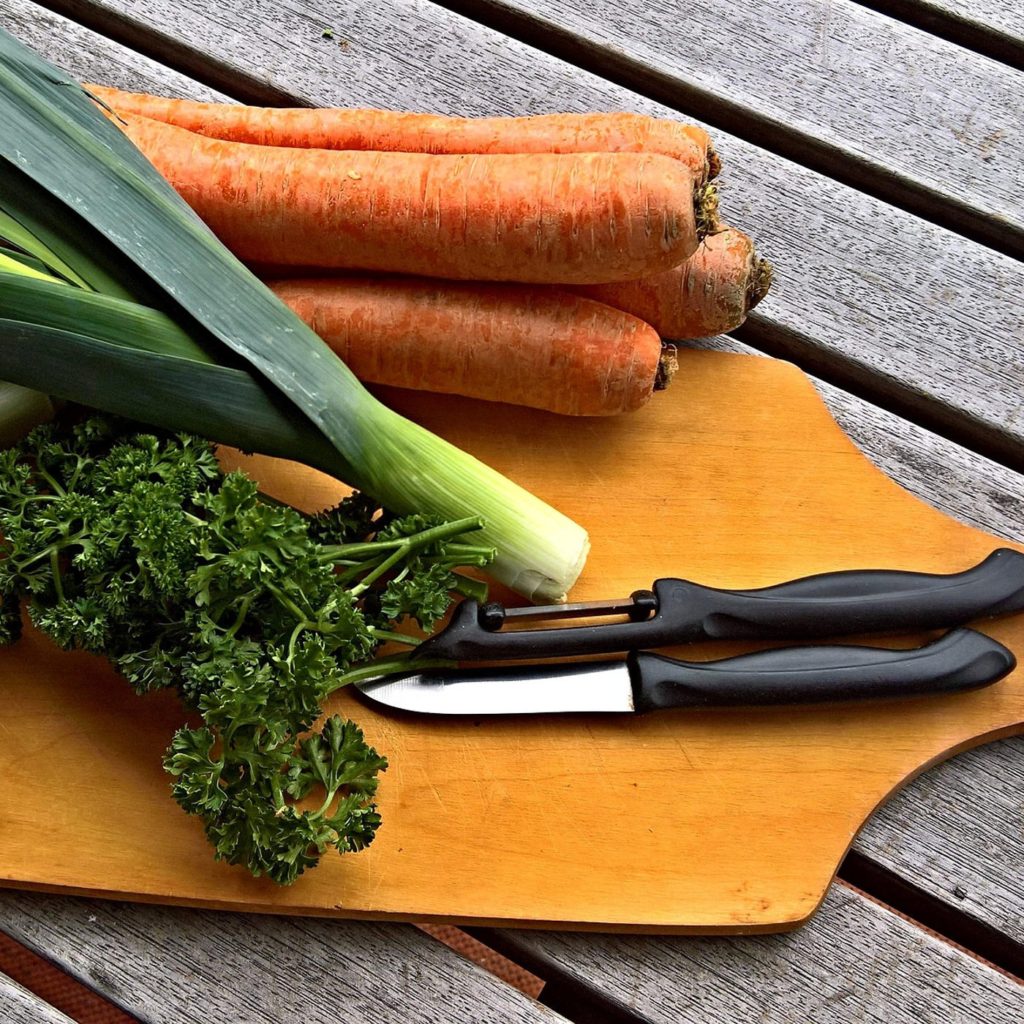
These are five ways we can make our work into spiritual practice. They’re from the “Tenzokyokun,” or “Instructions to the [Head Monastery] Cook,” which was written by Zen master Dogen in 1237, following a long tradition of Zen “work practice.” In the essay, Dogen writes, “just working as tenzo is the incomparable practice of the Buddhas.” While it may seem like specific instructions for cook in a traditional Zen monastery isn’t relevant to us, fortunately that’s not the case at all. Enjoy!
1) Taking Joy in Serving Others
2) Treating Each Thing as the Body of the Buddha
3) Refusing to Be Pushed About by Judgments and Preferences
4) Doing the Best Job You Possibly Can
5) Becoming One with Your Activity, or Getting in “the Zone”
Advice for Approaching Work Practice on a Daily Basis
1) Taking Joy in Serving Others
First, we can take joy in our work as service to others. Dogen writes, “The true bond established between ourselves and the Buddha is born of the smallest offering made with sincerity rather than of some grandiose donation made without it. This is our practice as human beings.”[1] Note he says, “the smallest offering,” so this includes a sincere smile, leaving something cleaner than we found it, adding an edible flower to the top of a dish, or quietly taking up the slack when our co-worker overlooks something.
In the Tenzokyokun, Dogen describes how the tenzo should have an attitude of joy in her work, and approach it with the selfless love of a parent. He suggests we recall that it would have been very possible for us to be living in circumstances where we would be unable to engage in the work we’re doing, and how fortunate we are to have the opportunity to be of benefit to others. Rather than feeling burdened or underappreciated, we’re asked to approach our work as parents take care of their children: “A parent protects the children from the cold and shades them from the hot sun with no concern for his or her own personal welfare… In this same manner, when you handle water, rice, or anything else, you must have the affectionate and caring concern of a parent raising a child.”[2]
The idea of enlivening our work by engaging it as service or generosity isn’t that radical, but many of us tend to imagine it’s only surgeons, firefighters, or particularly talented and remarkable people who get to feel deeply gratified by the benefits they are offering to others. However, Dogen emphasizes how the monastery cook serves others even as he’s going about simple, unglamorous tasks like washing rice or putting away pots and pans, so he’s clearly encouraging us to see the service and generosity within the work we do.
It can be challenging to see your regular daily work as beneficial to others to the extent that you can consequently take great joy in it and see it as noble and worthwhile. Personally, I don’t find it easy to sit alone at my computer, putting together a podcast episode, and nurture a sense that I’m benefitting others. Even though people have told me they enjoy the podcast and appreciate it, it’s still easy just to see it as something I’ve got to get done today – and certainly no big deal compared to the work that has to be done to meet the critical needs of the world today, like ending world hunger or researching climate change.
However, bringing a joyful sense of service to your work isn’t really about how much it technically benefits others in relative sense. It’s about the state of your own heart as you work; your offering may be small, but as Dogen said, the true bond between ourselves and the Buddha is “born of the smallest offering made with sincerity.” He also instructs us to “see that working for the benefit of others benefits oneself,” and to “understand that through making every effort for the prosperity of the community one revitalizes one’s own character.”[3] The beautiful thing is that a community truly thrives when each person in it sees themselves as contributing, and aspires, in the manner of a selfless parent, to give whatever is needed without concern for reward or reputation.
2) Treating Each Thing as the Body of the Buddha
A strong theme in the Tenzokyokun is treating each thing you encounter with great care. Dogen quotes a Chinese Chan master, “Use the property and possessions of the community as carefully as if they were your own eyes.”[4] In Zen work practice, we’re never supposed to do anything thoughtlessly or carelessly. Nothing is dismissed as garbage, or beneath our attention, or beside the point. Tools are handled with care, washed after use, and stored carefully. Things are carried with both hands. Assistants are treated kindly and thoughtfully. Parts of vegetables you’re not going to eat are conscientiously composted, and even wash water is carried outside and poured at the base of a plant instead of being tossed down the drain.
Dogen writes, “Handle even a single leaf of green in such a way that it manifests the body of the Buddha.”[5] What does this really mean? First, we usually have to slow down a little, and actually look at what’s in front of us. This cultivates mindfulness, one of the main practices of Buddhism. Then we refrain from evaluating the leaf in our hand simply in terms of ourselves. Ordinarily we are thinking only about completing our task so we can rest, or get praise for how good a job we’ve done. Or we’re daydreaming about something else, because, frankly, this leaf isn’t very important to us.
If we cut through the fog of our self-centered dream, however, we may glimpse what a miracle this leaf is, and how amazing it is that we’re holding it. Inherent in the leaf is the wonder of life, and the power of the sun. Someone planted a seed, carefully tended the plants, and then harvested this leaf. The hard work and generosity of many people were required for this leaf to end up in our hands. Right here, right now, we are alive, and healthy, and capable of grasping the leaf with our fingers… what else do we mean by “the body of the Buddha?” The body of the Buddha is the physical, real manifestation of the Ineffable, and here it is.
Do we think about these things while holding a single leaf of green, or a pencil, or the steering wheel of a car? Maybe, but that’s not the point. It’s nice to have a personal sense that everything is manifesting the body of the Buddha, but whether we feel that way or not, that’s the truth of things. In treating each thing with love, care, respect, and attention, we align ourselves with this truth and honor it.
We’re also not separate from this truth, so there’s a strange way in which our participation is necessary in order for the whole scenario to be complete. After Dogen tells us to handle even a single leaf of green as we would the body of the Buddha, he says, “This in turn allows the Buddha to manifest through the leaf. This is a power you cannot grasp with your rational mind.” So, this isn’t about treating things carefully because they are sacred and we’re not, or about acting in a particularly way because we hope to glimpse of the Ineffable and we work. This is about learning how to treat things such that we allow the Ineffable to manifest through them. If we can do this, our whole day and everything we do has the potential to feel sacred.
3) Refusing to Be Pushed About by Judgments and Preferences
You might think it would enough to say we should treat each thing as if it’s the body of the Buddha, but we tend to be very attached to our opinions and reactions, so Dogen devotes plenty of time in the Tenzokyokun to admonishing us to rise above them. He writes:
“Your attitude towards things should not be contingent on their quality. A person who is influenced by the quality of a thing, or who changes his speech or manner according to the appearance or position of the people he meets, is not a man working in the Way.”[6]
Specifically, Dogen instructs the tenzo to handle all food with respect, regardless of its quality, “as if it were to be used in a meal for the emperor.”[7] He says a tenzo should “never feel aversion toward plain ingredients,” and instead should try to make the best use of whatever ingredients she has. Believe me, this is very relevant advice for a monastery cook, who is usually operating on a tight budget and forbidden to rely on rich, expensive ingredients to make the food delicious. It’s also common for monasteries to receive food donations that… well… prove a challenge. My teacher’s monastery once had to make good use of a semi-truck load of onions that overturned on a nearby freeway. For months, their tenzo had to find creative ways to incorporate way too many onions into the meals.
We’re also supposed to take care of people despite our judgments and preferences about them. Dogen is specific about this, saying “do not judge monks as deserving of respect or as being worthless, nor pay attention to whether a person has been practicing for only a short time or for many years.” He admits there may be significant differences between juniors and seniors, or those who are gifted with great intelligence and those who are not, but says, “Even so, all are the treasures of the sangha [community].” He explains, “Even though there may be right or wrong, do not cling to that judgment.”[8]
So, even though in the course of our daily lives and work, opinions, judgments, and preferences will naturally arise, we don’t have to allow them to interfere with our work practice. We can diligently hold to our aspiration to treat each thing (or person) such that it (or they) can manifest the body of the Buddha. We should respond to circumstances differently depending on what and who we’re dealing with, but stay true to our underlying intention to serve others and honor the Ineffable at all times. This is a tall order, of course, but essentially this aspect of work practice is not allowing ourselves to be pushed about by our own thoughts and preferences. We can easily be lost in the fog of a self-centered dream filled with our opinions and reactions instead of responding appropriately and compassionately to things as they really are.
4) Doing the Best Job You Possibly Can
Again, this probably follows from the aspects of work practice I’ve already covered, because if you’re taking joy in serving others, and treating everything you encounter such that it manifests the body of the Buddha, you’ll probably do the best job you can. Still, it helps to view work practice explicitly through the lens of diligence. This is about taking personal responsibility, and being energetic and meticulous in your work.
Dogen illustrates the importance of diligence in our work with another story about an encounter he had with a tenzo in China. The tenzo was again an older monk – 68 years, to be exact – and Dogen found him drying mushrooms in the hot sun. Dogen writes, “the sun’s rays beat down so harshly that the tiles along the walk burned one’s feet,” and says he was concerned for the tenzo, whose back was bent and whose “eyebrows were crane white.”[9] When asked why he never used any assistants, the old monk replied, “Other people are not me.” Dogen says, “You are right… I can see that your work is the activity of the buddhadharma, but why are you working so hard in this scorching sun?” The tenzo answers, “If I do not do it now, when else can I do it.”
Elsewhere in the Tenzokyokun, Dogen quotes the Chanyuan Qinggui (a classic set of Chinese monastic regulations), which instructs the tenzo to “prepare each meal with meticulous care,”[10] and to “pay full attention to your work in preparing the meal; attend to every aspect of it yourself so that it will naturally turn out well.”[11] After conveying disappointment and disgust as he described a careless Japanese tenzo, Dogen writes, “Strengthen your resolve, and devote your life spirit to surpassing the refinement of the ancient patriarchs and being even more meticulous than those who came before you.”[12]
Now, we have to careful with these particular instructions about work practice because it’s common in our society for people to work too much, and to be very identified with the outcomes of their work. It’s not helpful for us to try to become even more controlling, obsessed, compulsive, ambitious, or self-critical. The valuable message for us here, I think, is an invitation to take a healthy pride in our work, no matter what it is, and to allow ourselves to unleash our energy, creativity, and vision as we engage in it. In other words, making our work into spiritual practice doesn’t mean making it half-hearted or dreamy, as we contemplate deep spiritual matters in the midst of our tasks. Rather, it means energetically applying ourselves. This reminds me of a sign I saw posted at Zen monastery, over a dishwashing area where mountains of pots and dishes were washed, rinsed, and sterilized after every meal. The sign was clearly in response to newcomers to the monastery who were just learning how to consciously engage their work as spiritual practice. It read, “Mindful does not mean slow.”
Personally, I was delighted when I learned that an essential part of the tenzo’s job is to make delicious and beautiful dishes. Dogen quotes the Chanyuan Qinggui: “If the tenzo offers a meal without a harmony of the six flavors and the three qualities, it cannot be said that he serves the community.”[13] The six flavors are sweet, salty, bitter, sour, mild, and hot. The three virtues are light or flexible, clean or neat, and conscientious or thorough.[14] According to the tenzo tradition I was trained in, you need to consider all kinds of things when preparing a meal: flavors, textures, color, contrasts between dishes and ingredients, and variety. You serve beans no more than once a day, and vary the carbohydrates by meal using rice, pasta, root vegetables, bread, corn, and other grains. Lettuce for salad needs to be torn in tiny pieces in order to fit in people’s eating bowls and be easily picked up with chopsticks. Particularly popular dishes like egg frittata are deeply appreciated on the third day of retreat, which tends to be one of the most difficult for people.
There’s a funny phenomenon in American culture where people are considered annoying or mildly anal retentive when they concern themselves with the details of a task and are very particular about the way it’s done. Eyes are often rolled behind the person’s back, and when they are scrupulous in fulfilling their responsibilities – often going above and beyond what’s absolutely required – they are sometimes seen as obsessive or attached. I think this is unfortunate, because it’s beautiful when people do the best job they possibly can, whether they’re pumping gas, offering tech support over the phone, stacking produce in a supermarket, or teaching children. It’s especially inspiring when people are diligent and take pride and delight in their work just for its own sake, regardless of their level of compensation or recognition.
Again, the exhortation to do the best job you possibly can isn’t meant to stress you out by implying you need to work even harder. Instead, it’s an invitation to imbue your work with significance, vitality, and beauty, rather than holding something back from it because you don’t think it’s all that important, or you’d rather be doing something else. No matter the job, it’s always possible to bring something personal and special to it. We’ve all had the experience of being cheered up by a friendly and competent receptionist, or relieved by an empathetic nurse, or made to feel valued by an appreciative shop owner who recognizes us as a repeat customer. With our diligence, we enhance our service to others – plus, there’s satisfaction in a job well done.
5) Becoming One with Your Activity, or Getting in “the Zone”
Becoming one with your activity has long been a goal of Zen practice, but many people will be more familiar with the popular English phrase “in the zone.” This is an experience where our self-consciousness falls away and we become completely absorbed in an activity, allowing us to perform to the best of our ability. Rather than daydreaming about other things while we work, thinking about ourselves and our relationship to our task, evaluating our performance, comparing ourselves to others, or imagining what people think of us, we just do, wholeheartedly. We just cook, wash, write, speak, design, or dig.
In the Tenzokyokun, Dogen says that if we would only step back and reflect carefully on the way our minds are usually racing about, and how often our emotions are unmanageable, “our lives would naturally become one with our work.”[15] In practice, this means bringing awareness to our mind state whenever we remember to do so. When we notice we’re chopping carrots but thinking about an upcoming camping trip, we recall our aspiration to become one with our work, and therefore with our life. We want to be awake, right? Life is short, and we want to appreciate what’s going on. Right now, we’re chopping carrots.
In order to become more absorbed in our task, once we’ve woken up to the present moment, we employ one or more the practices I’ve already talked about: devoting ourselves to serving others, trying to treat the carrots as the body of the Buddha, refusing to be pushed about by our own preferences, and energetically doing the best job we can. Dogen explains, “If [the tenzo] throws all his energy into whatever the situation truly calls for, then both the activity and the method by which he carries it out will naturally work to nurture the seeds of the buddhadharma.”[16] Sounds like being in “the zone,” doesn’t it?
But how does “the zone” work? How does paying attention to present moment, absorbing ourselves completely in a task, and letting go of thinking about the task, lead to everything naturally working out? Of course, this is an actual experience and not something that can be easily explained, but I think there’s a clue in Dogen’s instruction, found elsewhere in the Tenzokyokun: “Both day and night, allow all things to come into and reside within your mind. Allow your mind and all things to function together as a whole.”[17] In other words, when we’re one with our task, we’re not shutting anything out or excluding anything. Everything we know and all the skills we’ve developed are accessible to us. We’re not even excluding daydreams or thoughts about self – we’re simply channeling our energy and attention into our work as wholeheartedly as we can.
Dogen further explains the process of our lives naturally becoming one with our work, writing that, “Doing so is the means whereby we turn things even while simultaneously we are being turned by them.” “Turning something while being turned by it” is phrase often used by ancestral Buddhist teachers, pointing toward the experience of simultaneously actively participating in something, and being carried along in a process by forces beyond yourself. When we become one with our activity in this way, amazing things happen – like the Buddha manifesting through a lettuce leaf! Dogen says, “This is a power which you cannot grasp with your rational mind. It operates freely, according to the situation, in a most natural way. At the same time, this power functions in our lives to clarify and settle activities and is beneficial to all living things.”[18]
Advice for Approaching Work Practice on a Daily Basis
Of course, the moment we think, “wow, I’m in the zone, I’m one with my work, isn’t this great,” we’re no longer in the zone. Still, the only thing we can do at such a moment is throw ourselves back into our work. Hopefully, the five aspects of Zen work practice I’ve distilled for you from the Tenzokyokun will be useful:
- Taking Joy in Serving Others
- Treating Each Thing as the Body of the Buddha
- Refusing to Be Pushed About by Judgments and Preferences
- Doing the Best Job You Possibly Can
- Becoming One with Your Activity, or Getting in “the Zone”
Now, by way of encouragement I want to say that while descriptions of “being one with our activity” may sound transcendent or profound – and occasionally we may experience our life that way – work practice is also very challenging. There are few other areas of our lives where we are so tempted to adopt a self-centered agenda, be obsessed with the outcome, or be preoccupied with our performance, comfort, reputation, or status relative to others! Just letting go and allowing ourselves to be “turned by” things can become an elusive ideal against which our ordinary ways of operating seem pretty pathetic. Our minds wander over and over, and our opinions and preferences grandstand in our brains as if they had a life of their own.
I vividly remember my work practice from a weeklong retreat many years ago. I was given the job of maintaining the walking trails at the monastery. This was my favorite job – I loved being outdoors, surrounded by nature, doing manual labor. However, at that particular retreat, my two Dharma brothers were assigned to work on the monastery roof. I couldn’t help but notice that women were rarely, if ever, assigned to work on the roof or at other physically risky or skilled jobs. This pissed me off to no end, and I spent the work periods over the entire week mentally rehearsing arguments against this injustice, sneaking looks over at my male friends running around on the roof. I tried to let the thoughts go and pay attention to my trail work, but it was extremely difficult to fight against myself.
It would be easy to conclude, when we find work practice a struggle, that we’re just “not good at it.” It could be tempting to give up trying to make our work into an opportunity for practice. However, there are two essential reasons not to judge, or give up on, your work practice. First, Buddhist practice is not about reaching some ideal, but about paying attention to your life just as it is, right now. In other words, you don’t make any progress by dwelling on how you should be. Instead, you fully face and embrace your current reality – which is only possible if you refrain from judging it. You are where you are. There are no guarantees you’ll make “progress” in this life, but you’re very unlikely to do so if you give up.
Second, the Great Matter of Life and Death is much, much bigger than we are. There is beauty and truth operating within your work practice as long as you’re trying, regardless of what you think. This is what Dogen means by, “This is a power which you cannot grasp with your rational mind. It operates freely, according to the situation, in a most natural way.” This doesn’t mean you should go passive and stop trying because it’s all out of your hands, or that the Dharma will manifest no matter what you do or don’t do. Because, remember, through our practice we allow the leafy green to manifest the body of the Buddha! Still, our efforts and failures are part of the whole picture: While my work practice on the trail, where I spent my time inwardly bitching about sexism, was not ideal in one sense, in another sense I was diligently doing my best to cultivate awareness of my life. I may have missed a lot of the joy, service, and beauty of my work assignment, but I was very aware of what was going on in my mind, and had to face a deeper question about how to be true to my values and experience while still not being pushed around by my judgments and preferences.
A closing word from Dogen: “My sincerest desire is that you exhaust all the strength and effort of all your lives – past, present, and future – and every moment of every day into your practice through the work of the tenzo, so that you form a strong connection with the buddhadharma.”[19]
Sources
Uchiyama, Kosho. From the Zen Kitchen to Enlightenment: Refining Your Life. Translated by Thomas Wright. New York, NY: Weatherhill, 1983.
Endnotes
[1] Uchiyama pg. 13
[2] Uchiyama pg. 18
[3] Uchiyama pg. 15
[4] Uchiyama pg. 4
[5] Uchiyama pg. 7
[6] Uchiyama pg. 7
[7] Uchiyama pg. 4
[8] Uchiyama pg. 14
[9] Uchiyama pg. 9
[10] Uchiyama pg. 12
[11] Uchiyama pg. 5
[12] Uchiyama pg. 7
[13] Uchiyama pg. 4
[14] Uchiyama pg. 100 (Translator’s note)
[15] Uchiyama pg. 7
[16] Uchiyama pg. 9
[17] Uchiyama pg. 6
[18] Uchiyama pg. 8
[19] Uchiyama pg. 17
The Importance of Sangha Part 5 of 5 – Sangha As Service

Part 5 of the Importance of Sangha (see Part 1, Part 2, Part 3 and Part 4):
There are many, many more benefits of Sangha I could go into, but I’ll end this series of posts with how Sangha can become a practice of generosity and service to others. Let’s say you’ve been part of a Sangha for many years and your Zen or Buddhist practice is strong. You have a pretty good understanding of the Dharma, you can see your Dharma friends outside of Sangha events, and you’ve experienced a fair amount of polishing from potato practice (whether within Sangha or elsewhere in your life). Why keep participating in Sangha?
A short answer is this: as a strong practitioner, you strengthen the Sangha with your mere presence, and thereby make it a better refuge for others. Putting aside the relatively superficial differences between Sanghas in terms of overall flavor and style, healthy, mature Sanghas tend have a certain energy or tone. They feel stable and resilient as a group – and therefore able to accept new members and endure upsets and changes without fracturing. Strong Sanghas have a clear sense of their purpose and their commonly-held practice or tradition, so newcomers are less likely to be able to hijack Sangha discussions or events (this sometimes happens when new people bring particular agendas with them).
A strong Sangha will also feel – and this is a little difficult to describe – sane. Individuals struggling with anxiety, depression, and other mental health issues can sometimes feel to others, energetically, as if they’re vibrating at a higher or a discordant frequency, or, alternatively, as if they’re a drain on the energy of others. The more sane, strong practitioners there are in a room, the more the overall energy of the Sangha will feel sane – grounded, tuned in to reality and the experience of others, and able to behave appropriately.
This is why it’s important us to keep participating in Sangha even if we don’t feel so much of a personal need to do so: our sane presence grounds and strengthens the Sangha so it can hold people even when they’re new, uncertain, anxious, neurotic, on a soapbox, oblivious, obnoxious, or struggling with tragedy or mental illness. In other words, people who are really suffering need our support. A teacher or priest can’t provide a wholesome, stable, safe container for vulnerable or vibrating individuals all by themselves, so – ironically – the stronger and older your practice is, the less you may feel you need Sangha, but the more you have to offer the Sangha – the more Sangha needs you. Even when you don’t have a special role to play at a given practice event – or even especially when that is that case – you make a substantial contribution with your steady and enthusiastic participation.
I’ll close with some words about Sangha from revered Vietnamese teacher Thich Nhat Hanh:
“Taking refuge in the Sangha means putting your trust in a community of solid members who practice mindfulness together. You do not have to practice intensively – just being in a Sangha where people are happy, living deeply the moments of their days, is enough. Each person’s way of sitting, walking, eating, working and smiling is a source of inspiration; and transformation takes place without effort. If someone who is troubled is placed in a good Sangha, just being there is enough to bring about a transformation.”
– Zen Teacher Thich Nhat Hanh, from Cultivating the Mind of Love
The Importance of Sangha Part 4

Part 4 of the Importance of Sangha (see Part 1, Part 2 and Part 3):
Potato Practice: Benefiting from Friction with Others
Being asked to include everyone in the Sangha with an open heart is a very, very different scenario than “out in the world,” where for the most part everyone picks and chooses who they want to spend time with based on their preferences, without feeling the slightest need to look any deeper than that. In Sangha – ideally, at least – everyone belongs as long as they have a sincere interest in the Dharma, behave with a basic level of consideration and respect, and don’t pose a threat to others. This means an open Sangha of any significant size is inevitably going to include people who annoy you or even who trigger negative karmic reactions in you.
You may experience a negative reaction to someone as soon as you walk through a Sangha’s door, or only after many years, but it’s important to recognize this as an opportunity and not as sign that the Sangha treasure isn’t working for you. It’s tempting when we feel negatively about someone to take off, or ask the other person to change, or try to maneuver things so you don’t have to encounter the person much. However, if you stick around and face your interpersonal friction or conflict instead, you may be able to resolve major issues that would otherwise follow you for a lifetime!
The value of learning from interpersonal friction is actually so central to Zen practice, we have a term for it: potato practice. If you ever need to wash a whole bunch of potatoes, float them all in a big sink full of water and then tumble them against one another with your hands. By bumping into one another, the potatoes become amazingly clean! Another commonly-used analogy is that practicing in Sangha is like being a sharp-edged rock tossed in a rock tumbler with a bunch of other sharp-edged rocks: Eventually, we polish one another until we’re shiny and smooth (or, put in practice terms, self-aware, humble, authentic, compassionate, etc.).
This benefit from interpersonal friction within Sangha happens whenever interactions between people provide a “mirror” of sorts for one or more of the people involved, allowing them to become more aware of their behavior and views. For example, potato practice happens when an overbearing Sangha member eventually notices no one wants to work with them, and they finally get some gentle but honest feedback about their behavior. It happens when a new person arrives and you feel a powerful negative reaction based on some aspect of their personal appearance or manner of speaking, revealing a “sharp edge” of yours that may be tied to past experiences or an insecurity of your own. You don’t get to exclude someone from the Sangha just because, when you’re around them, you feel annoyed, judgmental, defensive, inferior, needy, etc. As long as you don’t exclude yourself from the Sangha, you have a chance to experience some spiritual polishing!
Note: The fact that potato practice is valuable doesn’t mean anything goes in terms of Sangha behavior – that no matter how outrageously someone acts, it’s just an opportunity for you to examine your own karma and learn not to be reactive. Taken to extremes, potato practice can result in abusive and dysfunctional situations in Sangha. (This has happened, particularly in Zen communities, so watch out for it.) Sometimes what you need to learn from potato practice is how to skillfully and appropriately speak up and ask for what you need, or to point out how harm is being done.
On the other hand, the vast majority of human interactions that cause friction or conflict are not actually serious matters. Most people – including myself – could benefit from erring on the side of acceptance, non-reactivity, and inclusiveness about 99 times out of 100 when we feel a negative reaction to someone or their behavior.
Resolving Lifelong Karma through Relationship
If you’re part of a Sangha for many years, you will probably get a chance to experience an even more significant aspect of the “potato practice” discussed above. Chances are, you’ll encounter at least one other long-term Sangha member you just can’t get along with to save your life. They may bug others as well, or just you, but once again you’re faced with an opportunity for deep practice and transformation. When we have powerful, negative karmic reactions to certain people, it’s usually because our unresolved issues are butting up against their unresolved issues. It can be an uncomfortable process, but as long as both of you remain in the Sangha and do your best, eventually you may be able to help one another recognize and overcome significant inner obstacles.
To illustrate what I mean, I’ll share an example from my own practice. My monastic Dharma brother and I had to live and practice together at a very small Zen center for many years – we’re talking about encountering each other just about 24-7 for meditation, work, meals, everything. I triggered him in ways that made it difficult for him to trust me, probably in part because of my extroverted habit of demanding responses from him that would validate me in some way. This made him withdraw, which only made me more insecure and desperate for approval. All of our interactions felt to me like complete misunderstandings at best, and stressful struggle at worst. In order to mitigate the tension, our teacher mercifully assigned us daily work that would minimize the amount we had to interact.
Eventually, I recognized my lifelong pattern of gravitating toward people who I felt judged and rejected me, in order to impress them and ingratiate myself with them. I tended to judge myself on how well I was able to anticipate what would generate disapproval in the person, and then adapt my behavior in order to shift the reaction to approval. Recognizing this tendency at last, I decided I didn’t want to do it anymore. Instead, I began reminding myself, whenever I perceived disapproval (real or not) from my Dharma brother, it was his responsibility to tell me if he had a problem with me. I would try to act respectfully and kindly, but not twist myself in knots over someone else’s reactivity to me. This helped a lot; it let me relax, and therefore it helped my Dharma brother relax!
Eventually I took practice with this problematic relationship one step further: I realized I wanted my Dharma brother to love and respect me, but even more than that, I wanted him to assure me that was the case. I wanted him to address and overcome my doubts. Sadly, he took my barely-camouflaged demand for reassurance as a sign that I didn’t trust him! So, one day, I decided to recklessly act as if he loved and respected me. I mean, if I really thought about it, I had to admit he probably did. Doing this felt a little scary, but heck, I was really tired of my old way of operating. Beautifully, miraculously, my relationship with my Dharma brother opened up and blossomed. Mutual trust grew, and we remain deeply grateful for the valuable interpersonal lessons we taught each other.
0 Comments
Submit a Comment
You must be logged in to post a comment.
The Importance of Sangha Part 3
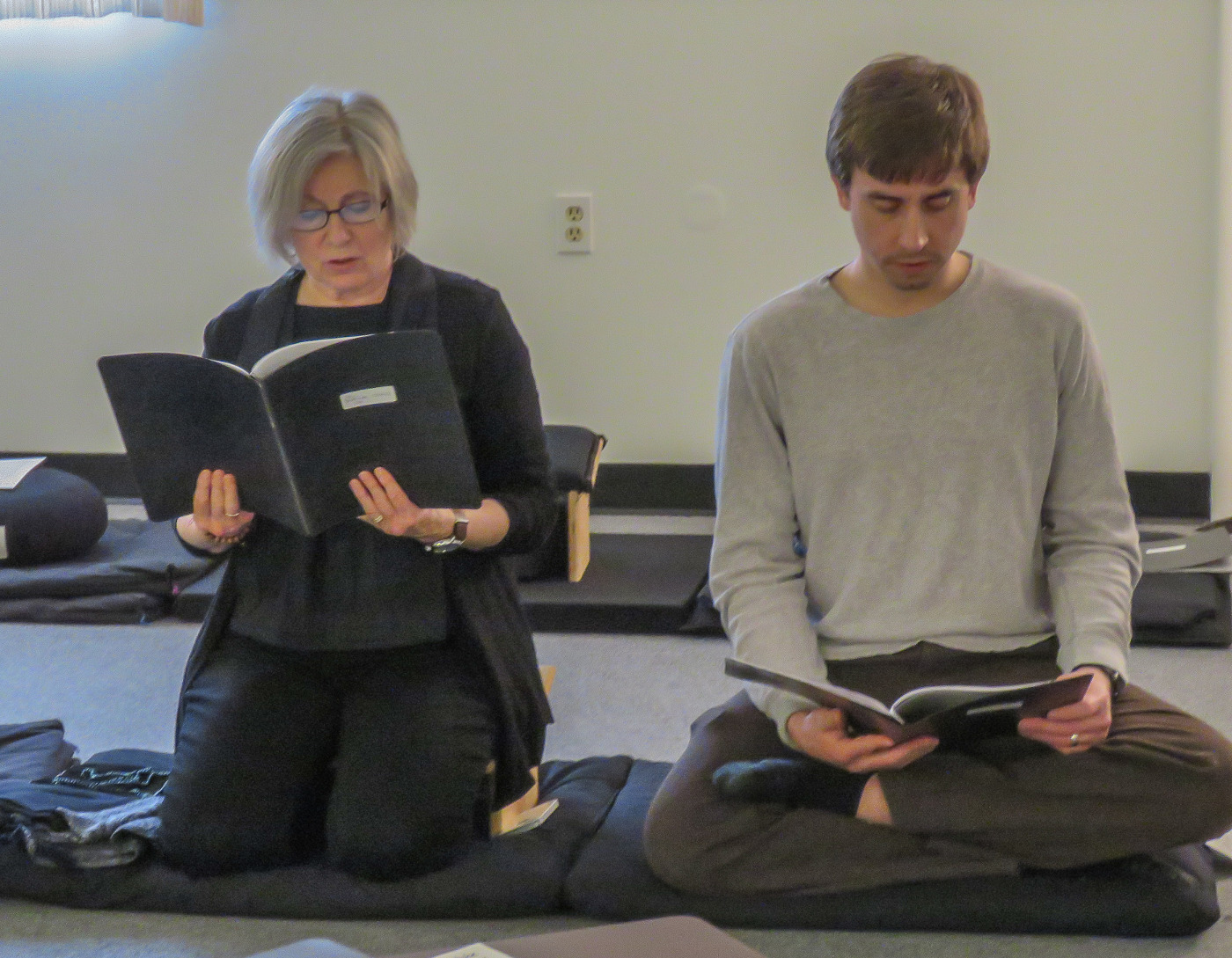
Part 3 of the Importance of Sangha (see Part 1 and Part 2):
Forming Dharma Friendships
Most of us also find social connection within a Sangha. It’s very precious to end up with friends who share your aspirations and the language of your spiritual practice. Personally, I find it very rare to have conversations outside of Sangha that are as deep and meaningful as the ones I regularly have with what I call “my dharma sisters and brothers.” I remember being amazed when I first joined a Sangha that adults anywhere would get together, admit they weren’t perfect, and sincerely discuss their aspirations to work toward greater wisdom and compassion. I continue to be amazed that I can talk with people in the Sangha about the profound bliss that can be found gazing mindfully at a spot of sunlight on the carpet… and have them understand!
Practice in the midst of everyday life is challenging, and it can be valuable to have a trusted friend – or two, or three – to talk to about it. Friends can give us inspiration, encouragement, and comradery – and sometimes they’re the ones who can ask us the most useful questions. A teacher may be of some support to us, but sometimes it’s easier to be totally honest with friends – we let them hear us complain or despair or express anger. A good Sangha friend will hold what we say in confidence, without judgement, but also without entirely believing us, either. They know our aspirations and encourage us to remember them. In the Mitta Sutta, Shakyamuni Buddha described a good friend:
“He gives what is beautiful,
hard to give,
does what is hard to do,
endures painful, ill-spoken words.His secrets he tells you,
your secrets he keeps.When misfortunes strike,
he doesn’t abandon you;
when you’re down & out,
doesn’t look down on you.”[1]
Another profound aspect of Dharma friendship within Sangha is that gradually, over time, the people in Sangha get to know us. If we allow it to happen, we end up being seen for who we really are – including our strengths as well as our weaknesses. It can be incredibly healing and encouraging to find we’re still accepted by the Sangha despite the end of our anonymity, and regardless of the fact that – eventually – we let our guard down or fail to keep our act up. Many people carry around the fear that they will be rejected if others find out what they’re really like – but wonderfully, that fear tends to be unfounded because we’re our own worst critics.
Taking Responsibility for Our Social Issues and Reactions
Of course, while it’s lovely to think about Dharma friendships and healing acceptance, few people find social interactions easy. In fact, the realm of interpersonal relationships and communication is one of the most challenging places to practice! It brings up all kinds of issues for us: the need for validation and approval, sensitivity to criticism, judging others, competition for popularity, fear of rejection, avoidance of intimacy… you name it. Whatever social neuroses, habits, and conditioning you had before encountering Sangha, you’ll bring with you when you participate in one.
For all their aspirations, I don’t know that Zen and Buddhist practitioners are, on average, any more socially skillful that anyone else. In fact, Zen in particular tends to attract introverts because the central practice involves silent meditation – so it’s not at all uncommon for people new to a Sangha to end up standing awkwardly by themselves during informal social breaks! The introverts who have been in the Sangha longer have finally managed to find friends, and the last thing they want to do is try to chat up a stranger. If you find yourself feeling socially awkward or isolated in a Sangha, the best thing to do is find someone who looks even more awkward and isolated and offer a friendly word.
What’s beautiful is that, within the Sangha, we have a wonderful opportunity to examine and work through our social issues. The basic premise of Buddhism is that we’re responsible for what happens within our own minds and hearts – that we’re touched and influenced by the world around us, but ultimately nothing outside of us has to make us feel or react in a certain way. When we’re practicing, we look within ourselves for the cause of a negative feeling or response before we place the blame outside.
Therefore, it’s not enough just to say you don’t like someone; you need to ask yourself what within your own mind causes that reaction. It’s not enough to say you don’t like a certain social environment, you need to explore what makes you uncomfortable about it. Once people have been doing Sangha practice for a while, they’ll be asking themselves the same thing, about their reactions to you.
The result is an environment where, for the most part, people aspire to accept and embrace all Sangha members equally, and then take responsibility for their own negative feelings and reactions. Naturally you’re going to gravitate toward particular people, but the background aspiration, based in Buddhist practice, is learning to let go of our attachments and preferences, and to treat all beings with openness and compassion. Particularly if you struggle with social anxiety, this invites you to relax, because if someone has a negative reaction to you, that’s their practice. If their reaction is about something you’ve said or done that needs to be addressed, it’s their practice to let you know. You can stop worrying about others, and focus on what you can influence: your own mind.
[1] “Mitta Sutta: A Friend” (AN 7.35), translated from the Pali by Thanissaro Bhikkhu. Access to Insight (Legacy Edition), 4 July 2010, http://www.accesstoinsight.org/tipitaka/an/an07/an07.035.than.html.
0 Comments
Submit a Comment
You must be logged in to post a comment.
The Importance of Sangha Part 2
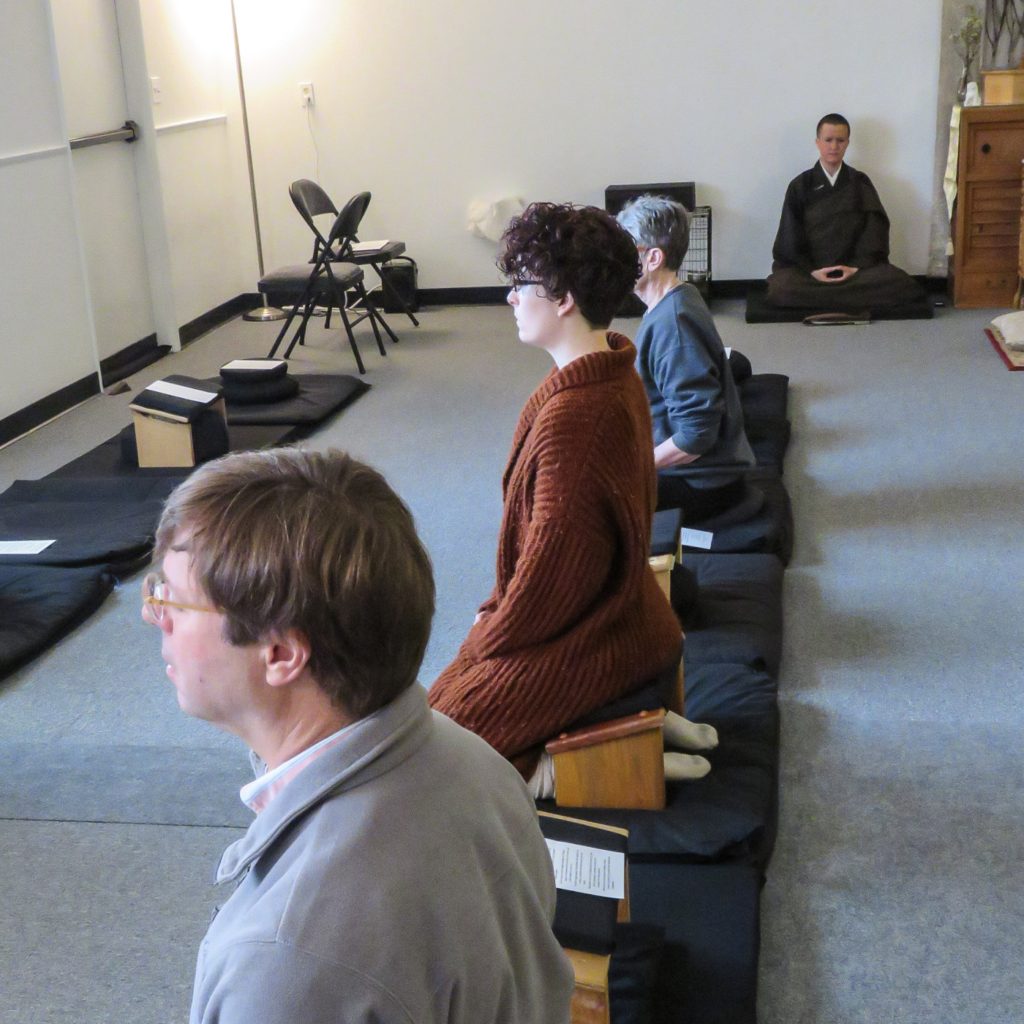
We learn from sangha when our ideas are challenged – and the most important ideas that get challenged in the midst of Sangha are ideas about Sangha.
Challenging and Clarifying Our Understanding
Even if you’re a really self-disciplined person and don’t need others to keep your practice strong, and even if you feel you can learn everything you want to know about Buddhism from books, there are still important reasons to practice with Sangha. The first of these is that our ideas about practice get challenged when we encounter teachers, peers, and people who have been practicing longer or more intensively that we have. It’s like attending a class on something; through the interactions with others and by engaging the material in a social situation, we’re exposed to new ways of looking at things.
We may think we’ve understood a teaching or practice but then find out our ideas are incorrect or incomplete. When we’re questioned by a teacher or Sangha member and try to give an answer that reflects our understanding and experience, we may struggle for words and realize we haven’t clarified something for ourselves as much as we thought we had. Even coming up with a question is a valuable process, as we have to look inward and find the edge of our understanding.
Frequently, the questions and experiences of others in the Sangha – whether seniors, peers, or newcomers – helps us realize something. It’s amazing how often I say something over and over as a teacher, but a student won’t really get it until another Sangha member says more or less the same thing, but in different words and from a different perspective. Overall, participating with other people in Buddhist study and practice can teach us a lot.
Accepting We’re All Just Ordinary Beings
However, in case you hear this and expect Sangha discussions to always be deep and edifying, I should point out that the most important ideas that get challenged in the midst of Sangha are ideas about Sangha. That is, ideas about how Buddhist practitioners should think and act – including ourselves. Sometimes people feel disappointed when they first participate in Sangha because these supposed Buddhists don’t seem to have very deep understanding, or they’re still rather opinionated, rude, or oblivious when they communicate. Sangha members may reveal weaknesses, mistakes, problems, confusion, and doubt – and these things can make us doubt the efficacy of the Buddhist path, or deflate the hope we had that Buddhism would solve all of our problems and quickly make us into gracious, enlightened beings.
I had been part of a Sangha for a year or two and was hard-core into Zen when I overheard someone ask one of the senior practitioners, “How have you been?” The senior was a woman I admired who had practicing for 10 years or so, and she responded, “I’ve been awful!” I was surprised, confused, and disappointed – how could someone who had been practicing for 10 years feel awful?!
After many years, I realized and accepted the fact that Buddhist practice doesn’t relieve us of our humanity. We still make mistakes, have weaknesses, and encounter problems. We still feel, from time to time, sad, depressed, confused, and discouraged – but practice lets us see that we are larger than these experiences; they come and go, and don’t define who we are. We learn to face our issues head-on rather than distract ourselves or live in denial. We become more honest with ourselves and others. We accept ourselves and our humanity, and ironically taste enlightenment as we do so.
In the context of Sangha, this is what we should look for: Humble people who are working hard, not people who are already perfect. As the 18th century Japanese Zen master Hakuin wrote, “As with water and ice, there is no ice without water; apart from sentient beings, there are no Buddhas.”[1] We may hold an ideal of Buddhahood that contrasts greatly with the imperfect, fallible people we encounter – but Buddhas are nothing other than imperfect, fallible people who have awakened!
[1] “The Song of Zazen” by By Hakuin Ekaku Zenji (http://dharmamind.net/readings/the-song-of-zazen/)
0 Comments
Submit a Comment
You must be logged in to post a comment.
Three Practices for Buddhists in Troubled Political Times

A priest and leader of a congregation needs to be thoughtful about when to speak up about “political issues,” but I want to offer three practices for Buddhists in troubled political times.
Why now? At a certain point, things happening in political spheres become moral issues, and our Zen Buddhist practice becomes directly relevant. We need our practice to maintain sanity and perspective, but our practice also calls us to Right Action and the path of the Bodhisattva. And let’s not forget, the central champion of Zen is Truth itself.
Right now, those in power are denying the fact of human-caused climate change and rolling back environmental protections that were already too little, too late to prevent worldwide suffering and chaos. Five million people are facing starvation in Africa, but the U.S. is planning to cut aid in order to place America First. People of color are once again being scapegoated as we target Muslims and undocumented Latino immigrants, as if excluding them from our country will be able to prevent terrorism and fix our deep, systemic economic problems. The U.S. has just given North Korea – one of the most dangerous and volatile countries in the world – an ultimatum, while our Commander in Chief is someone who reacts angrily to parody and determines foreign policy by Tweet in the middle of the night. If the current administration’s budget gets accepted, seniors will go without meals and infants without formula so we can build an incredibly expensive wall on the Mexican border to prevent illegal immigration just when such immigration has fallen to the lowest levels in nearly 50 years. Facts don’t seem to matter, and compassion seems to be out of fashion.
What can we do, as Buddhists? Three things.
First, we keep our Buddhist practice strong: sitting zazen, spending time with Sangha, practicing mindfulness in our everyday life, studying the Dharma, periodically renewing ourselves in the space of a meditation retreat. We have to take care of ourselves and our lives in order to do the next two things to the best of our ability.
Two, we keep ourselves informed. This is the practice of Avalokiteshvara, the bodhisattva of compassion, who “perceives the cries of the world.” Sure, it can be overwhelming and depressing. Sure, we need to take a break sometimes, consider carefully what news sources we consume, and find the dynamic middle way between bad-news-overload and putting our heads in the sand. But this is our obligation as bodhisattvas and citizens of the world. It’s not always easy to witness! (Click here for a post I wrote about what happened to Avalokiteshvara when he was overwhelmed by the suffering of the world.)
Three, we do something to change our world and come to the aid of suffering beings. Anything! But the more active the doing, the more it brings us into contact with others, the better! Why? Not only because we might benefit someone else, but because it’s the best medicine in the world for denial, overwhelm and despair. As Buddhists, we are not limited to a doctrinal playbook. We observe what relieves suffering, increases wisdom, and strengthens compassion – and then we do it. If exercise relieves your depression, then exercise needs to be part of your practice. If writing poetry increases your sense of appreciation for your life, than make writing poetry part of your practice. If gardening keeps you present in your body, your gardening is Zen practice.
Activism expands your focus beyond your own life, and directly counteracts passivity and a sense of helplessness. Once you find something to do, you can put aside grief and worry in order to devote yourself to your task. Periodically, of course, you need to ask yourself if you can do more, or whether your time and energy would be better spent elsewhere. But only periodically. The rest of the time you can find some solace in knowing you’re doing what you can, and supporting others in the fight for compassion and justice.
A lovely side-effect of activism? Community building! It lets you get to know people outside of your regular circles. I’m new to activism myself, and was delighted to find my local Indivisible Group – a bunch of concerned and defiant neighbors of mine who gather regularly to learn, support one another, and enjoy beverages, snacks, and humor!
Photo credit: By Kathryn Kendall, of a #SomosPortland action in November 2016.
What Is Meant By Zen “Practice”?

If you have spent any time in a Zen community, or reading Zen books, you will have encountered the term “practice” countless times. Zen ancestors and teachers exhort us to practice diligently. Fellow practitioners talk to one another about their practice: “I have been practicing 20 years,” or “I just started practice,” or “Lately my practice has been focused on an acceptance of change.” We say it is hard to practice without a Sangha, or community. When facing challenges in life, we say, “It’s good practice.”
If you asked 100 Zen practitioners what they mean by “practice,” you probably wouldn’t get 100 different answers, but you would probably get about 25 different answers. With the word “practice,” some people are referring specifically to the things they do that can be clearly identified as “Zen,” like study of Buddhist texts, participation in Sangha, or meditation. Most include these things but also are referring to the day-to-day efforts they make in their own minds and hearts to understand and/or manifest Buddhist teachings.
Knowing my definition will change over time, I’ll nonetheless take a risk and offer a definition of “practice:” inquiry and behaviors undertaken to address and resolve one’s deepest questions, longings and fears, in order to live the best possible human life in a spiritual sense. Below I will explain this definition, phrase by phrase.
Inquiry and behaviors: In general there are two paths of practice, understanding and manifestation. Inquiry leads to understanding, and the adoption and cultivation of certain kinds of behaviors leads to manifestation. Many people have more affinity for one path than the other. Some of us want to understand – not just in an intellectual way, but also in a deep knowing that comes from personal experience – before we fully commit ourselves to action. Others of us are primarily drawn to manifestation or action and want to start living out our values and aspirations as soon as possible; understanding can come later as a side effect or bonus. Of course, most people are interested in both understanding and manifestation, and ultimately our practice must include both. The Buddhist ancestors have taught many times that no matter what behavioral practices you adopt, if you don’t understand the great matter of life and death you will not really have achieved liberation. On the other hand, what good is understanding if you don’t manifest what you have learned?
Undertaken to address and resolve one’s deepest spiritual questions, longings and fears: Our secular societies and other spiritual traditions typically offer us two options with respect to these issues:
- Don’t ask troubling questions, there aren’t any answers, so just try to fulfill your longings and cope with your fears; and
- Here are the answers to your questions, as well as instructions for what to do about your longings and fears.
Zen is a radical tradition in that is proposes:
- There are indeed answers to your deepest spiritual questions, including ones like, “What is the meaning of life?” and “How can there be so much good and evil in the world at the same time?” and there is no limit to the depth of the questions that can be asked and answered except your own courage and perseverance;
- It is possible to address and resolve your deepest longings and fears, including longings like those for meaning, security and connection, and fears like those of death, loss or annihilation, and again there is no limit to the depth of that which can be faced and transformed except your own courage and perseverance;
- The answers and resolutions cannot be taught to you by others or read in books, they must be personally explored and experienced. While Buddhist teachers have taught about the answers and resolutions for well over 2,000 years, you do not need to accept anything they offer without personal verification, and if you do, it will not be of nearly as much good to you as your own personal experience. Answers and resolutions occur, come into being, only when lived.
In short, Zen dares you to address and explore spiritual matters that may make you quiver in your shoes, and is a method, not a system of answers.
In order to live the best possible human life in a spiritual sense: What does this mean to you? According to one Buddhist teaching there are five kinds of “energies” within us, and for most of us one or two energies predominate. Each energy is associated with a different kind of spiritual preoccupation:
- intimacy (with other beings but also with everything we encounter)
- stability (or security, the sense of being real, strong and substantial)
- order (the universe has a structure that is, or should be, reflected in everything)
- efficacy (ability to move, act and interact with universe in a impactful and efficient or graceful way)
- transcendence (a sense of the “more” beyond the details of our everyday lives)
With each of these spiritual longings comes an accompanying set of typical fears and tendencies.
Whether the particular breakdown of human spiritual preoccupations offered above makes sense to you or not, it makes clear the variety of ways people will conceive of “living the best possible human life in a spiritual sense.” One person may think of living a moral life with a maximum of benefit, and a minimum of harm, to others. Another may think of rich, meaningful, intimate, brave relationships with family and friends, and an general open generosity to all beings. Another may think of developing a deep understanding of the universe and human life, and creating things that reflect their understanding of the beauty and order they have discovered. What is common to all of these is a liberation of human potential from the bondage of misunderstanding, longing and fear.
You certainly don’t have to accept my definition of “practice.” In fact, if you don’t, if you argue with it, it will be of just as much – if not more – benefit to you than if you find it true or useful. The important thing is engaging everything wholeheartedly in the spirit of practice – inquiry and behaviors undertaken to address and resolve…


0 Comments