

Remembering There’s Nothing We Can Do to Prevent Change
Sometimes I notice stress sneaking into my life. It starts accumulating under the surface of everything, making me irritable and somewhat sad. Usually this has to do with anxiety about the future. It’s important to note this anxiety is pretty unspecific and...
My First Protest Rally
Just thought I’d write a little report about my first protest rally. I’m guessing my readers will fall into two basic categories with respect to protests: Either you have attended them before and they’re no big deal to you, or you haven’t...
Back to the Drawing Board with Meditation for the Homeless
I thought it would be a good idea to post an update on my efforts, chronicled earlier on this blog, to work up close and personally with people experiencing homelessness. My downtown Portland meditation group is on a hiatus as I go back to the drawing board to create...
When It’s Time to Speak Out as a People of Faith
Last week one of the largest Zen Centers in the U.S. published an open letter urging California governor Jerry Brown to ban hydraulic fracking in the state. I was thrilled, but not all Zen folks will be, even if they agree on this particular issue. Speaking out as...
Three Ways Activists Alienate People – and What They Can Do about It
If, like me, you want to be an effective activist, it’s good to keep in mind how you’re liable to alienate people instead of getting them on your side. Activist are people who are actively trying to bring about change in the world. Ideally they also try to be...
We’ve Got to Passionately Love Life Itself
I’ve heard folks speak in placid tones about suffering and destruction due to climate change, widespread poverty and inequality, and the mass extinctions of species. It’s as if they have passed judgment on humankind and decided the degeneration of our...

The Power of Questions
Last Sunday we read chapter one, “Zazen as Inquiry,” from Taigen Dan Leighton’s Zen Questions: Zazen, Dogen and the Spirit of Creative Inquiry. Leighton writes:
“What are we doing in zazen? Each of us have some question that somewhere back there was behind our wanting to engage in this Buddhist meditation. What question has led you to face the wall in zazen, what is this? There is a question that we each have to explore.”
The World Needs the Concept “Bodhisattva”
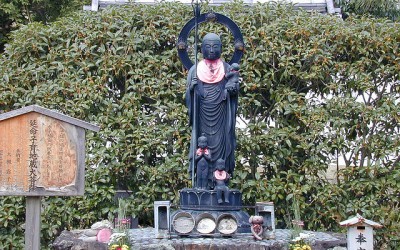
I hope that everyone who reads this will embrace the concept of a “bodhisattva” and share it widely, regardless of your interest in Buddhism, because I think it’s what the world really needs.
I’ve tried long and hard to come up with some way to translate the Buddhist term “bodhisattva” into something familiar, secular, and English, but I haven’t had any luck. It takes whole sentences to describe what a bodhisattva is…

Bursting the Mindfulness Bubble
A misguided practice of mindfulness can lead to an unfortunate restriction in my engagement with life – to the detriment of myself and others, particularly when it comes to social responsibility. It invites me to create a manageable mindfulness bubble around myself – reaching no further than my immediate surroundings, existing only this moment, and centered on my body…
Zazen as Practicing Great Ease and Joy
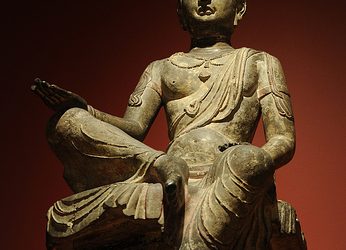
Sometimes, when I find zazen challenging or dull, I engage it as a practice of trying to be completely joyful and at ease in this moment - just the way life is right now: in this body, with these aches, bad habits, and unfinished projects, in this moment's confusing...

Do All Beings Have Buddha Nature? No.
In one of the most famous Zen koans, a monk asks Zen master Joshu whether a dog has buddha nature. According to Buddhist teachings, all beings have - or are - awakened nature. This may be interpreted as saying all beings have the potential to awaken to reality and...
Am I Practicing Hard Enough?
If you think of yourself as having a Zen practice, you should regularly ask yourself this question. On the other hand, if the question stresses you out, you’re missing the point of Zen practice.
I am coming to believe that the essence of Zen is learning to embrace paradox. This means learning to fully engage with life even when you encounter a situation where two apparently contradictory things are simultaneously true. In paradox, it’s not that one thing is sometimes true and the opposing thing is true at other times. It’s not that the situation looks a particular way from one vantage point, and looks another way from a different vantage point. In paradox, both things are fully true at exactly the same time.
When you consider how hard you’re practicing, the paradox is this:
You can always practice harder, and should, and
Perfect, complete practice is always – and instantly – available to you this very moment.
Let’s examine both sides of this paradox, and then how real practice is about fully actualizing both.

The Experience of Less-Self
Excerpted with permission from Idiot's Guides: Zen Living by Domyo Burk --- As I mentioned earlier, you can’t recognize when you are living without the filter of your self-concept. The moment you think, “Ah, here I am, experiencing no-self,” the self-concept is...

Random Violence: a Symptom of Society’s Fatal Illness
When the shit first really hits the fan, denial is a natural human response. It’s not that people don’t care, it’s that they care so much. The possibility that there’s nothing they can do to help the situation is too terrible to face. This is...
Dispelling Illusion
Excerpted with permission from Idiot's Guides: Zen Living by Domyo Burk No matter how many things you recognize are not part of your self-essence, you can still persist in believ-ing you have one. After all, it just feels like you do. Even if you manage...
The Empty World
Excerpted with permission from Idiot's Guides: Zen Living by Domyo Burk One Big Reality One of the first things you realize once you get a good look at reality is that a lot of the things you previously thought were real were simply your concepts about the world....
What Self to Have Faith In?
A commentary on Zen Master Lin-chi's teaching. Quotations are from Chapter 11 of The Zen Teachings of Master Lin-chi, translated by Burton Watson (New York, NY: Columbia University Press, 1993) The Master instructed the group, saying: Those who study the Dharma of the...
Provocative Zen Teachers
Some Zen teachers are pussy cats, and some are tigers. Some are emphatic, some are ambiguous, some are dogmatic, and some eschew all dogma. Which Zen teachers are right? When you are still searching for a teacher to trust, this may feel like a very important question....
Enlightenment as Choice, Not Skill
You can choose to be enlightened this moment. Your enlightenment does not depend on any skill such as the ability to concentrate, the ability to stay in the present moment, or the ability to overcome your attachments. Perfect Zen meditation, or zazen, is the same...
What’s the Good of Zen Teachers?
Why, in a tradition like Buddhism in which you are supposed to verify everything for yourself, is there such an emphasis on Teachers? In Zen our relationships to teachers are complex and multilayered. Relationships with teachers, whether brief and informal or...
Why Offer Zen without Religion?
The religious elements with which Zen is often presented may prevent many people from hearing what it has to offer them. This is unfortunate. Most people, religious or not, hold at an intention to learn and grow throughout their lives. Yet few people are aware that...

“Religious” Versus “Spiritual” Versus “Practicing Being Human”
Many people will say, “I’m spiritual, not religious.” What does this really mean, and what significance do these concepts have in our world? When people describe themselves as “spiritual” they usually mean that they pay attention to aspects of life beyond our personal...

When Religion Refrains From Explaining “Why”
If religion’s purpose is to help people find peace and strength and to live good lives, which I believe it is, it makes sense that people would turn to religion to explain why terrible things happen in the world – particularly terrible things that happen to...
Why Meditate for Eight Hours a Day for Six Straight Days?
Periodically Zen Buddhists gather for sesshin, or 5-10 day silent meditation retreats. During sesshin participants follow a rigorous schedule from dawn until dusk that includes 5-10 hours a day of seated meditation (and sometimes more). Sesshin is a powerful tool for...
Step One – Commit to Stillness, Don’t React
Click here to read this post on Patheos.com
The Courage to Face Our Shit
Every time we sit down in meditation we are challenged to face our shit. What is really going on in our body-mind? What ideas are we stubbornly holding onto? What are we afraid of? What would we rather not deal with – anger, resentment, longing, dissatisfaction,...
Belonging
I spent last week at a conference for Soto Zen priests. There were 90 of us at the Soto Zen Buddhist Association (SZBA) gathering. We were defined as much, or more, by our differences as by what we held in common. In the 45 years or so that Soto Zen has been...
Not Misunderstanding Dukkha
Have you ever heard someone - usually not a Buddhist practitioner - summarize the central Buddhist teaching as “life is suffering?” Sometimes people end up with the impression that the Buddha’s teaching was something like this: “Generally...
A Personal “Translation” of the 16 Bodhisattva Precepts
In working with the Precepts, I have found it useful to “translate” them for myself, using words that capture, for me, the flavor of how each Precept manifests in my life. I imagine that every person will have their own translation of each Precept,...
Spiritual Longing
Spiritual longing, like any desire, can cause great distress and be an obstacle in spiritual practice. It also is a great force that can propel us along a difficult path and drive us to investigate the deepest and scariest spiritual questions, so I heartily encourage...