


What Zen “Acceptance” and “Non-Attachment” Really Are
What does it mean to practice acceptance and non-attachment? We stop resisting the way things are. This describes how we engage the present moment with our whole body, mind, and heart. It describes our subjective experience as a human being. It’s a practice, not a moral principle or belief.
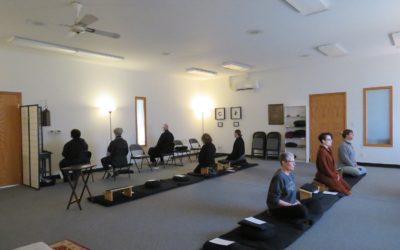
Our Zazen Is the Most Profound Thing We Do
Doing – or allowing – zazen (that is, shikantaza, or “just sitting”) directly challenges our normal, self-centered way of being. It asks us to be as alert and attentive as if our hair was on fire (!) even as we give up every single agenda, no matter how subtle. We let go of trying to improve ourselves, understand, feel more calm, gain insight, relax, everything. We even let go of “trying to be awake for each moment of our life” in a kind of greedy way. It’s amazing how pervasive and subtle our agendas are… there’s almost always one lurking below the surface if you look for it.

From the Individual to the Global Scale: Greed, Hatred and Ignorance Cause Suffering
For millennia, spiritual traditions have recognized that greed, hatred, and ignorance cause suffering in the human heart. Now it’s time to recognize that greed, hatred, and ignorance inevitably cause suffering at whatever scale they manifest: individual, family, community, national, or global. For too long we have separated our values from our economic and political systems…

Four Ways to Remain Open When We Witness Incredible Suffering
How do we remain open when we witness incredible suffering without being overwhelmed with despair? If we close ourselves off, we deactivate our conscience, hide out in denial and ignorance, reduce our sense of intimacy with all life, and let our heart atrophy. How do we walk the middle path that is neither denial nor despair? It’s possible, although it’s not easy…

The Practice of a Healthy Media Diet
If I look at my media consumption as a diet, I can mindfully monitor the state of my mental and physical health in order to know what to expose myself to, how much, and when. I don’t have to abstain completely because media consumption is pointless or harmful. Sometimes it is, sometimes it isn’t.

The Effort of Non-Effort (Meditation Is Not Something You Do)
I teach 8-10 new people to “do” Zen meditation every month. At times I feel kind of radical, but more and more I just want to tell them to sit still and do nothing at all. After 20 years of Zen practice, 14 years as Zen monk, and 5 years as a Zen teacher, I’m becoming deeply convinced that meditation is not something you do. Basically, just deliberately put yourself in the position of not doing anything, and the transformative and healing power of meditation takes care of itself.

Three Practices for Buddhists in Troubled Political Times
A priest and leader of a congregation needs to be thoughtful about when to speak up about “political issues,” but I want to offer three practices for Buddhists in troubled political times.

What Is Meant By Zen “Practice”?
If you have spent any time in a Zen community, or reading Zen books, you will have encountered the term “practice” countless times. Zen ancestors and teachers exhort us to practice diligently. Fellow practitioners talk to one another about their practice: “I have been practicing 20 years,” or “I just started practice.” I offer a definition of practice: Inquiry & behaviors to address & resolve one’s deepest questions, longings, & fears, to live the best possible human life.

Why Your (Real) Happiness Benefits Others
When we practice real happiness, we wake up. We notice everything – and not just what we can see and hear in our immediate environment. We notice the state of the world, and the state of our heart. We recognize calls to respond, and then our best response naturally arises. We recognize what’s ours to do, and we’re free to do it because we’re not caught up in our own misery, or in pursuing conditional happiness.

Questions Are More Important Than Answers
Everyone wants answers. We figure answers tell us how to live more happily. Answers let us fix things, while questions are simply problems to be solved with answers. Preferably answers come sooner than later because questions point to limitations in our understanding...