Select Page

A Soto Zen Pilgrimage

By: James Gregg
 
 
As both a frequent traveler and Zen practitioner, I was very happy to recently spend 2 weeks in Japan with my family.
Not only did we do the “tourist” thing, soaking in the uniquely Japanese experience, I also got a rare opportunity to touch the literal roots of our shared practice and lineage.
 
My first stop was to Daihonzan Sojiji, one of the two head temples of Soto Zen in Japan, and the place where our dharma great-great-grandmother Roshi Jiyu Kennett trained with Keido Chisan.
This temple is located in Yokohama, a short train ride south of the main metropolis of Tokyo.
I was only able to spend half a day here, but during that time was able to sit zazen and offer incense in the main Dharma hall, and I was able to see the wood-carved calligraphy by Keido Chisan over the door to the Butsuden.
As I walked towards the Sodo (the monk’s hall), I heard the sound of the bell ringing, and was able to listen outside the door as the monks performed a short chanting service, and then went silent, most likely practicing zazen.  It was comforting and wonderful to sit nearby as the monks went about their communal practice.
 
My next stop was in Fukui Prefecture, almost due west of Tokyo near the Sea of Japan, and an hour north of Kyoto.
Fukui is home to Eiheiji, the other head temple of Soto Zen, and the monastery established by Dogen Zenji in 1244 after he left Kyoto.
This monastery is where some of the later fascicles in the Shobogenzo were written, and where most of the sermons recorded in the Eihei-Koroku (Dogen’s Extensive Record) were given.  It was also Dogen’s final monastery, as he passed away during his tenure here.
We stayed 2 nights at Hakujukan, a hotel owned and operated by the monastery – where else will you see Dogen Zenji’s portrait hanging over the reception desk?  Instead of the Gideon Bibles we’re used to in American hotel rooms, our rooms were furnished with copies of Dogen’s “Zuimonki” and a treatise on Zen Buddhism, which were free to take!  The chef overseeing the restaurant’s menu was also the monastery’s head tenzo, so the meals we had there bore much resemblance to what the monk’s eat (albeit somewhat fancier).
 
Both mornings that I was there, I was invited to participate in the monks’ morning chanting service.
I arose at 4:00am and, along with a few other guests, met with a representative of the monastery in the hotel lobby.  We trekked 100 yards in the dark to the visitor entrance of Eiheiji, where we were turned over to one of the monks.  He led us up multiple flights of stairs (300 in all, I believe) to the “Hatto,” the highest building in the monastery and the primary Dharma hall.
 
Once we were seated, the monks began to appear, silently filing into the room, taking their places on the vast tatami floor.  I was surprised to see that the monks sat seiza (kneeling, sitting on their heels) directly on the tatami – no zafus or zabutons here!  Most of the monks wore the standard black robes, while a smaller group also wore beige okesas that indicated teacher status.  A monk stood in a large window that was cut out of one wall, intermittently striking a large bell.  After a few minutes, a small group of monks appeared, one of whom was holding an “inkin” bell (the same type we use for kinhin and our Three Full Bows), performing a call-and-response with the larger bell.
 
Finally, one of the vice abbotts appeared in a splendid bright orange robe and embroidered okesa.  He performed 3 bows at the haishiki (bowing mat), and offered incense to the large Buddha statue in the butsudan.  As the monks began chanting, we were instructed to stand up, make gassho and approach the butsudan, where we were allowed to offer incense as well.  I cannot begin to explain how it felt to be standing in Dogen’s monastery, walking past chanting monks, offering incense at the amazing and elaborate butsudan!
 It was at this point that I realized the woman sitting next to me was wearing a rakusu and was performing the 3 Bows and making gassho at all the right times – in talking to her later, she said she was from France, and a student at one of the zendos affiliated with the Association Zen Internationale, a Zen organization founded by Taisen Deshimaru, a disciple of Kodo Sawaki. 
Chanting service then began – we chanted the “Sandokai” (Harmony of Difference and Sameness, but in Japanese) and both the “Shosai Myokichijo Dharani” and the “Daishin Dharani,” exactly the same as we do them at Bright Way.  The choreography of simple acts such as distributing chant books and placing instruments, the attention to detail and care that was taken, was inspiring.
 
Once chanting service concluded, a few of the monks took us on a brief tour of the Butsudan (Buddha Hall), where they showed us statues of the 3 times of Buddha – past, present, and future – and the largest mokugyo drum and kesu bell I’ve ever seen.  They then took us to the Sanmon, or “mountain gate,” the gate that aspiring mendicants approach when they wish to enter the monastery to train.  Along one pillar of the gate was a board into which was carved a phrase that basically said “training here is very difficult, go away if you can’t handle it!” 🙂
We also visited the Joyoden, the hall containing a large black urn containing the ashes of Dogen Zenji, as well as the ashes of many of the later abbotts of the monastery.
 
Later in the day, we met again at the entrance to the monastery, and proceeded up to the 2nd floor of the main administrative building, where they have a special Sodo (meditation hall) designed for guests.  This room has the same raised tatami platforms on which junior monks sleep, eat, and do zazen in the main Sodo.  We received basic zazen instruction from one of the monks (which, of course, followed the edicts laid down by Dogen in “Fukanzazengi” and other treatises), and then sat zazen for about 20 minutes.
Obviously, I wasn’t able to get photos of either of these events, but I did return later in the day to get a photo of the Hatto where chanting service had taken place.
 
Afterwards, I visited the Eiheiji museum, which contained multiple artifacts from Dogen Zenji’s time.  The most impressive of these was a large scroll containing the text of “Fukanzazengi,” brushed by Dogen Zenji himself in 1233, when he was still in Kyoto.  This date and placement makes it one of the earliest copies of the text.  To see ink on paper and know that it was placed there by Dogen’s hand was an inspiring moment – so often it’s easy to forget that these teachings came from actual human beings who had struggled with their own karma and managed to break through and realize the Way for themselves.  Seeing physical evidence of their existence helped to confirm that we, too, are capable of awakening!
 
Finally, we traveled to Kyoto, where I was able to visit Daitoku-ji, the famed Rinzai Zen monastery famous for its gardens, and where seminal Zen figure Ruth Fuller Sasaki practiced and conducted research that was invaluable to some of the earliest translations of Zen texts into English.
 
Outside of my actual interactions with Buddhism and Zen – of which there were many more than I can recount here – the entire culture was obviously permeated with the spirit of Buddhadharma and Shinto practice: the respect for humility, respect, and quietude is evident even on the busy streets of Tokyo.
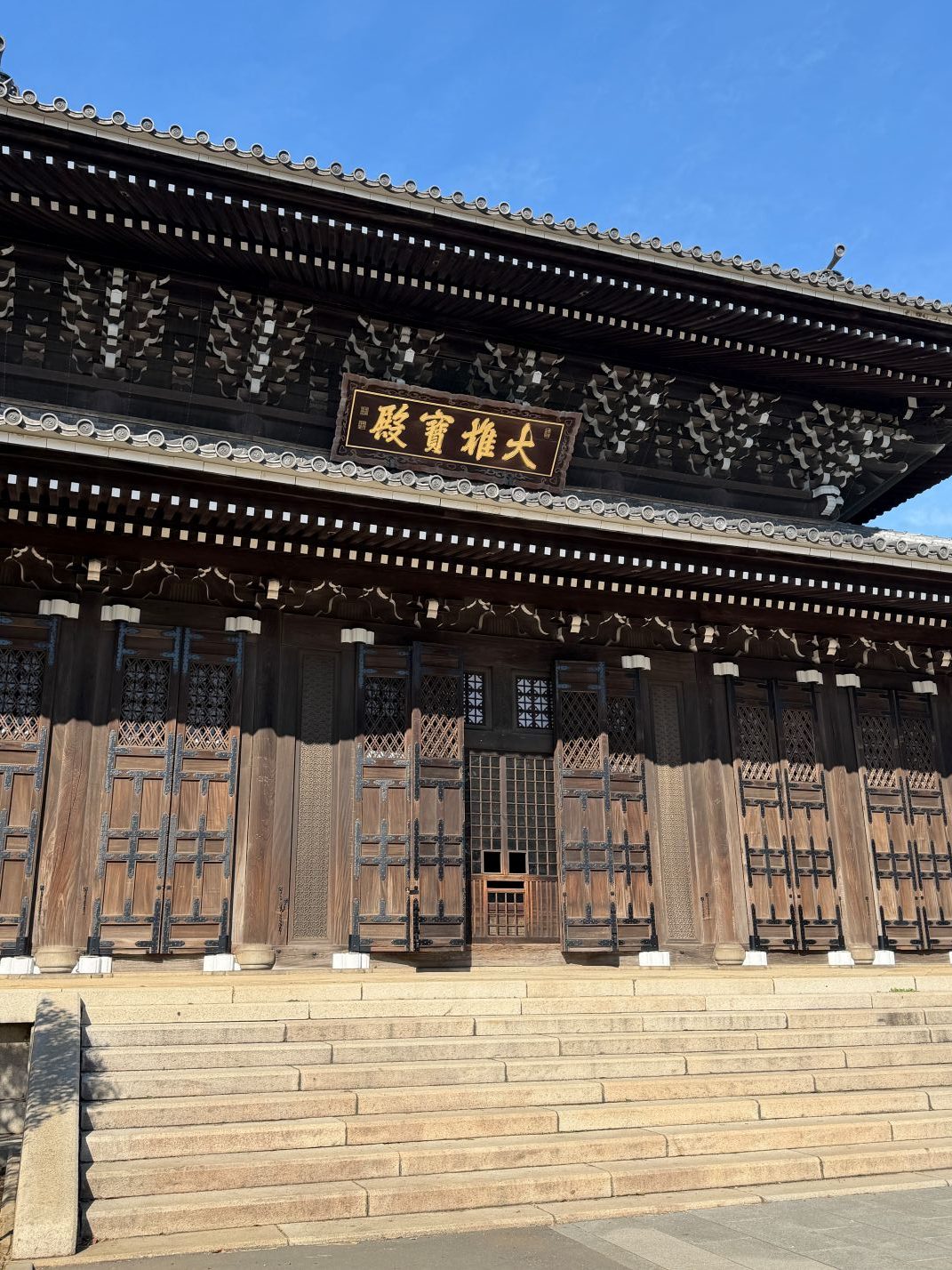


Sojiji – Butsudan showing Keido Chisan’s calligraphy above the door
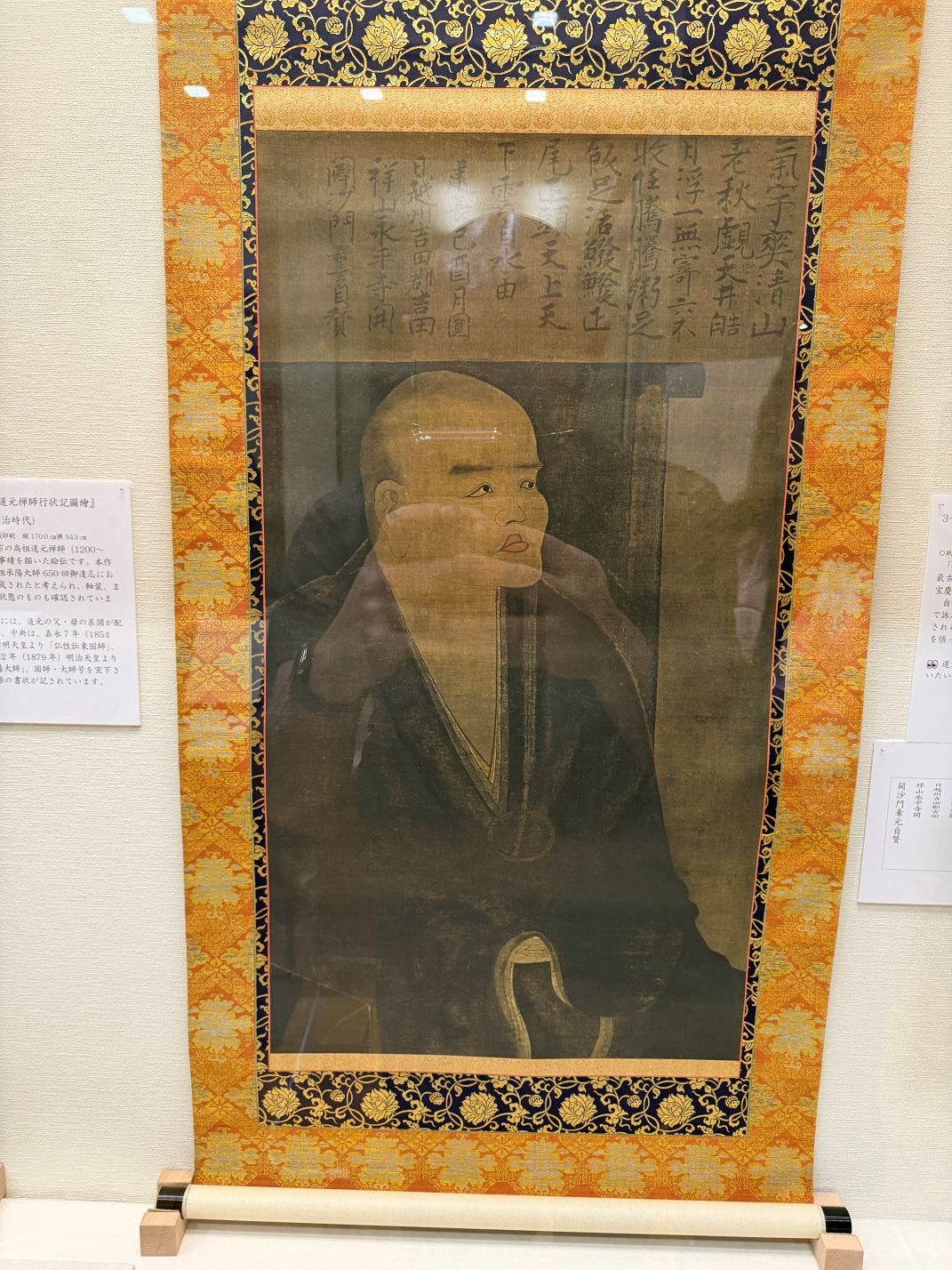
Sojiji – original artwork of the best-known portrait of Dogen Zenji
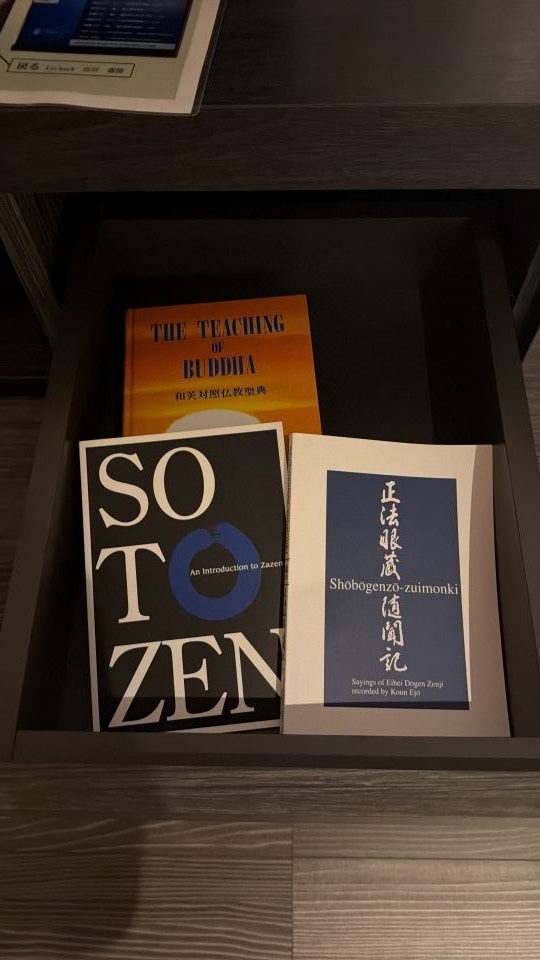
Eiheiji – Hakujukan hotel – no Gideon Bibles, but Zen books!
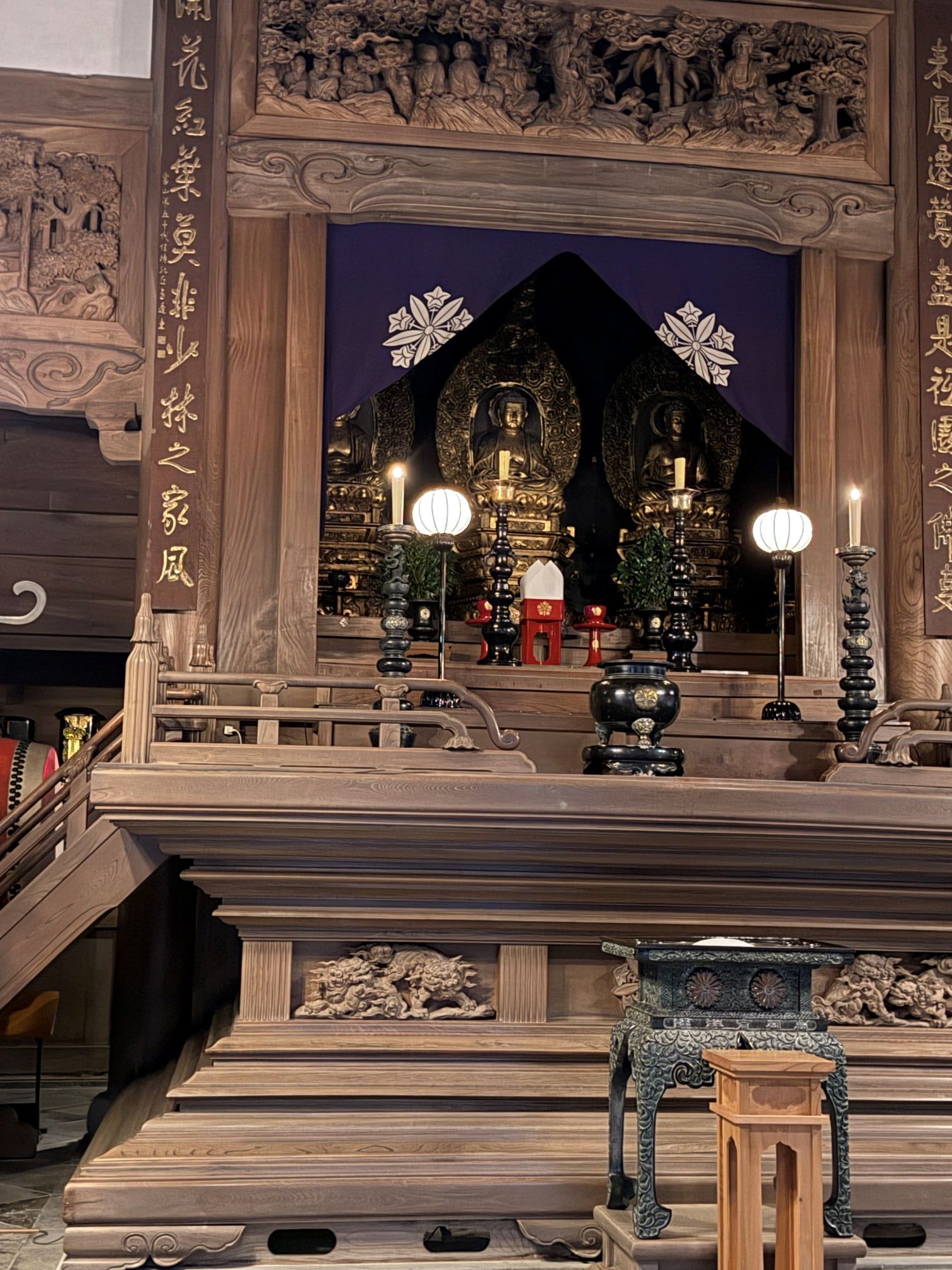
Eiheiji – 3 statues in the Butsudan showing of the 3 Times of Buddha
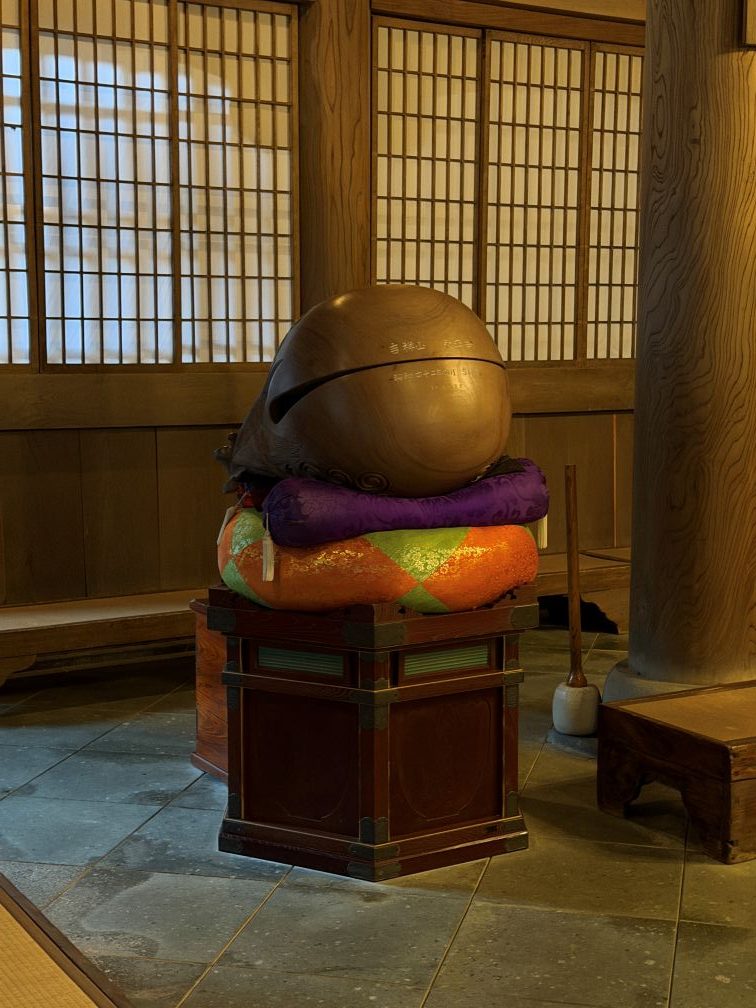
Eiheiji – giant mokugyo in the Butsudan
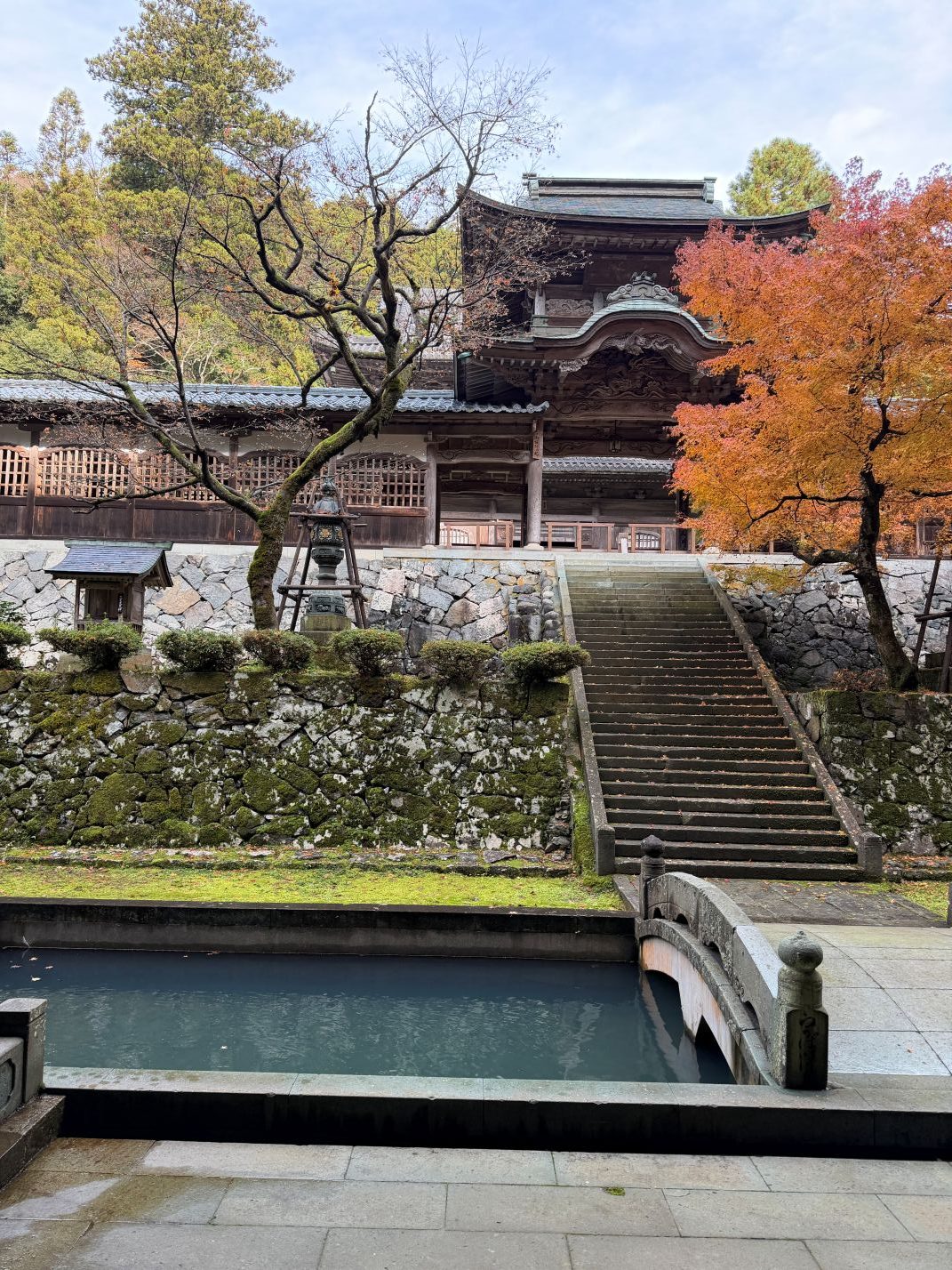
Eiheiji – from the Sanmon, looking towards the Hatto
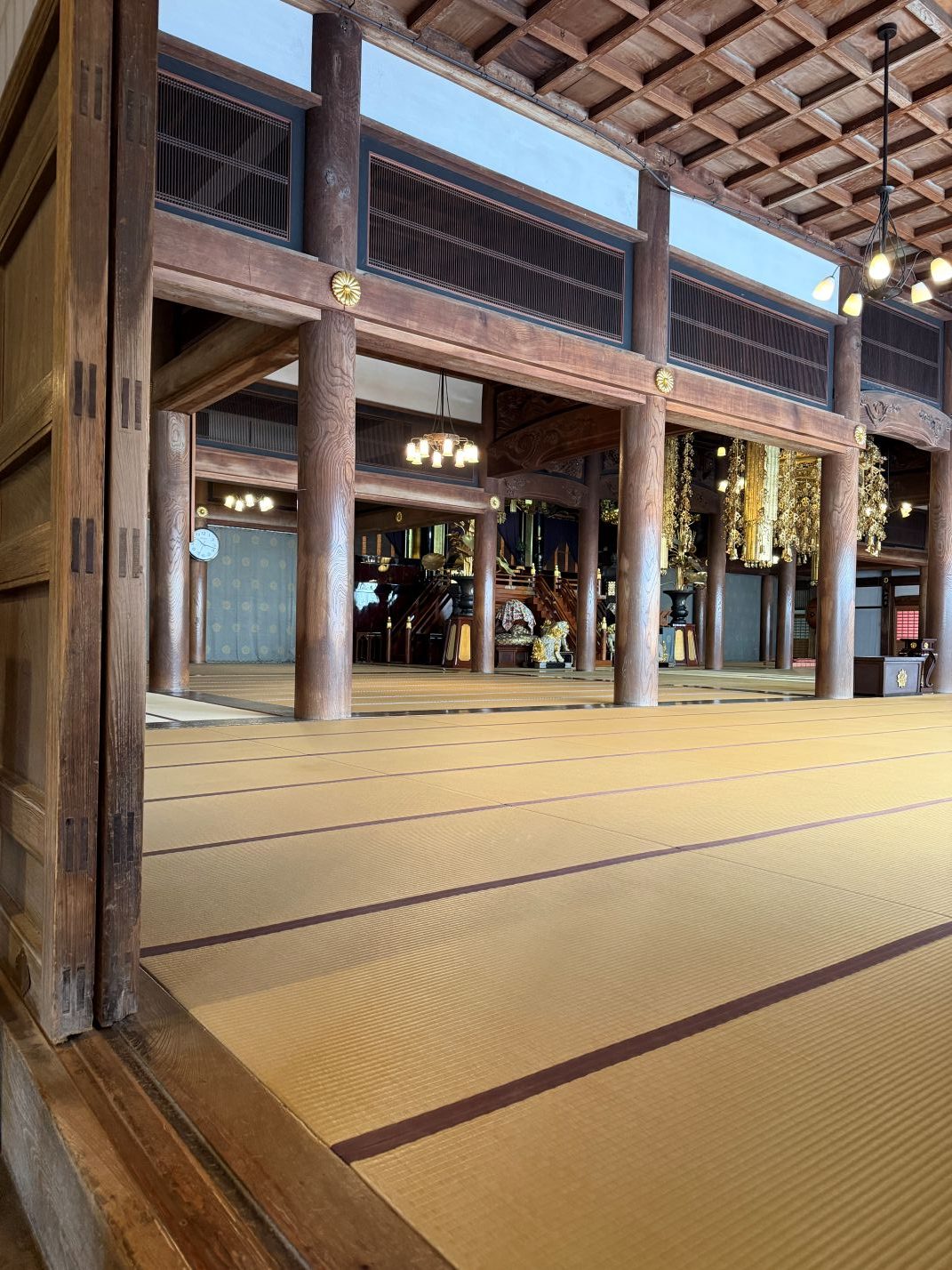
Eiheiji – interior of the Hatto, where I participated in morning chanting service and offered incense

Eiheiji – original manuscript of “Fukanzazengi” brushed by Dogen Zenji himself in 1244
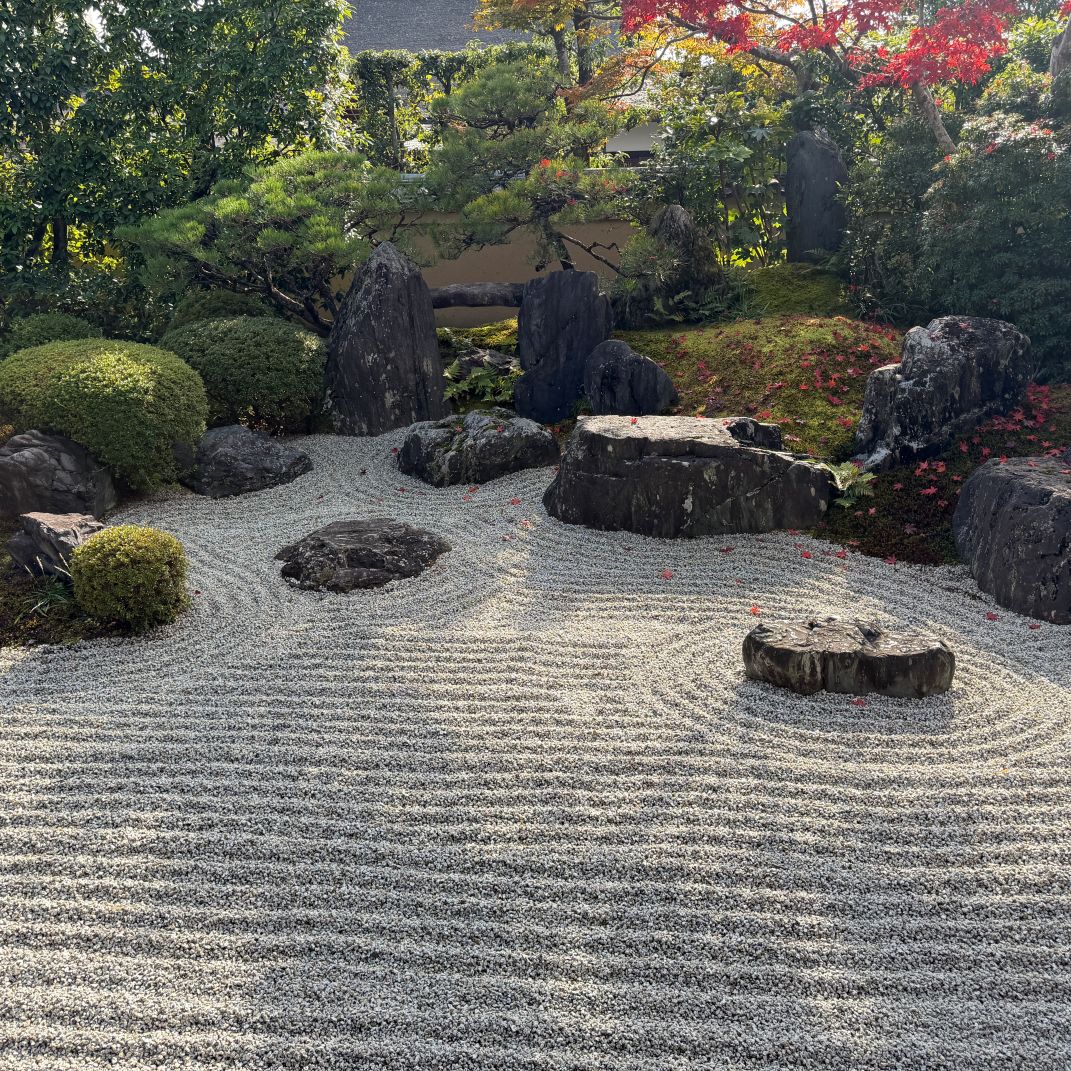
Daitoku-ji – Rinzai Zen monastery in Kyoto

Uselessly Doing Nothing: Zazen without Techniques

Last Tuesday we had a lively class discussion on zazen that went almost 30 minutes overtime!

First, we read the “Nothing to attain, Nothing to enlighten” chapter from Rev. Issho Fujita’s book Polishing a Tile.(1) Then we debated whether zazen should involve any techniques at all. Based on Fujita’s teachings (which are based on Dogen’s, as well as those of many great Soto Zen masters), I proposed that true zazen, or shikantaza, is letting go of doing anything. No breath counting or following. No attempt to control the mind, concentrate, be mindful, or “bring the mind back to the present.” Nothing but sitting there, which is the meaning of shikantaza: Nothing but  (shikan) precisely (ta) sitting (za).

Fujita and Dogen emphasize that zazen is not “meditation practice.” In Japanese, “meditation practice” is shuzen (shu is “learning” and zen is meditation). Of course, technically zazen means seated (za) meditation (zen), but in Soto Zen zazen refers to much more than that. Zazen is the dharma gate of joyful ease, returning home and sitting in peace, and “intimately contacting the true self.”(2) Shuzen is engaging a practice with our usual, limited, gaining mind – something done with a goal. Zazen has no goal at all, which is why it is so beautiful and profound.

What about the “dharma gate of joyful ease?” Isn’t that a goal? And don’t we need to do something in order to make that happen? (On Tuesday, one of our members put it this way, “I’ve always heard Zen and zazen have no goal, but it sure seems like it’s ‘no-goal-wink-wink.'” Like we cleverly reach our goal by pretending not to have one…)

This is why zazen is such a profound teacher: We can’t bear the thought of doing nothing. We’re sure, if we don’t at least try to “be present,” our minds will wander the whole time we’re sitting and we’ll utterly waste our time. After all, it’s nice when the mind calms down and we appreciate the present moment for a while. Shouldn’t we try to make that happen?

No. Any effort to make anything happen is not zazen.(3)

But when we really let go of doing anything, things don’t necessarily unfold the way we expect. If you really give yourself complete freedom in zazen, what will you do? You won’t spend the whole time planning grocery lists or worrying about money. Part of you likes being calm and present. You’ll do some of that. Habit energy will take hold of you at times, but this is all contained within zazen. What matters is not the content of zazen but the space you’re creating for it by just sitting. It’s turning toward reality with graciousness instead of self-interest – even self-interest around your meditation experience.

Fujita sensei describes zazen more clearly and beautifully than any other modern writer I know of – I highly recommend following the link below to read some of his writings.


(1) Polishing a Tile has not been published but is available to download as a pdf here.
(2) The first description is Dogen, the second is Keizan, the quote is from Fujita sensei.
(3) Zen practitioners (both teachers and students) will disagree with one another passionately about this, even within Soto Zen. I was once at Soto Zen Buddhist Association conference where a bunch of us stayed up late talking and ended up on the topic of whether zazen should involve any techniques. The debate got so heated a couple people needed to go off and check in with each other to make sure no serious offense had been taken. It was great.


Missing Kyogen Carlson and His Dharma

[I wrote this short essay in 2015; Kyogen Carlson passed away Sept. 18th, 2014, and we held our Founder’s Memorial ceremony for him last weekend.]

At my Zen Center last Sunday we read and discussed a beautiful teaching from Kyogen Carlson, one of my Zen teachers. It was from the chapter “Dharma Realm” in a little booklet Kyogen wrote called Zen Roots. I called this excerpt “Kyogen Carlson on the Cosmic Buddha.” We lost Kyogen suddenly last September to a heart attack, and rediscovering this teaching from him made me miss him terribly.

It isn’t so much that I miss him personally, in the sense of regular interactions, although he was generally a fun and interesting person to be around. Since I completed my junior priest training I had not seen Kyogen that often, so I can’t claim to be one of the many people directly impacted by his absence on a daily basis.

What I felt profoundly this last weekend was a longing for his Dharma. This “Dharma” includes his teaching, or his unique way of understanding and expressing Buddhism, Zen, and practice. However, that’s only part of it, because I had that aspect of his Dharma when I was holding his written teaching in my hands. The part that was missing was his living testimonial to the truth and reality of those teachings. His posture, his eyes, his physical expression that grounded the teaching in front of you in a provocative, encouraging, and indisputable way.

Anyone can write or speak teachings that sound pretty good. They may resonate with us, challenge us, or inspire us. But just because they sound good doesn’t mean they are true or effective, and just because we like them doesn’t mean we understand them. And then sometimes we don’t like teachings and we want to avoid them.

Then we encounter a true teacher like Kyogen – someone who verified for himself, through direct experience, what he taught. And someone who had achieved the spiritual maturity to abide peacefully in his understanding without needing to convince or convert others in an effort to feel more secure. Such a teacher gives you the opportunity to experience a full, embodied encounter with That-Which-You-Do-Not-Yet-Know.

Kyogen Carlson on the Cosmic Buddha” is his take on the Zen encounter with what Huston Smith calls “The More,” and what Kyogen’s teacher Roshi Kennett called the “Lord of the House.” Vaguely theistic imagery is often troubling to Zen students, and when I first encountered it in Zen I was definitively ambivalent. On the one hand I was intrigued by the idea of having some kind of transcendent experience, but on the other I was worried that this “woo-woo” stuff was a sign Zen was going to prove itself to be based on B.S. in the long run.

I went to Kyogen with my ambivalence, hoping he would tell me to ignore all of the references to the “Lord of the House” and the “Cosmic Buddha” in Roshi Kennett’s writings because they were irrelevant to Zen practice. He didn’t. He compassionately tried to explain the presence of devotion and theistic imagery in Zen (as he does so well in his essay), but he didn’t back down. There he sat, a thoughtful but slightly wry expression on his face, a concrete testimony to a reality I had not yet experienced.

There is much more I don’t understand, and much more Kyogen could have taught me just by living his truth.

Let’s value our living teachers!

How Physically Sitting Zazen Keeps the Precepts Perfectly

Parts in bold are from the text of the Bodhisattva Precepts; parts in italics explain how we keep a particular precept during the simple act of zazen.

The Gateway of Contrition

All my past and harmful karma,
Born from beginningless greed, hate and delusion,
Through body, speech, and mind,
I now fully avow.

A contrite heart is open to the dharma, and finds the gateway to the precepts clear and unobstructed.  Bearing this in mind, we should sit up straight in the presence of the buddha and make this act of contrition wholeheartedly.While we are sitting zazen, we are not running away, keeping ourselves busy, or distracting ourselves; we let our karma catch up with us.

Taking Refuge

I take refuge in the buddhaThis is what buddhas have done, so this is what we are doing.

I take refuge in the dharmaWhen we stop running away, keeping ourselves busy, or distracting ourselves, the truth becomes clearer; we are opening ourselves up to this possibility by sitting still.

I take refuge in the sanghaWe sit with others, or because others have done so and continue to do so.

The Precepts

Cease from harm – release all self­-attachment. We may not know what the right thing is to do, but we have stopped for a time.

Do only good – take selfless action. – We are engaging the activity of just sitting for the sake of all beings – we are not advancing any of our self-interested causes.

Do good for others – embrace all things and conditions.We give up trying to change anything for a time. Instead, we bear witness. We allow the truth to permeate and change us. We allow wisdom to grow within and inform our future actions.

Do not kill – cultivate and encourage life.We are not trying to get rid of what we don’t want, what we hate, or what we are afraid of.

Do not steal – honor the gift not yet given.We are not grasping after what we want.

Do not misuse sexuality – remain faithful in relationships.We are not doing anything to grasp or avoid intimacy, but instead we make it possible to notice a deeper intimacy with everything.

Do not speak dishonestly – communicate truthfully.We are not speaking, but are perceiving directly. Our truth of the moment is silent.

Do not become intoxicated – polish clarity, dispel delusion. – We are doing without distraction or extra pleasure.

Do not dwell on past mistakes – create wisdom from ignorance.Okay, we may be doing this in our minds. However, in this moment we are not making any mistakes. Over time we become more identified with this body, here and now, which is not defined by past mistakes.

Do not praise self or blame others – maintain modesty, extol virtue. – We are not saying or doing anything to build ourselves up or call attention to the faults of others.

Do not be mean with dharma or wealth – share understanding, give freely of self.Our time of just sitting is completely useless in worldly terms, but it’s still an offering. It’s an offering of listening and looking. It’s an offering of humility and don’t-know mind.

Do not indulge anger – cultivate equanimity.Sitting still is incompatible with anger. Don’t think so? Just try it!

Do not defame the three treasures –  respect the buddha,  unfold the dharma, nourish the sangha.However skeptical we may feel in our minds, our bodies are enacting the buddha way.


The Power of Questions

Last Sunday we read chapter one, “Zazen as Inquiry,” from Taigen Dan Leighton’s Zen Questions: Zazen, Dogen and the Spirit of Creative Inquiry. Leighton writes:

“What are we doing in zazen? Each of us have some question that somewhere back there was behind our wanting to engage in this Buddhist meditation. What question has led you to face the wall in zazen, what is this? There is a question that we each have to explore.

“The point of this practice of questioning, however, is not to discover an answer. We sit upright, centered, with ease and restfulness. And yet there is some problem, some question, something we are looking into. How do we practice with question? There is not just one way to do this, because each have our own version of this question. But we must recognize that there is a question. How do we live this life? How do we take care of this world, face the problems that we each have in our life, the problems that we share together?”

I talked about how most of our heart-felt questions – the ones we don’t just wonder about intellectually, but those we really care about – are related to one another. We may discriminate between “superficial” and “deep” questions, but usually even our superficial, specific, personal questions are related to our version of a very deep, universal question. For example, I may struggle on a daily basis with how to focus my effort efficiently without getting too caught up in striving, but that relates to a very deep question I carry about the nature of effort and action. Who does, if there is no inherent self-nature? How do we exercise choice in guiding the activity of our life?

I asked the other people present on Sunday to write down at least one real question they were holding, and said I would post them. Here they are, the raw and precious material people in our sangha are practicing and sitting with. It is important to hold these kinds of questions with reverence. They cannot be answered simply, or no one would be holding them. We may be inspired or influenced in our work with questions by things we hear, read, or see, but ultimately our answer is something we manifest within our being and it cannot be given to us by anyone else.

Please feel free to add your own question(s) by leaving a comment! (I think it would have been very helpful and encouraging to me as a child to read this kind of list of questions from adults, so I would understand that adults were still trying to figure things out and the world they were presenting to me was not the best they could come up with.)

Our questions:

Why do some people suffer so much?
How do I push beyond my limits?
When should I stop?
Why do I become anxious when asked to write down my question?
What is anxiety?
How do I respond to climate change?
How do I stay awake to my life?
What is the relationship between inner work and working for social change?
What should my practice look like?
Am I engaged enough? What if I get this question wrong?
What do I do now?
How can I best live my life? How will I know if I’ve succeeded in the best living of my life?
What will give the most meaning to my life?
How can I best serve?
Why am I here?
Would Shakyamuni Buddha have been sad if he were to die before being able to teach?
When one has no attachments, on what does one act?
How do we maintain the will to move forward with optimism and creative energy in the face of the pointless suffering that humanity must endure? Is this why “enlightenment” is so important?
Is compassion (love) real? Can everybody feel it? Does one have to work on accessing it? Why does it not arise spontaneously? Were we born just to realize it?
How should I be living my life?
If the answers have no certainty, why the need for question? Is faith embracing uncertainty? Can I embrace uncertainty?

Thanks everyone! – Domyo

Photo by Marco Bellucci

Random Violence: a Symptom of Society’s Fatal Illness

When the shit first really hits the fan, denial is a natural human response. It’s not that people don’t care, it’s that they care so much. The possibility that there’s nothing they can do to help the situation is too terrible to face. This is at least partly why so little has changed since the incomprehensible slaughter of 20 children at Sandy Hook Elementary School in 2012, even though random violence continues and is probably even increasing.

earth-2

Widespread random violence should be considered a conclusive sign that a society is suffering from a fatal illness. A society is coming apart at the seams when it contains a growing number of people who are so disconnected, lonely, and desperate they find gratification in seeking out and destroying completely innocent beings. Think about this. Sure, guns make the violence worse and need to be regulated. But for a moment, contemplate the internal hell that makes someone believe their best hope of relief is to see the life of child snuffed out in front of them – for no other reason than to see that life end. This isn’t about incidental killing during war, or being overcome with anger or aggression, or taking lives to make a political point. This is about a carefully contemplated hatred of life.

It’s a tragic mistake to vilify the individuals who commit random violence. Sure, every individual must be held accountable for their actions or placed where they can’t do further harm. But those who have acted out their hatred of life by killing are only the weakest among us and therefore the first to manifest the symptoms of our societal illness. When we simply label the perpetrators of random violence as “mentally ill,” we think we’ve solved the problem by placing it outside of ourselves, outside of our society. Instead, we create prejudice against a diverse group of people who suffer from mental illness, almost all of whom find random violence as unfathomable as everyone else does. We also create more alienation, hatred, and fear just when we need to be asking ourselves what is causing the most emotionally fragile and volatile among us to snap, and what we can do to help them.

What is our societal illness? We are so used to it we can hardly see it, so I’ll project our situation out a few decades.

Imagine this as an entry in history text:

The Industrial Growth Society
In the Industrial Growth Society, the comfort, pleasure, and freedom of individuals was prioritized over the health and long-term existence of the social and ecological systems on which all of life depended. Greater and greater material and technological productivity and ingenuity was encouraged by requiring individuals to compete with one another. People and nations who were successful in this competition ended up with more and more of the resources, and social systems were allowed to disintegrate because they ran counter to the self-interest of individuals. This resulted in a growing number of desperate people in extreme material or social poverty, some of whom committed extreme acts of random violence that demoralized whole nations. Inevitably, the industrial growth society self-destructed.

There are no simple answers because the answer is everything has to change. The whole way our society functions has to change. That said, we have to start somewhere, so lets get to work and help the following scenario come about:

The Life-Sustaining Society
The Industrial Growth Society was survived by the Life-Sustaining Society. It took a few decades to mature into full function, but its development was inevitable when people remembered that they could not function independently of one another, or of the systems in which they participated. People realized that the comfort, pleasure, and freedom of individuals had to be balanced with care for one another and for all living systems. They realized that the need for such care wasn’t an idealistic dream or an outdated spiritual idea, it was a real and practical necessity. Fortunately, much of the energy that individuals had previously spent competing with one another for resources was channeled into ingenious ways to restructure the society into a life-sustaining one.