Select Page

April 2026 Zaike Tokudo ceremony

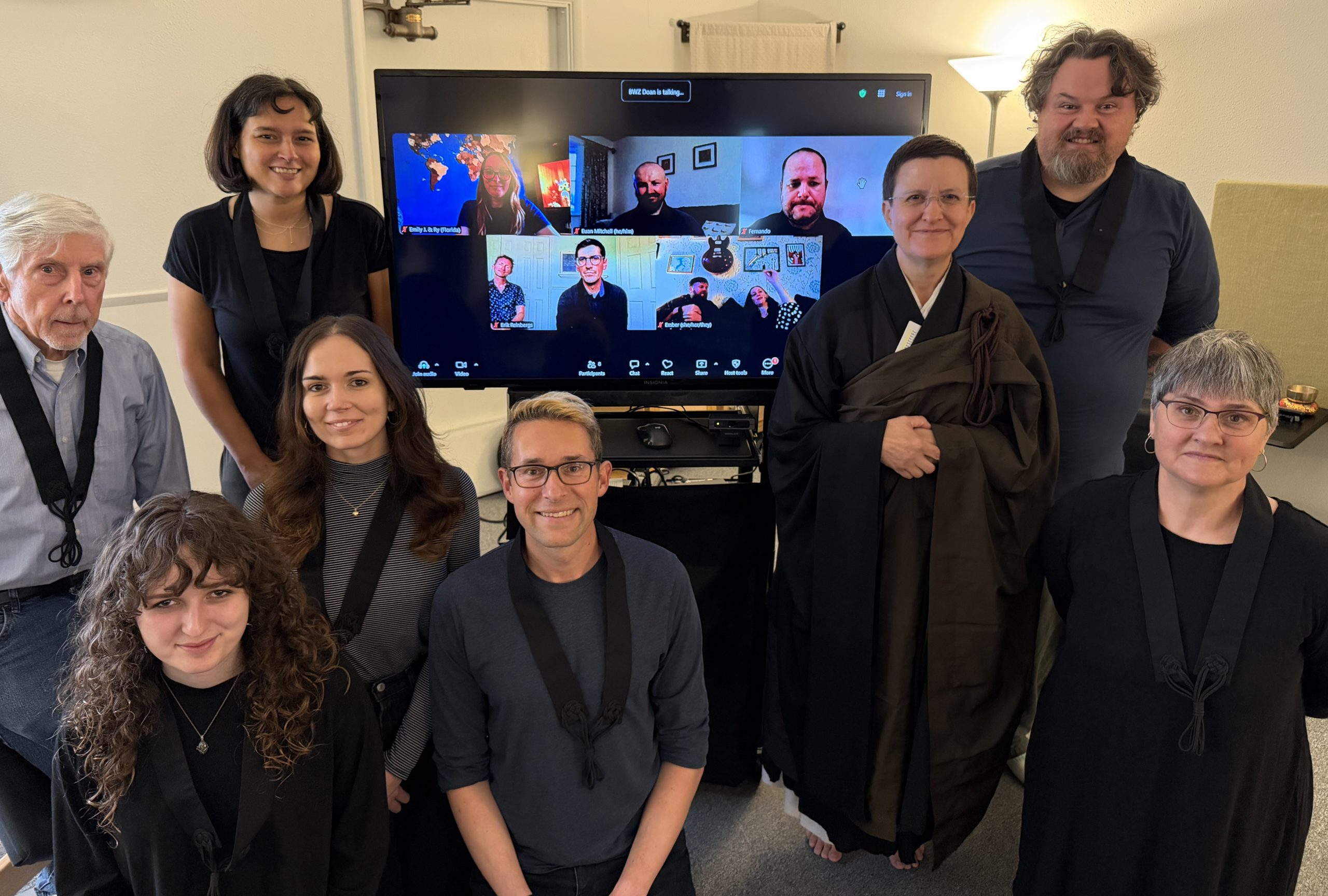
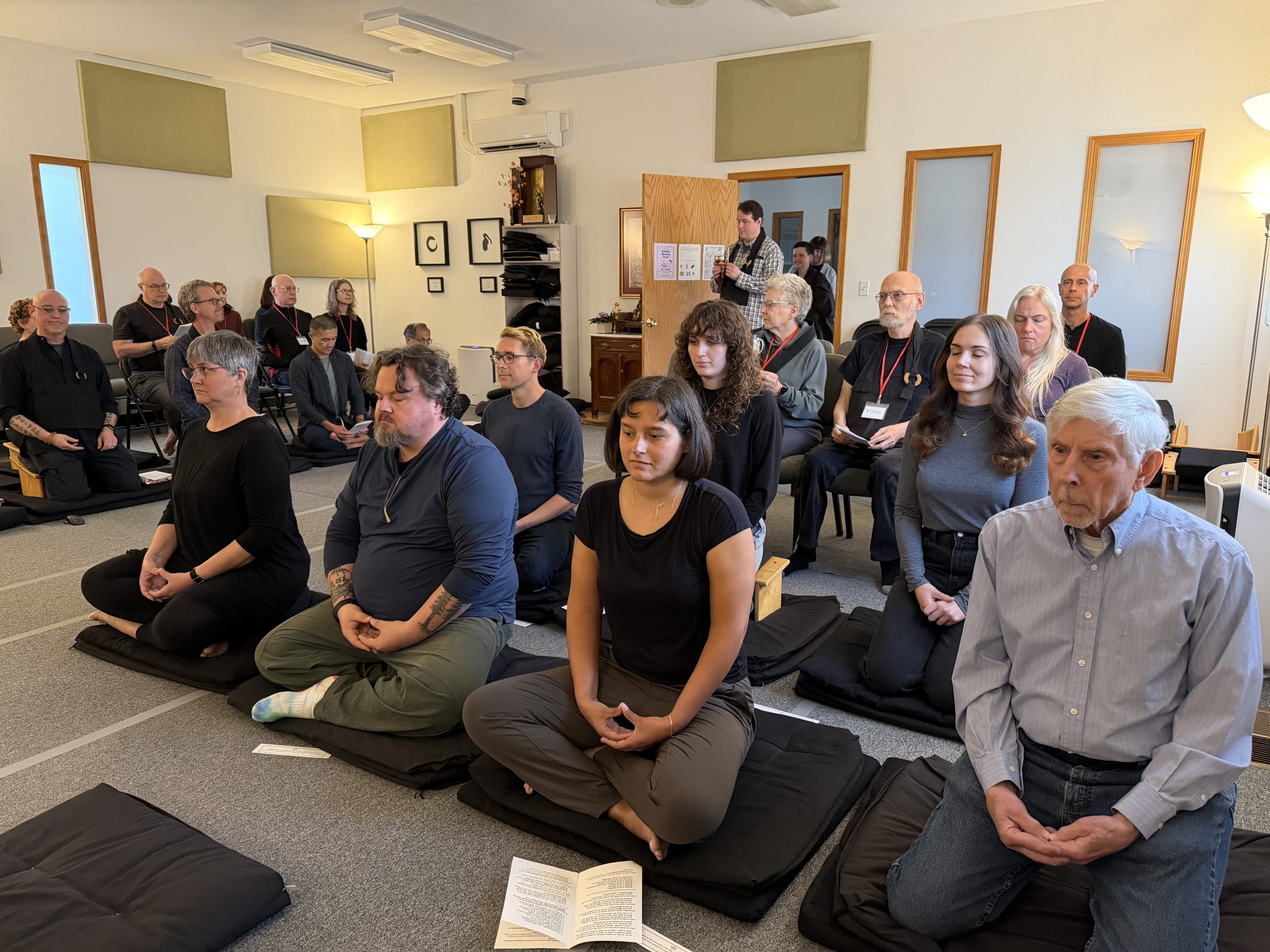
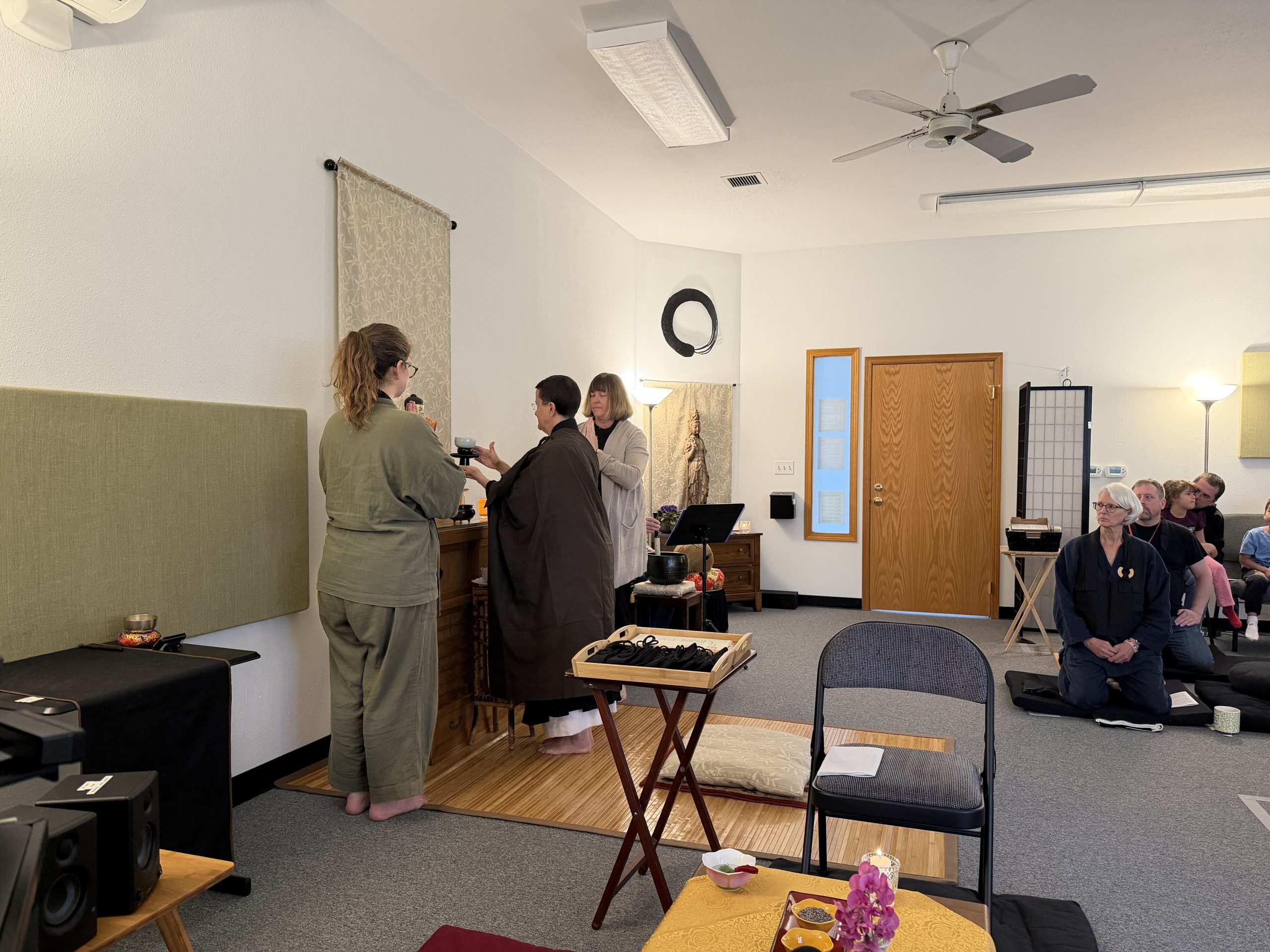
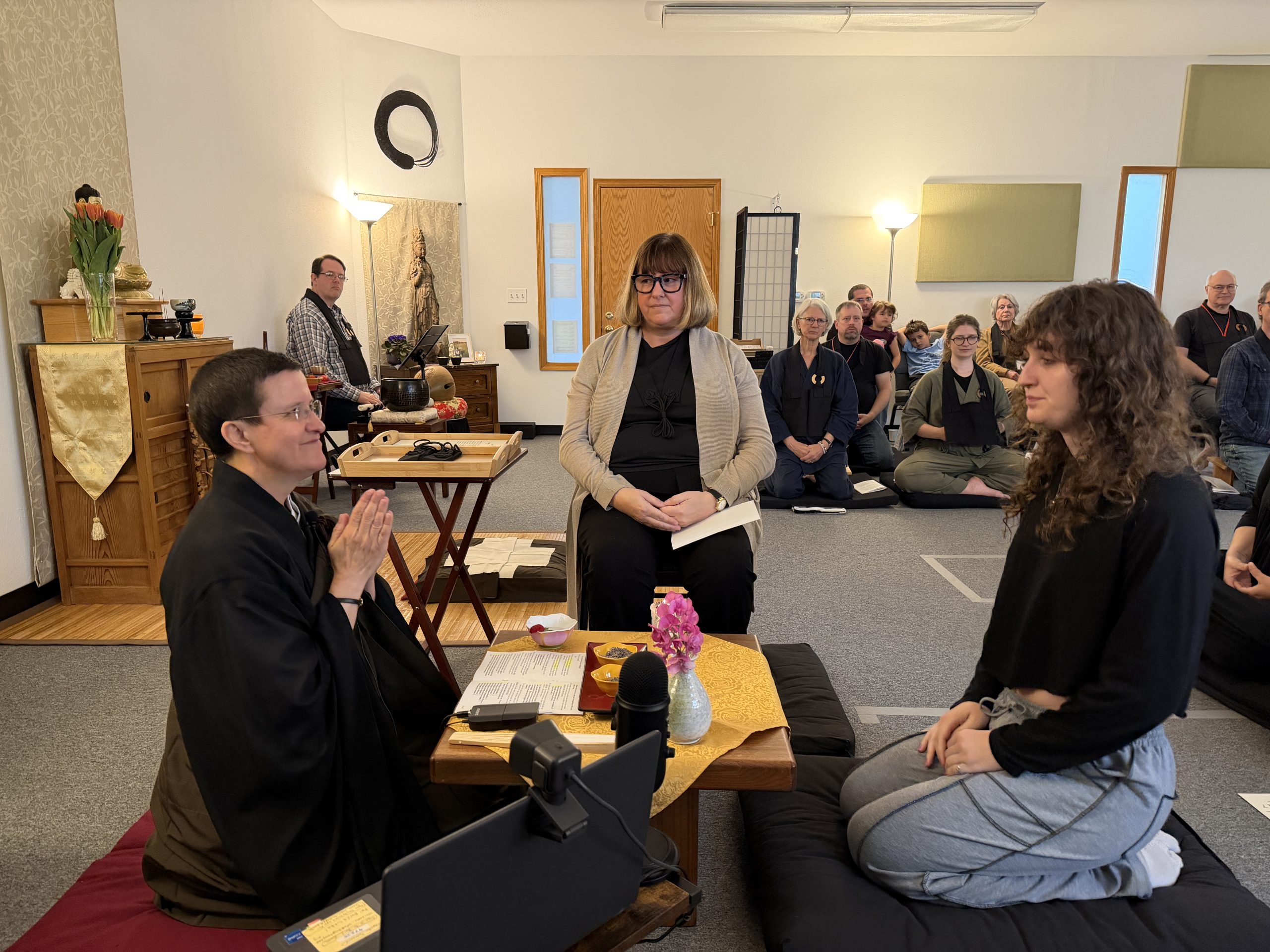
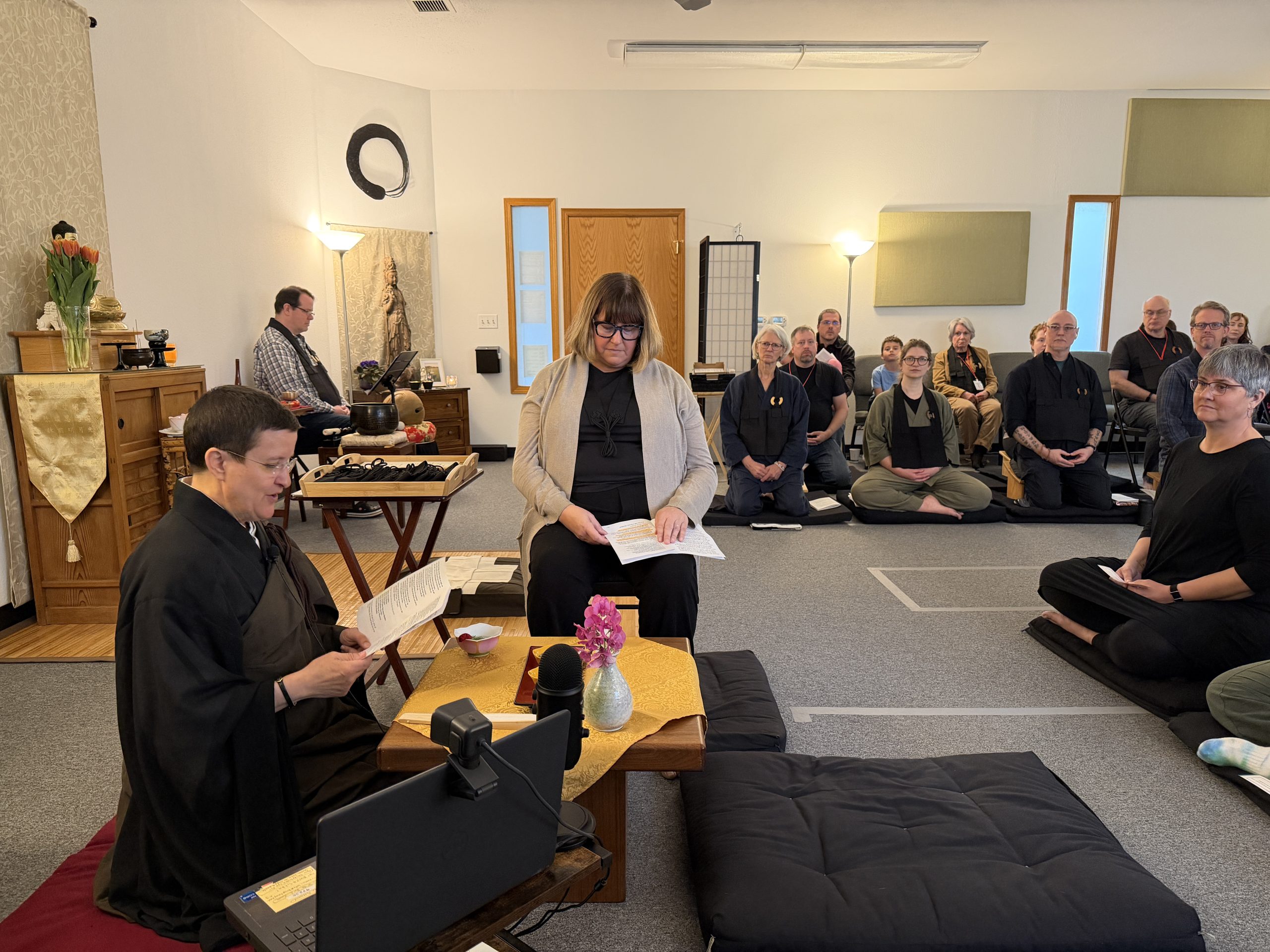
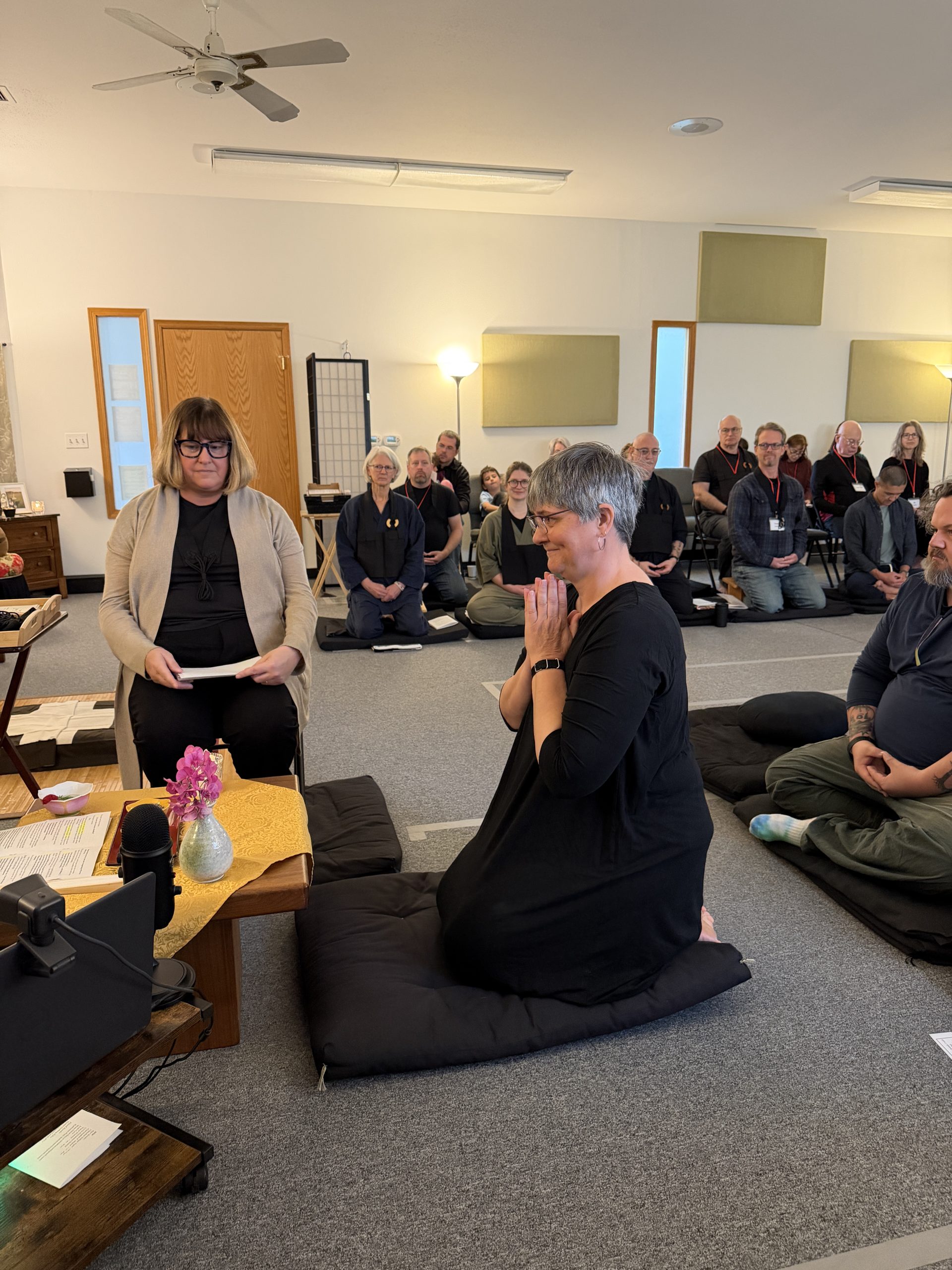
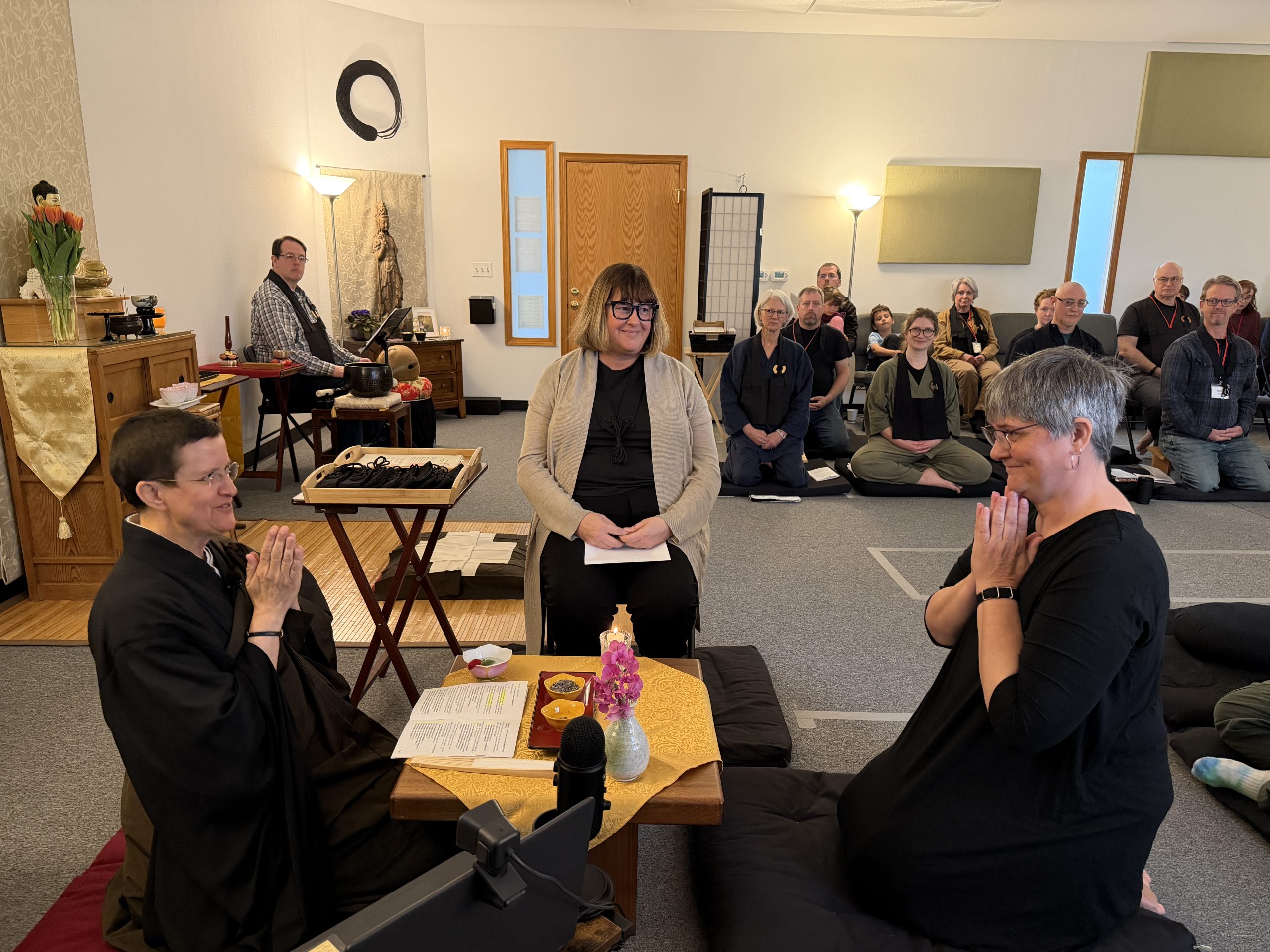
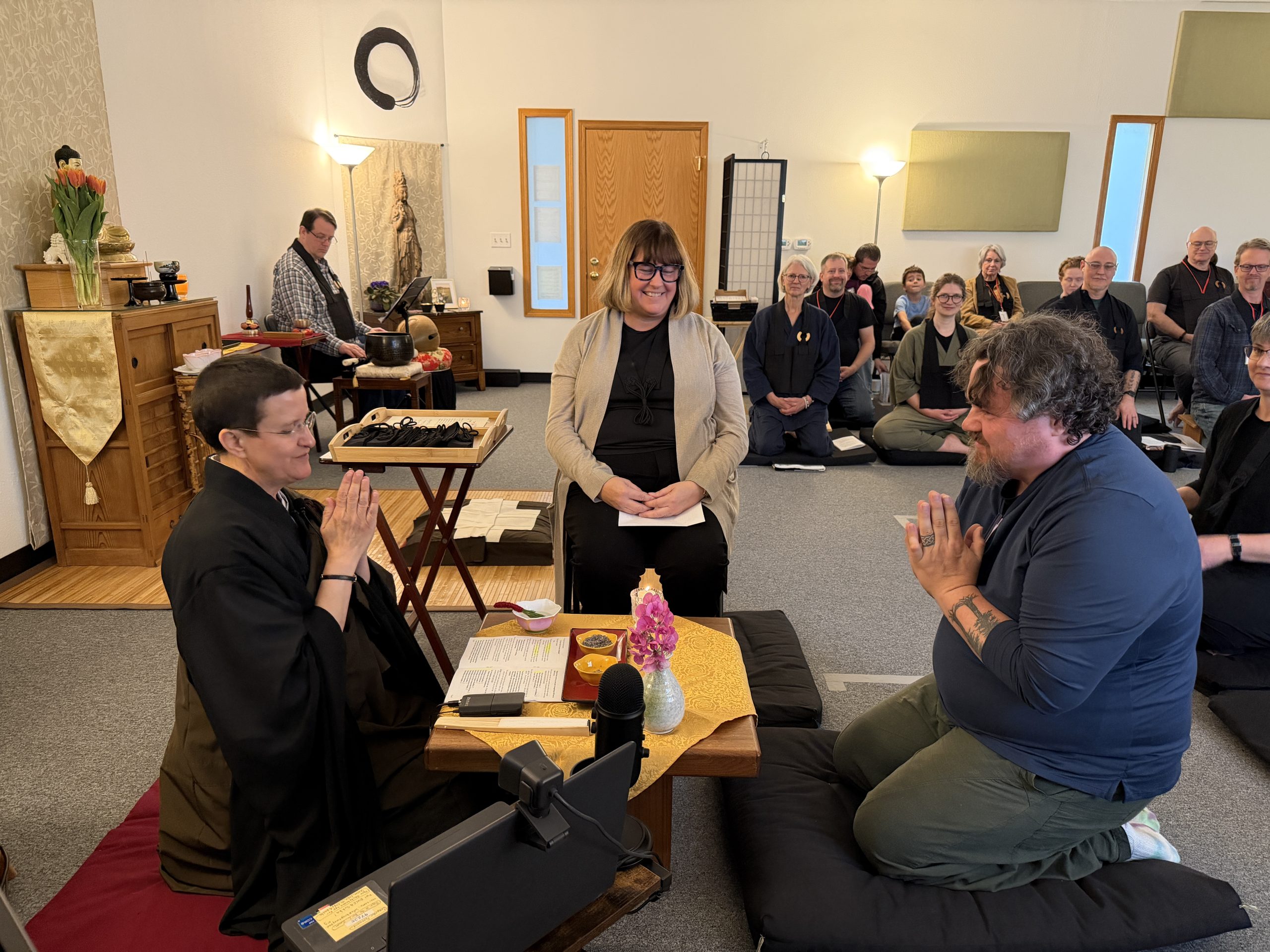
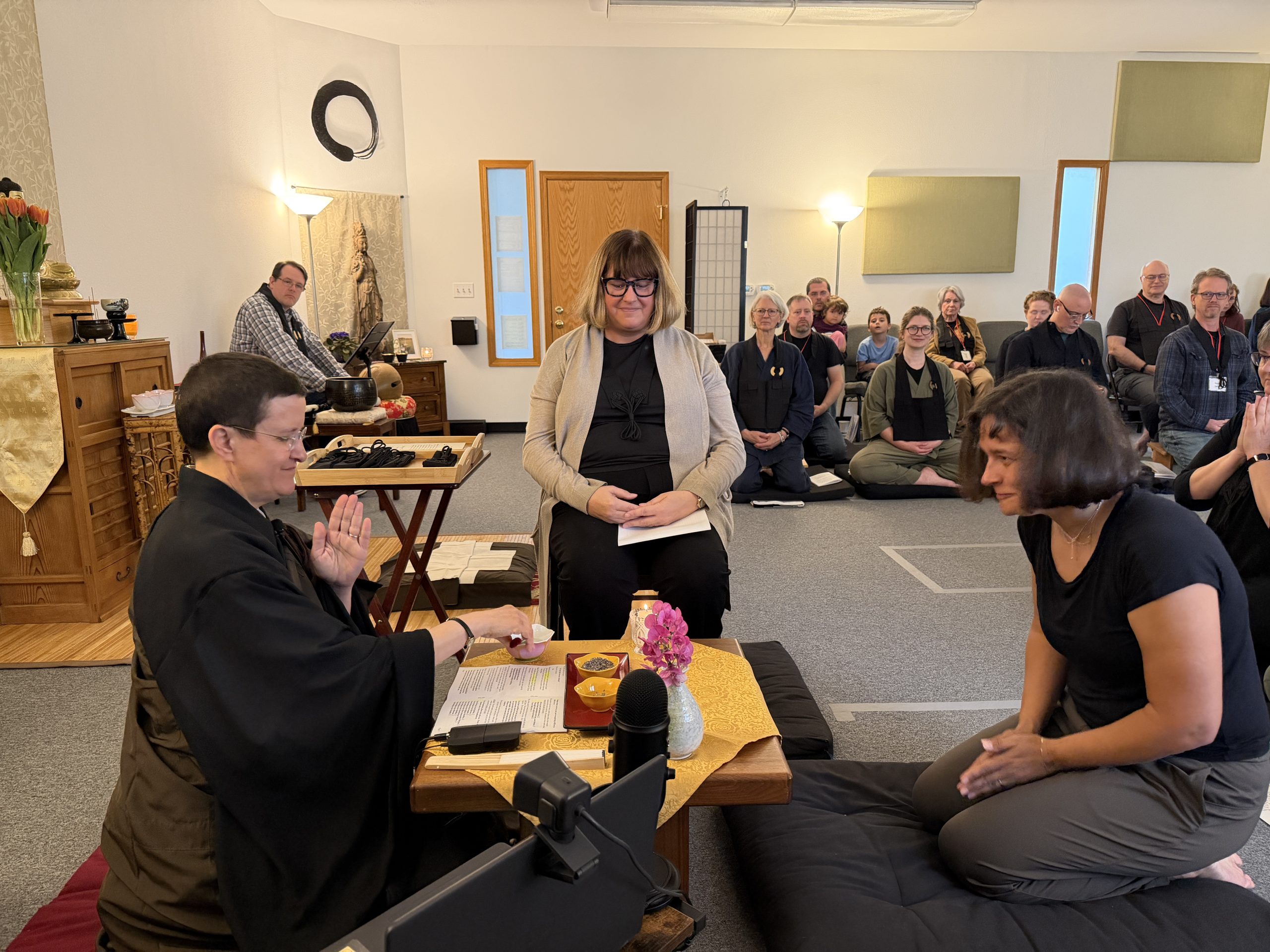
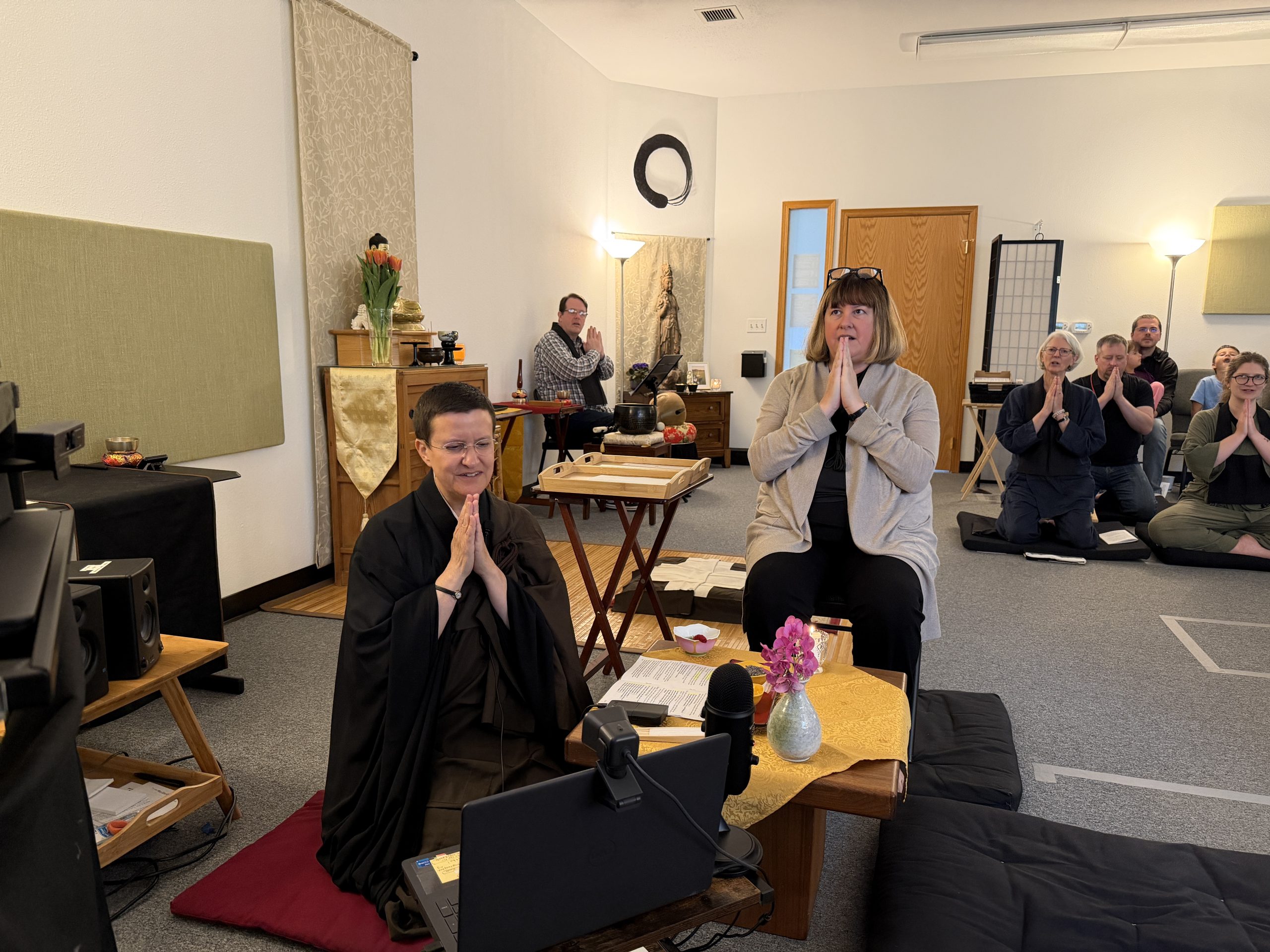
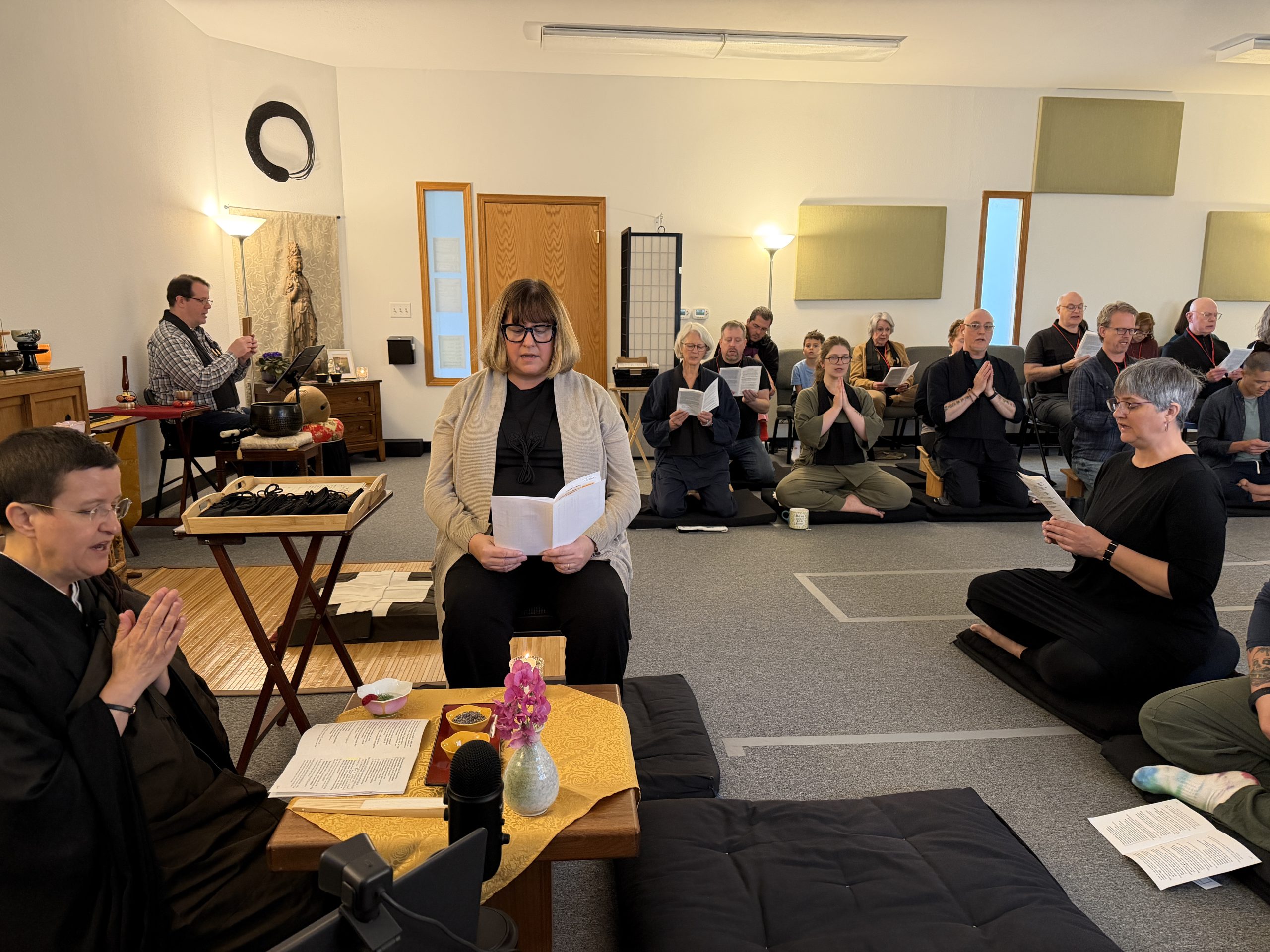
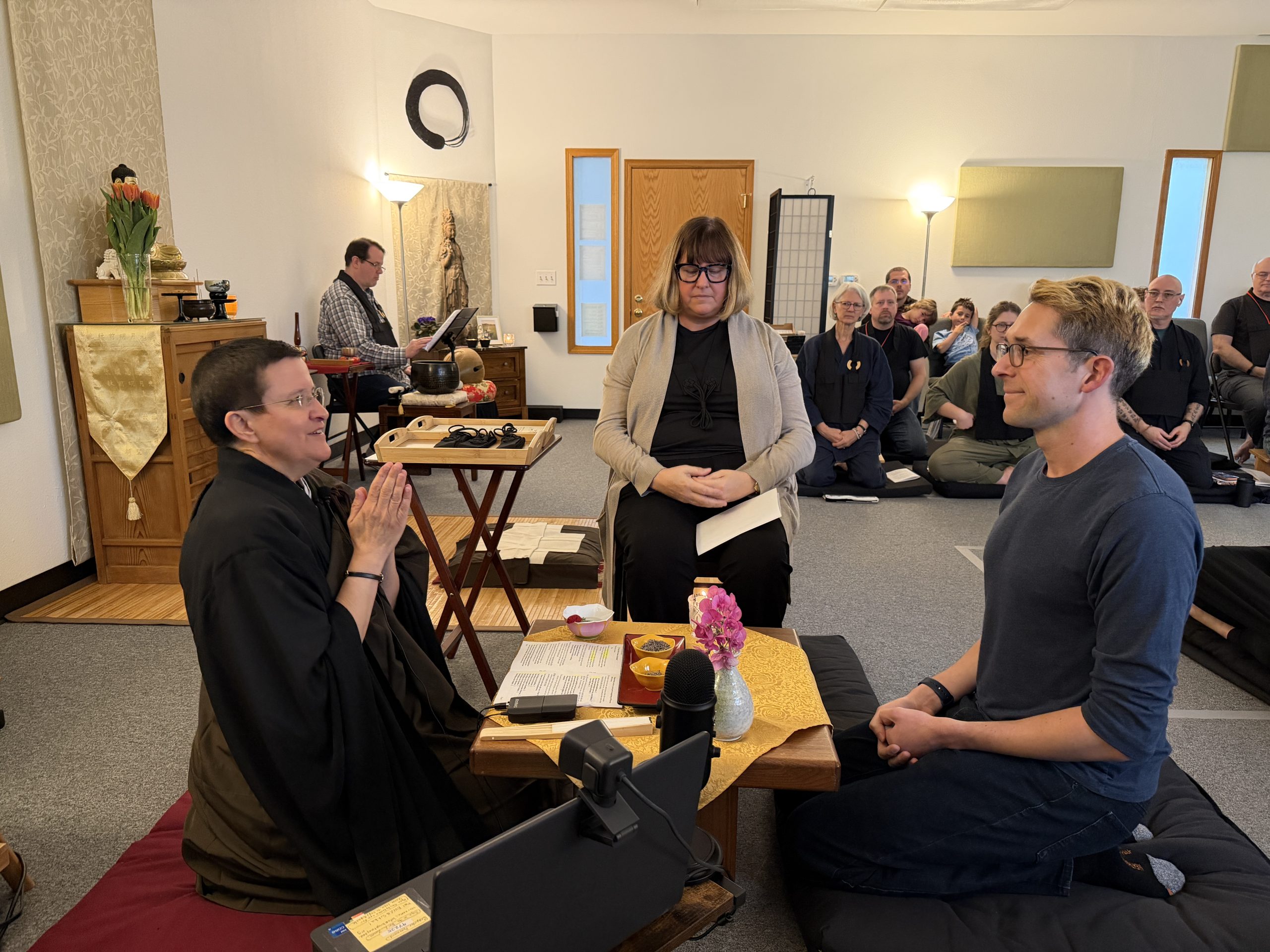
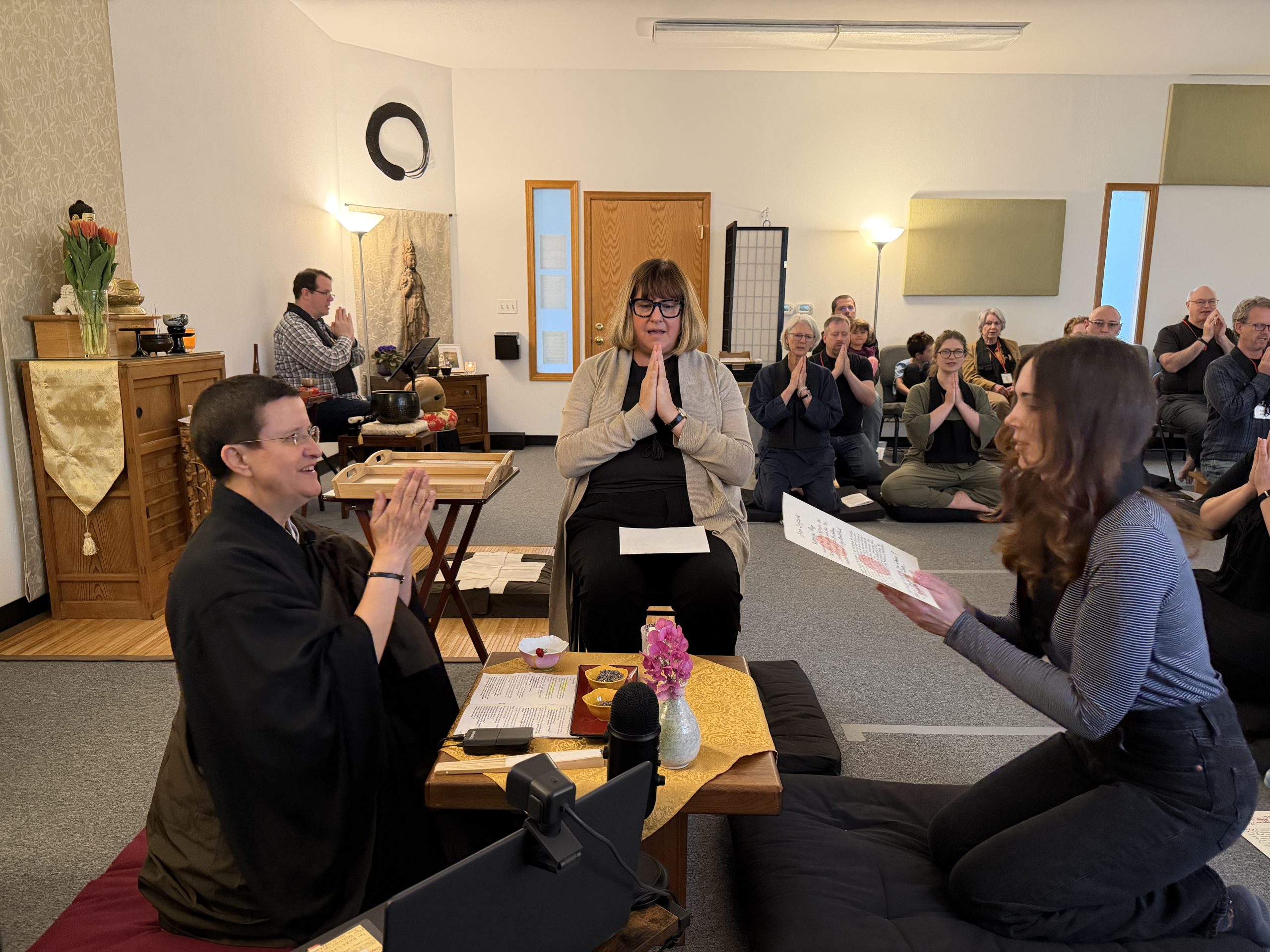
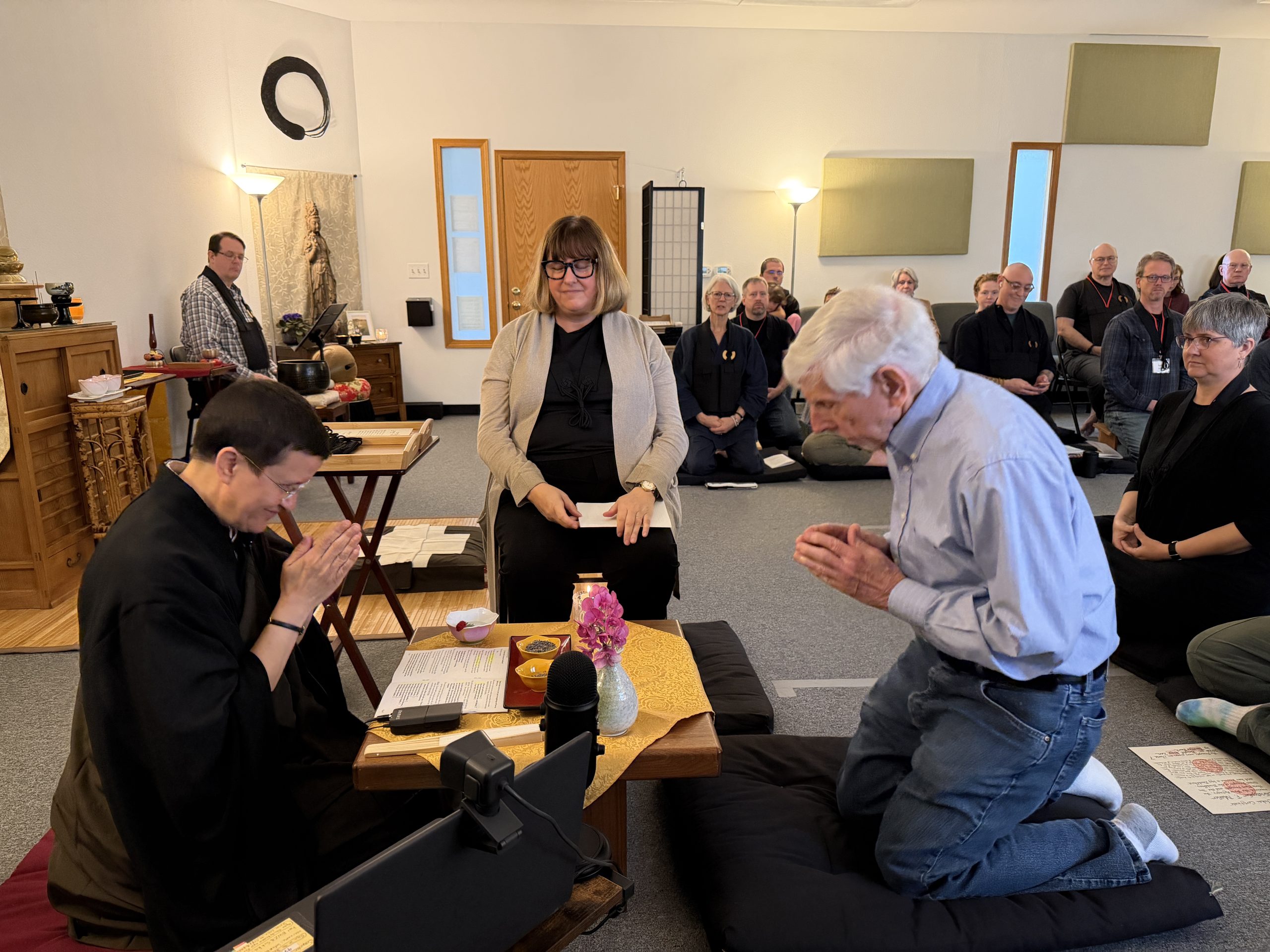
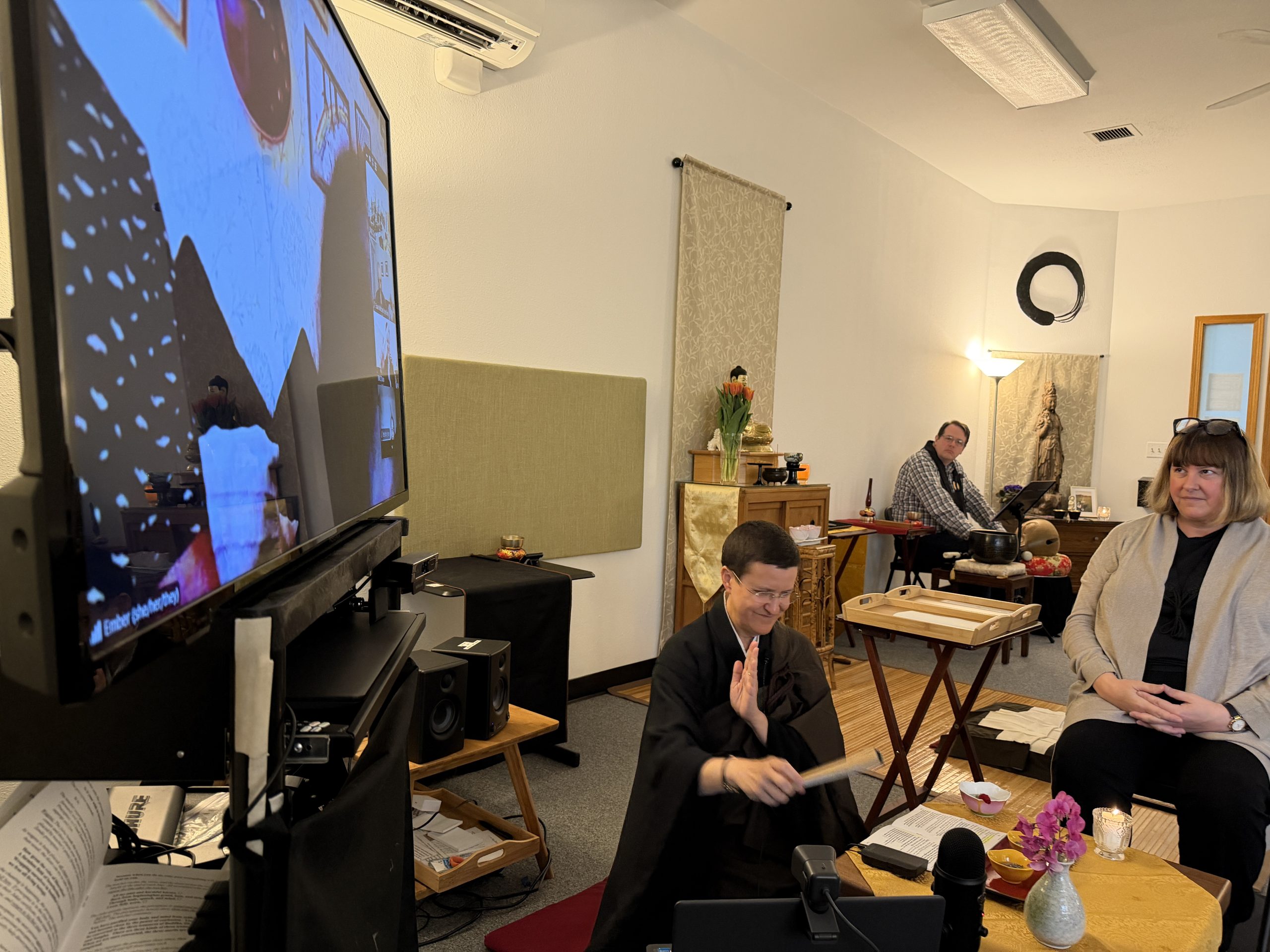
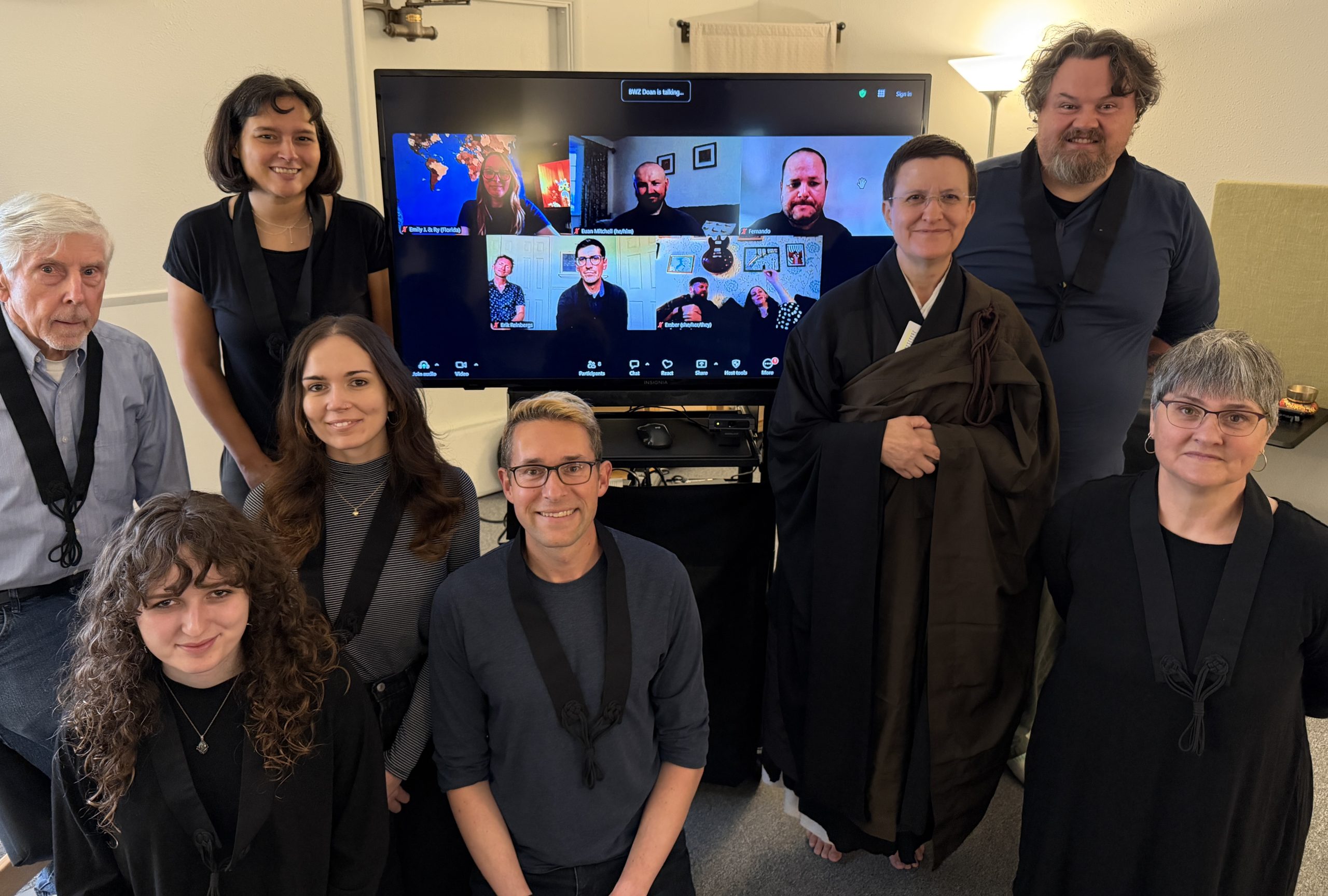
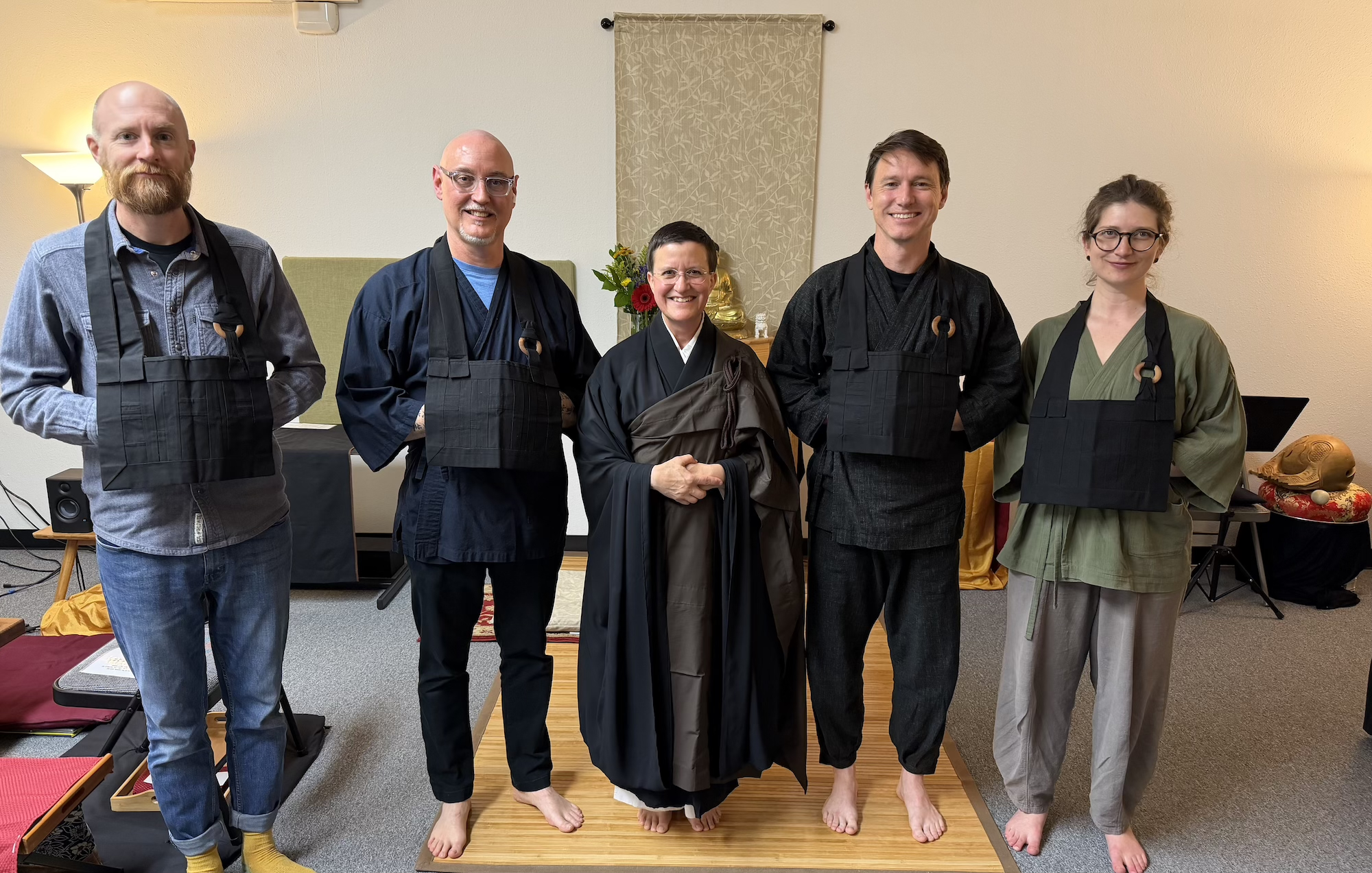
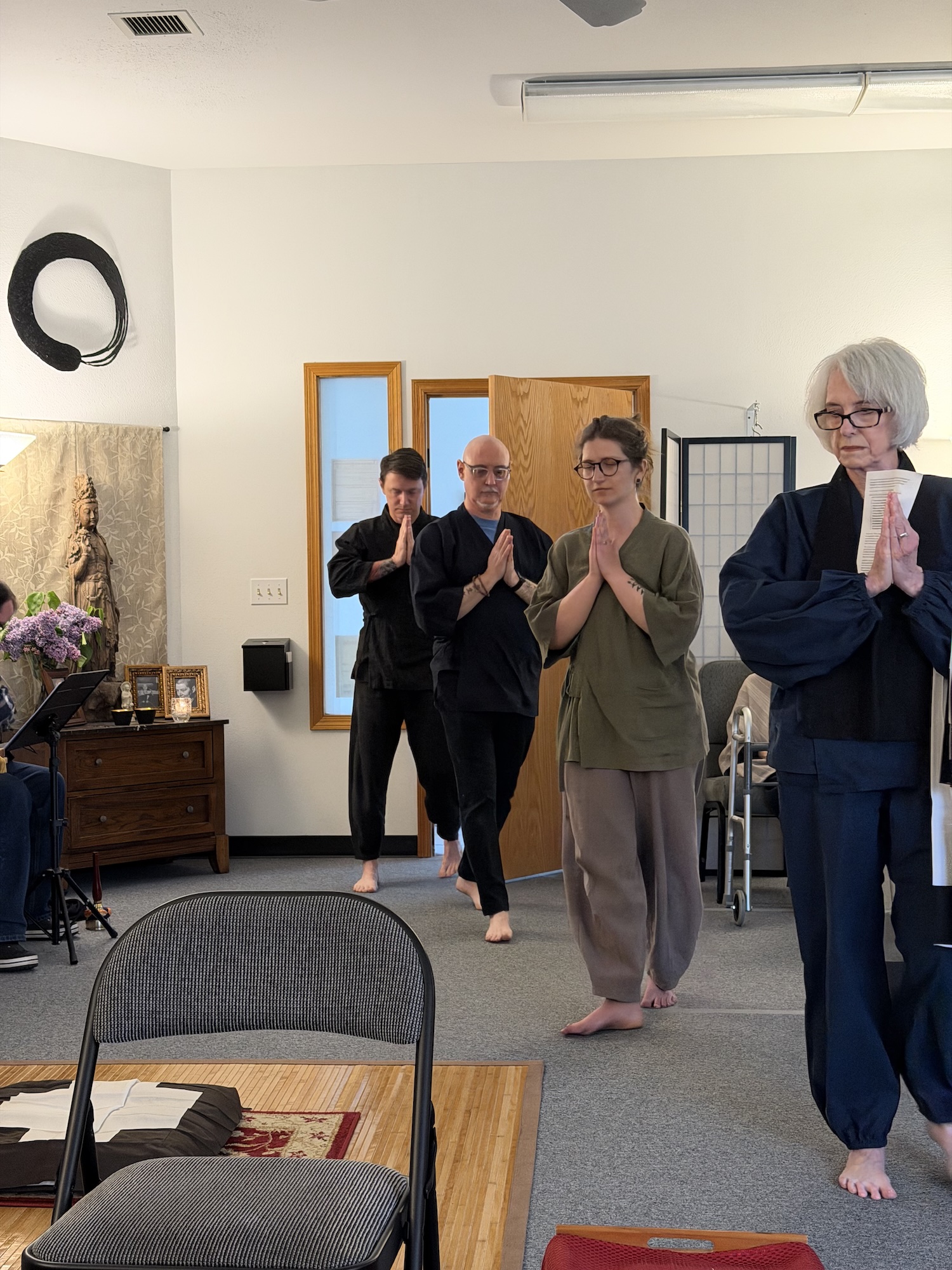
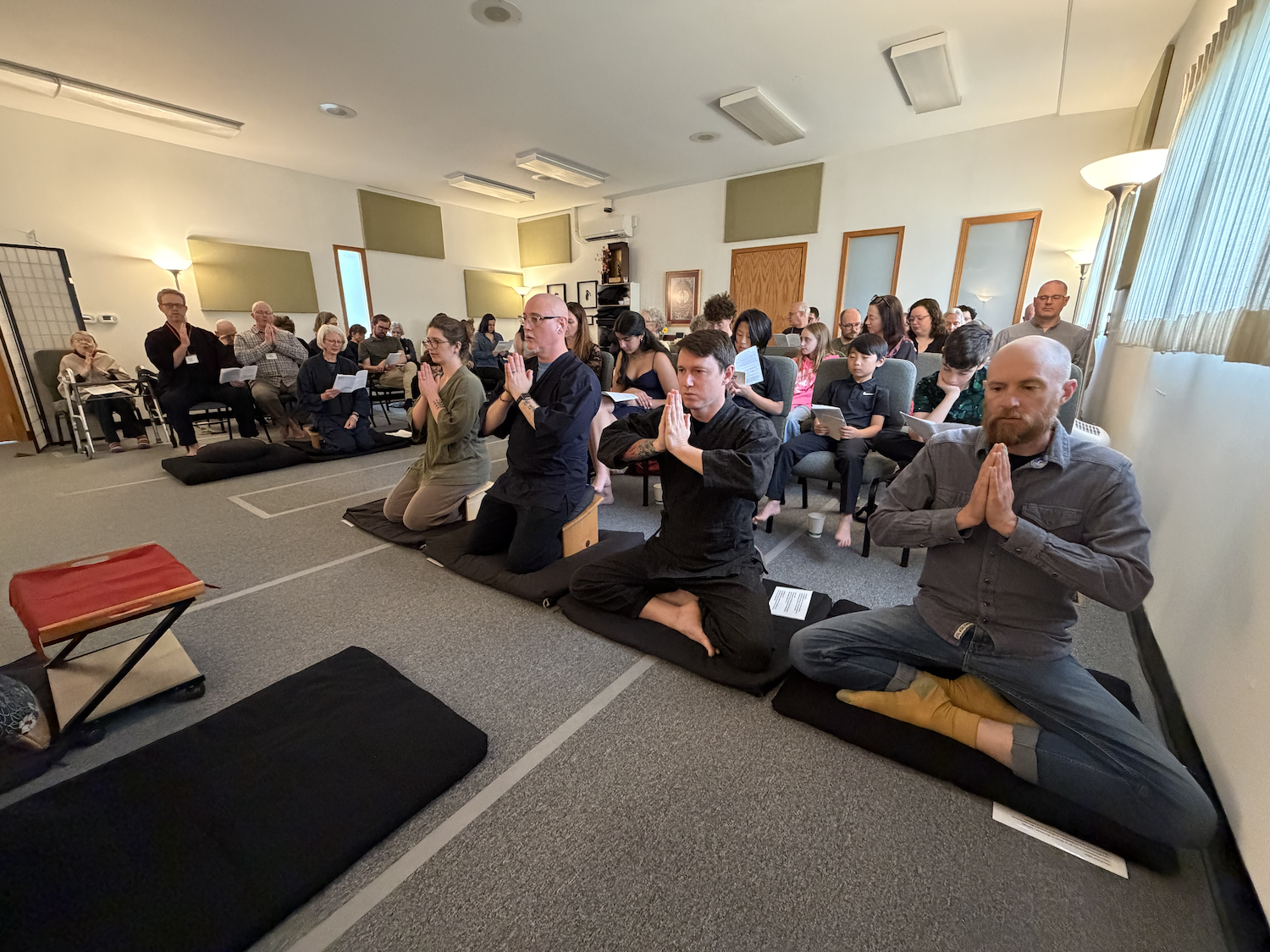
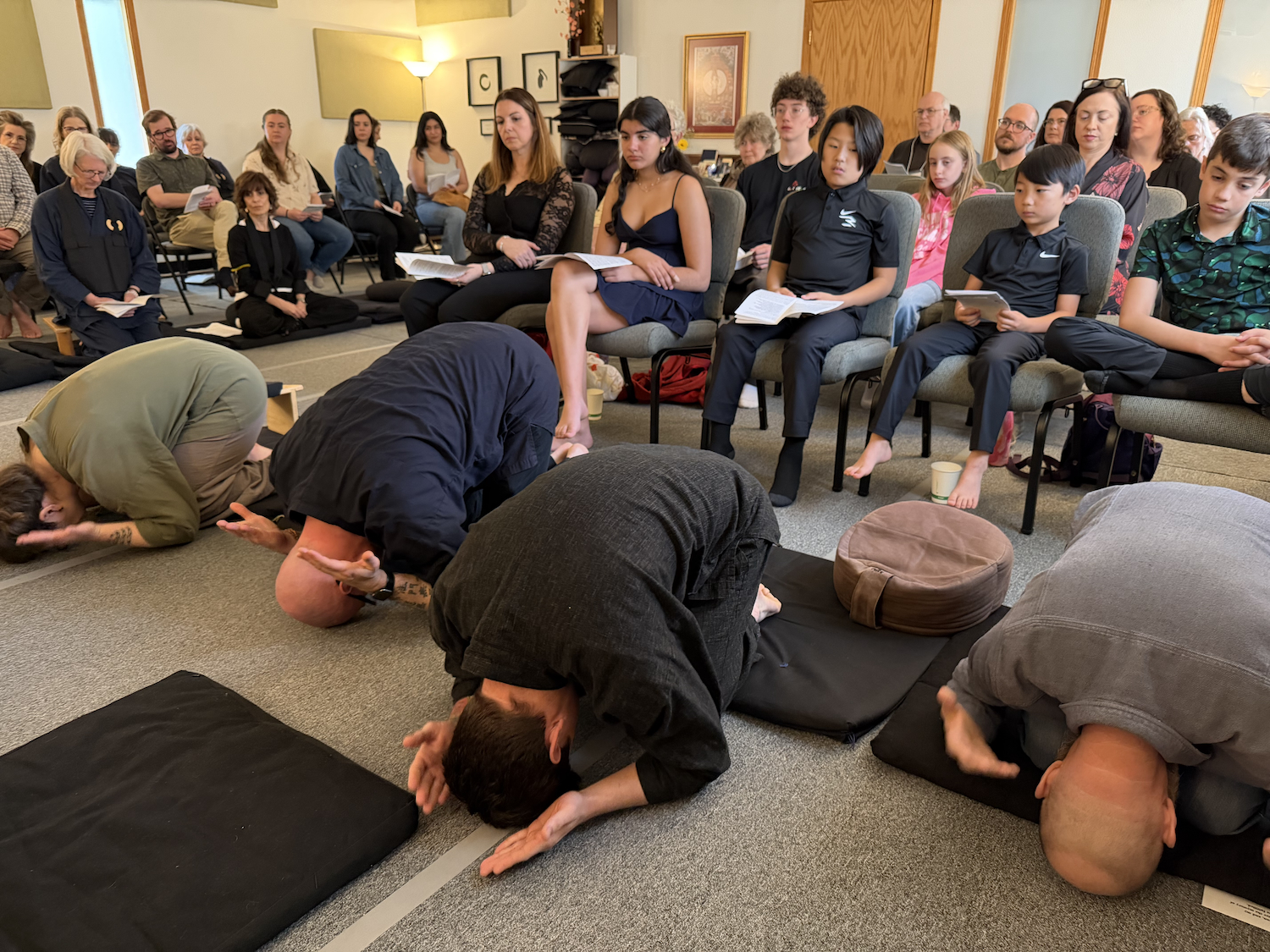
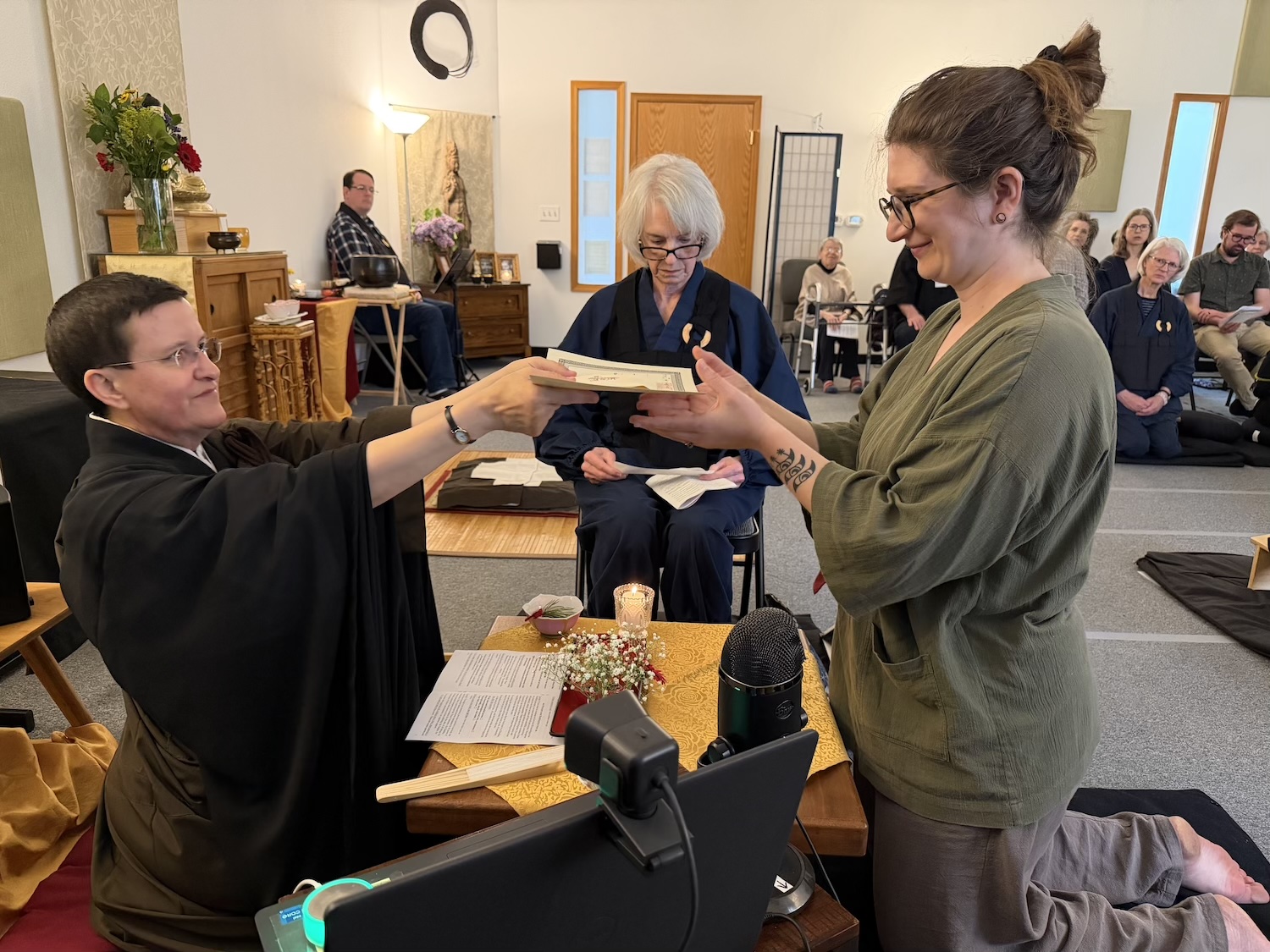
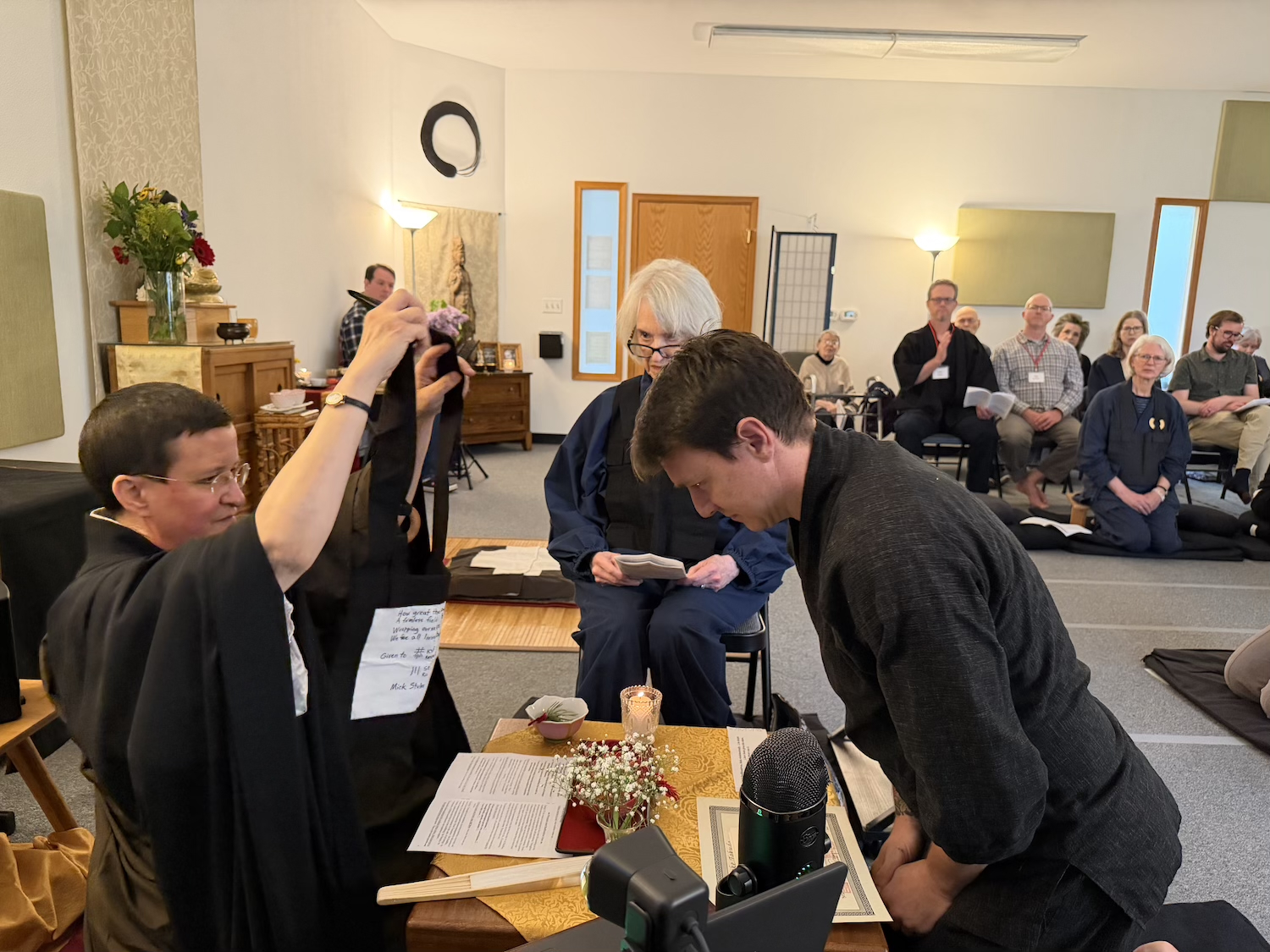
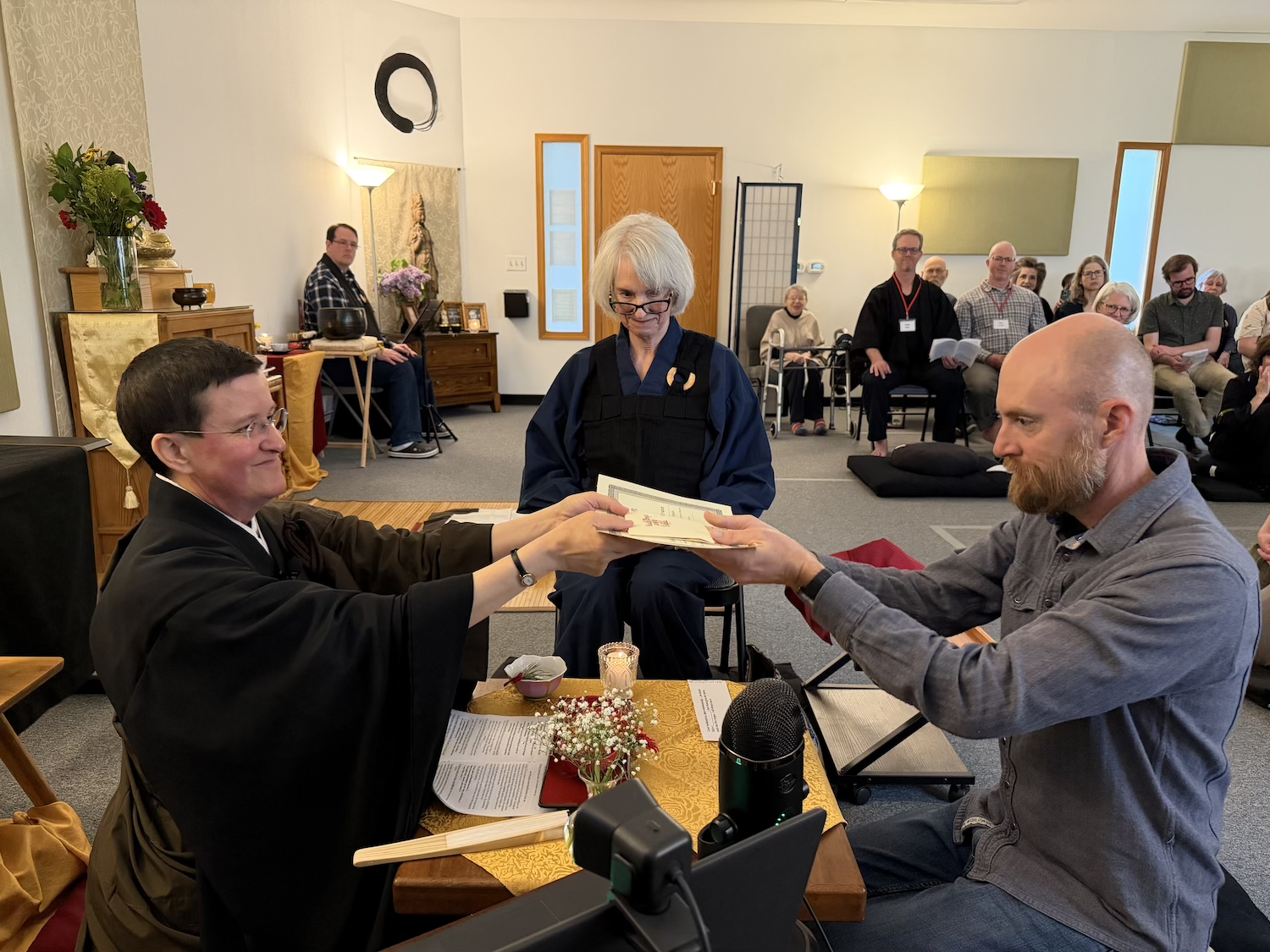
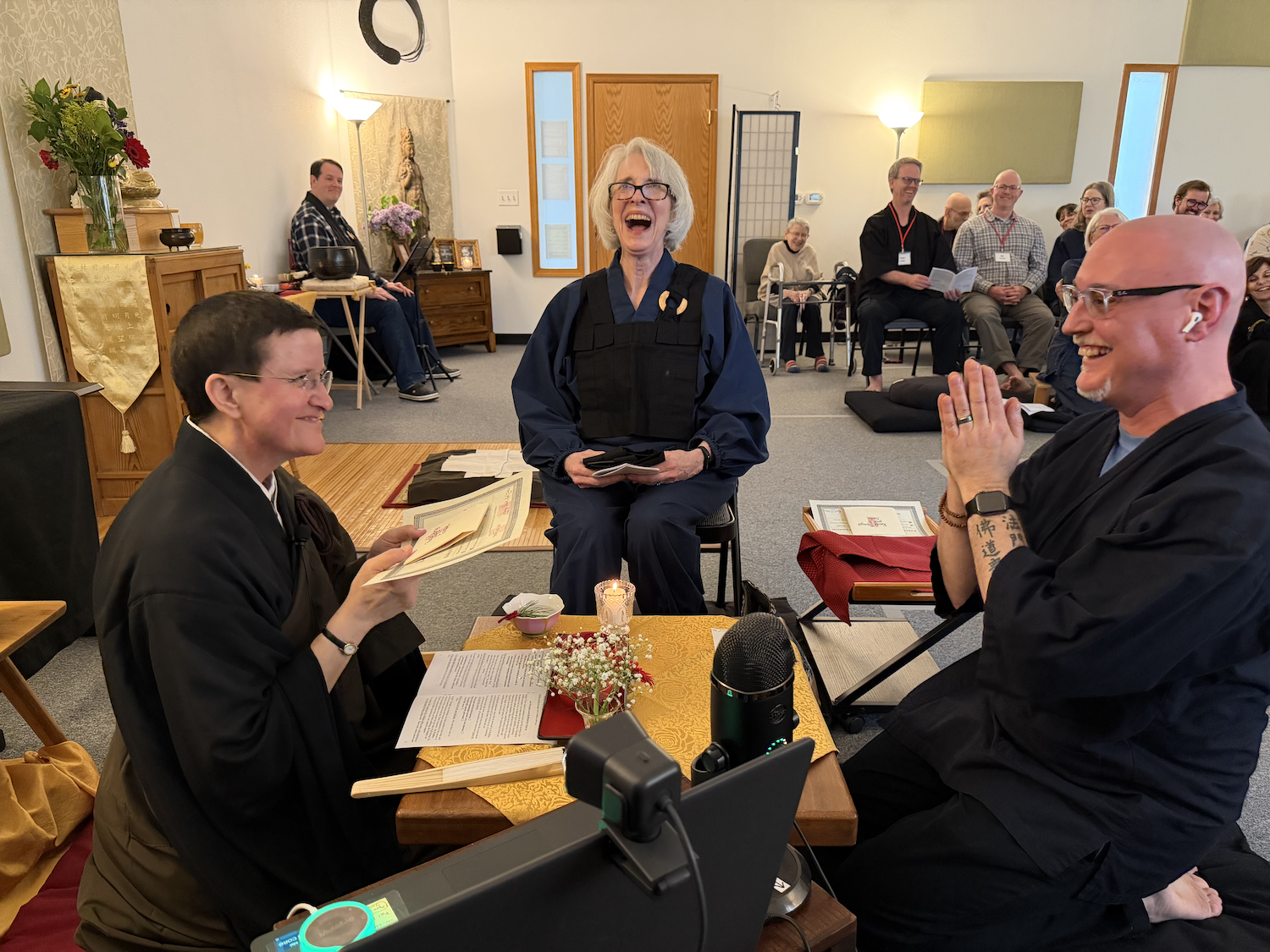
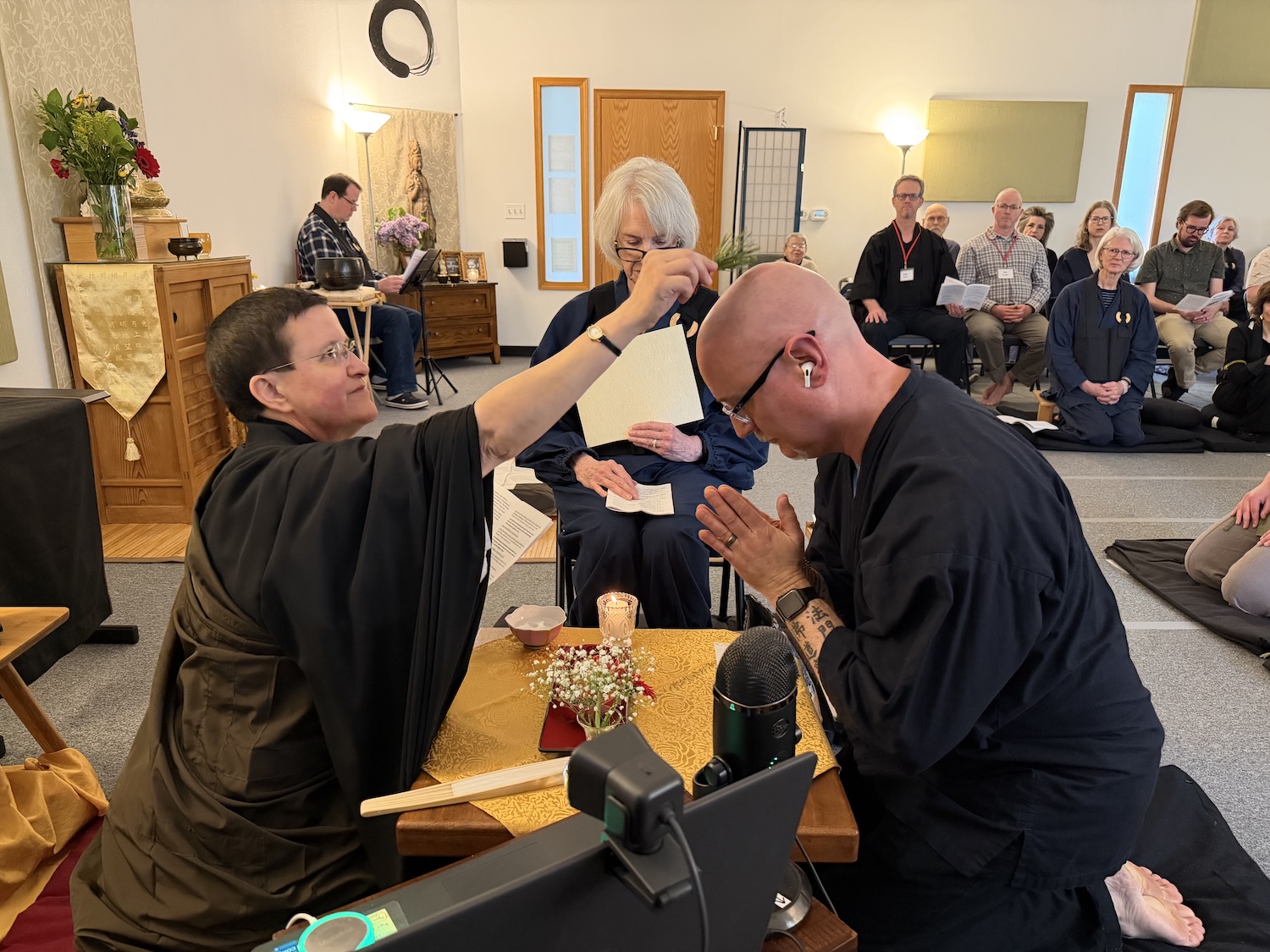
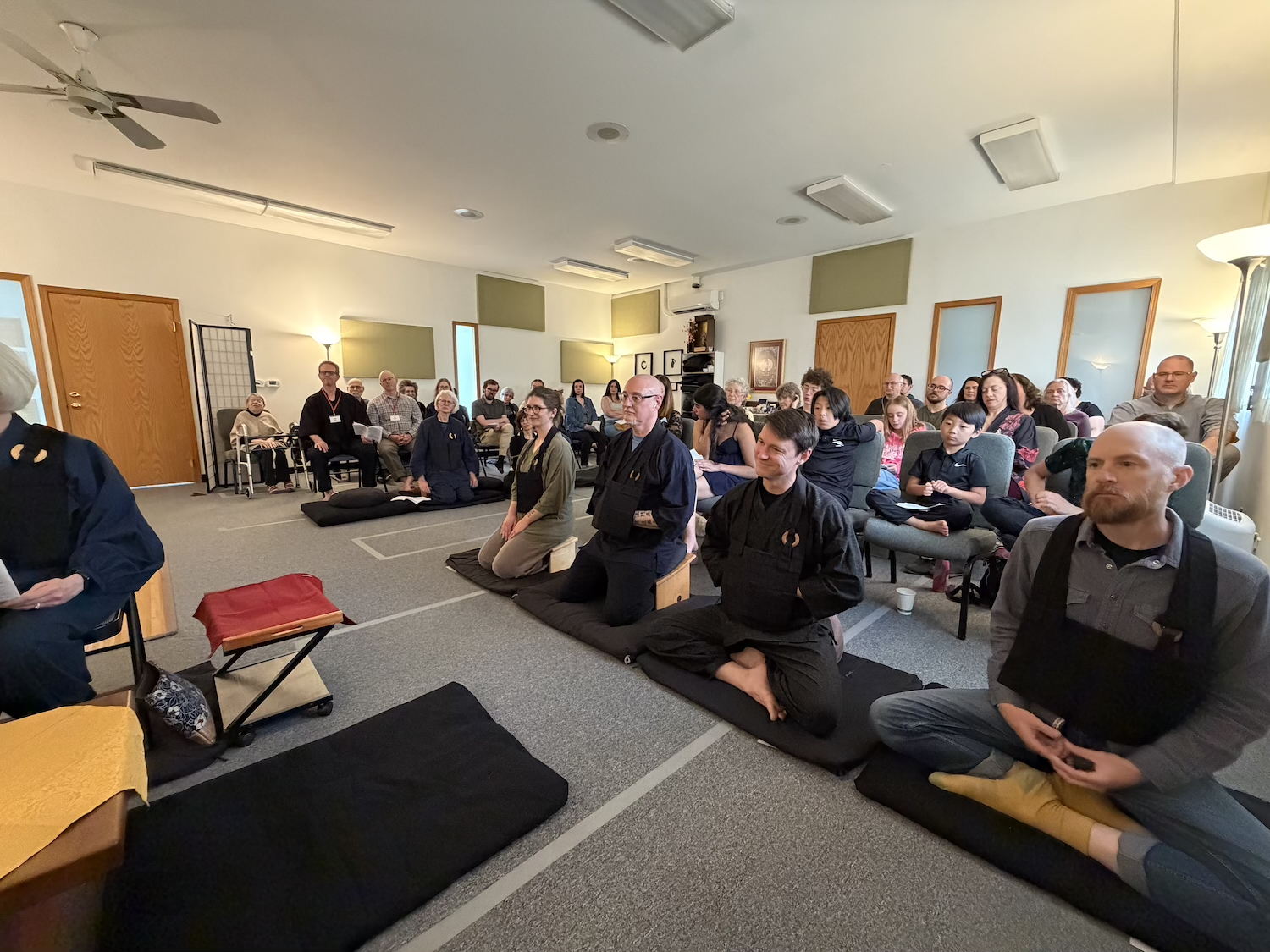
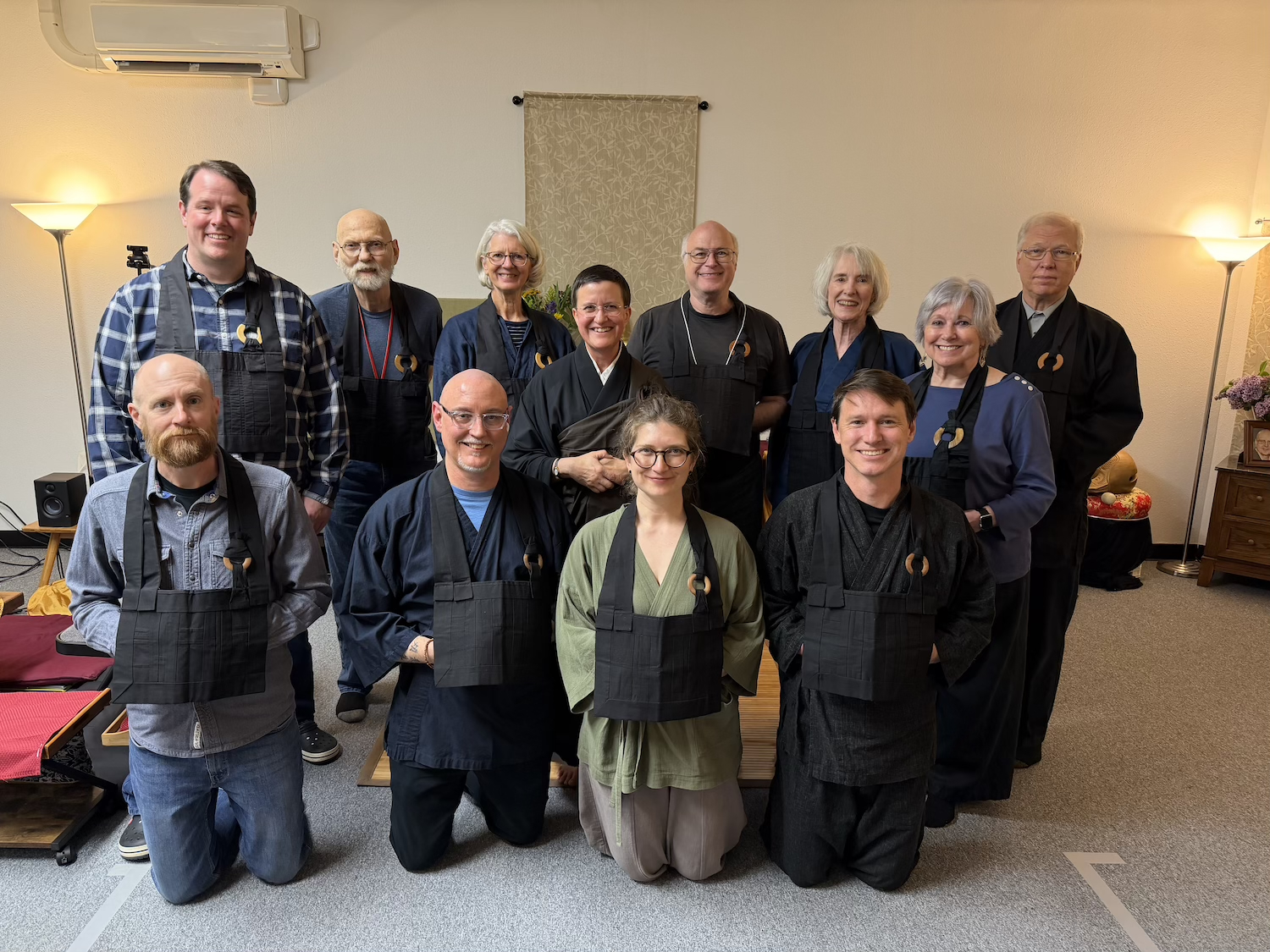
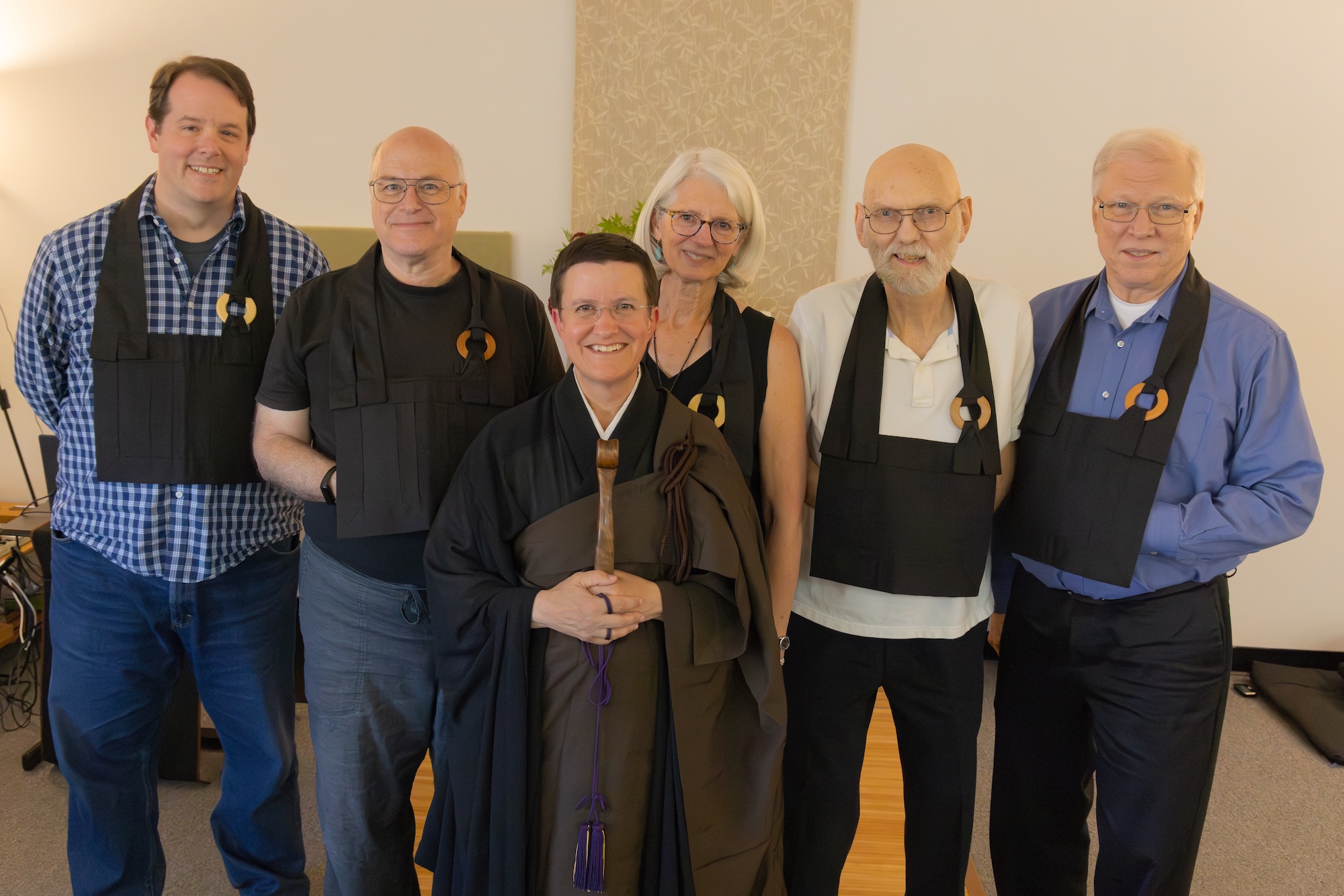
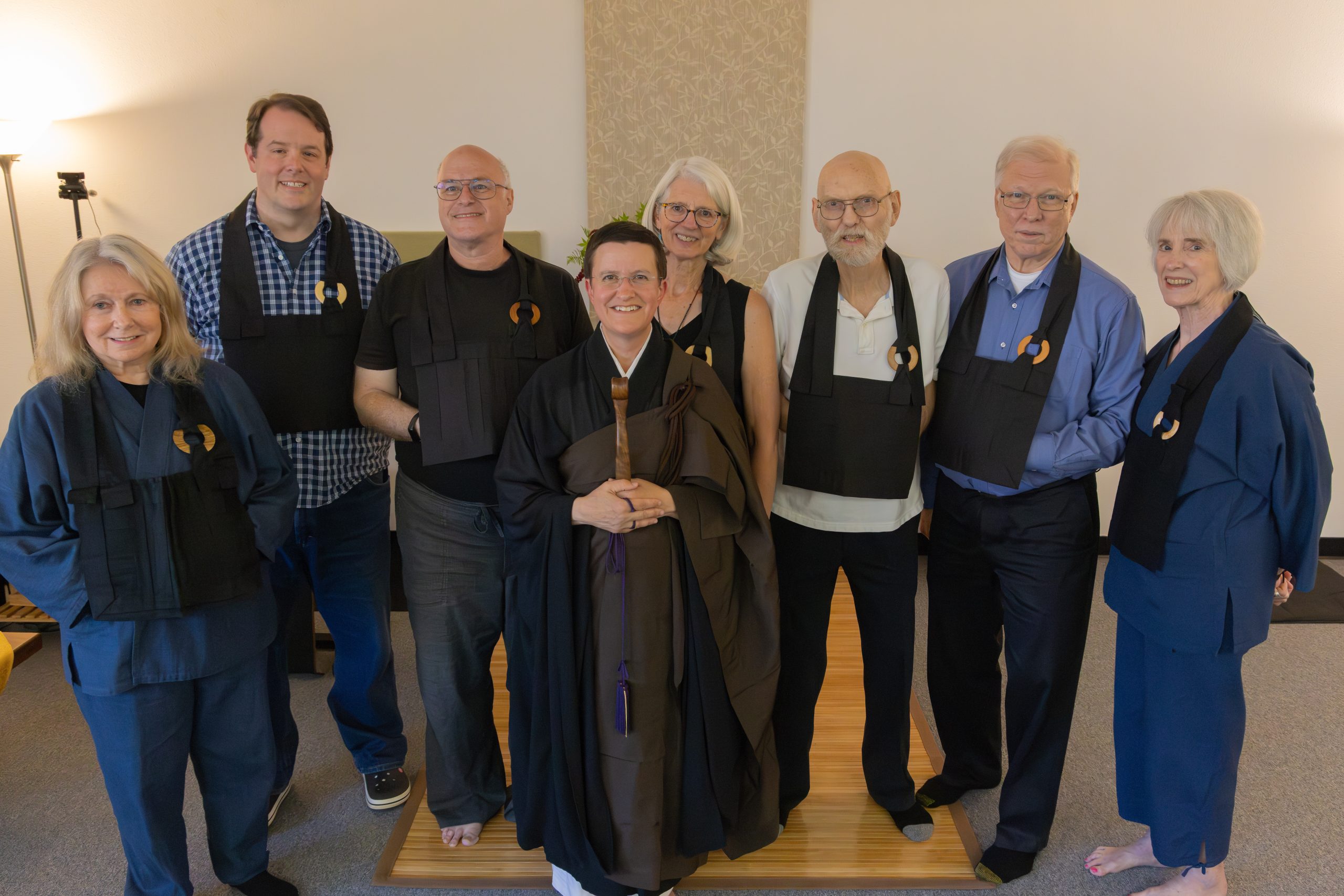
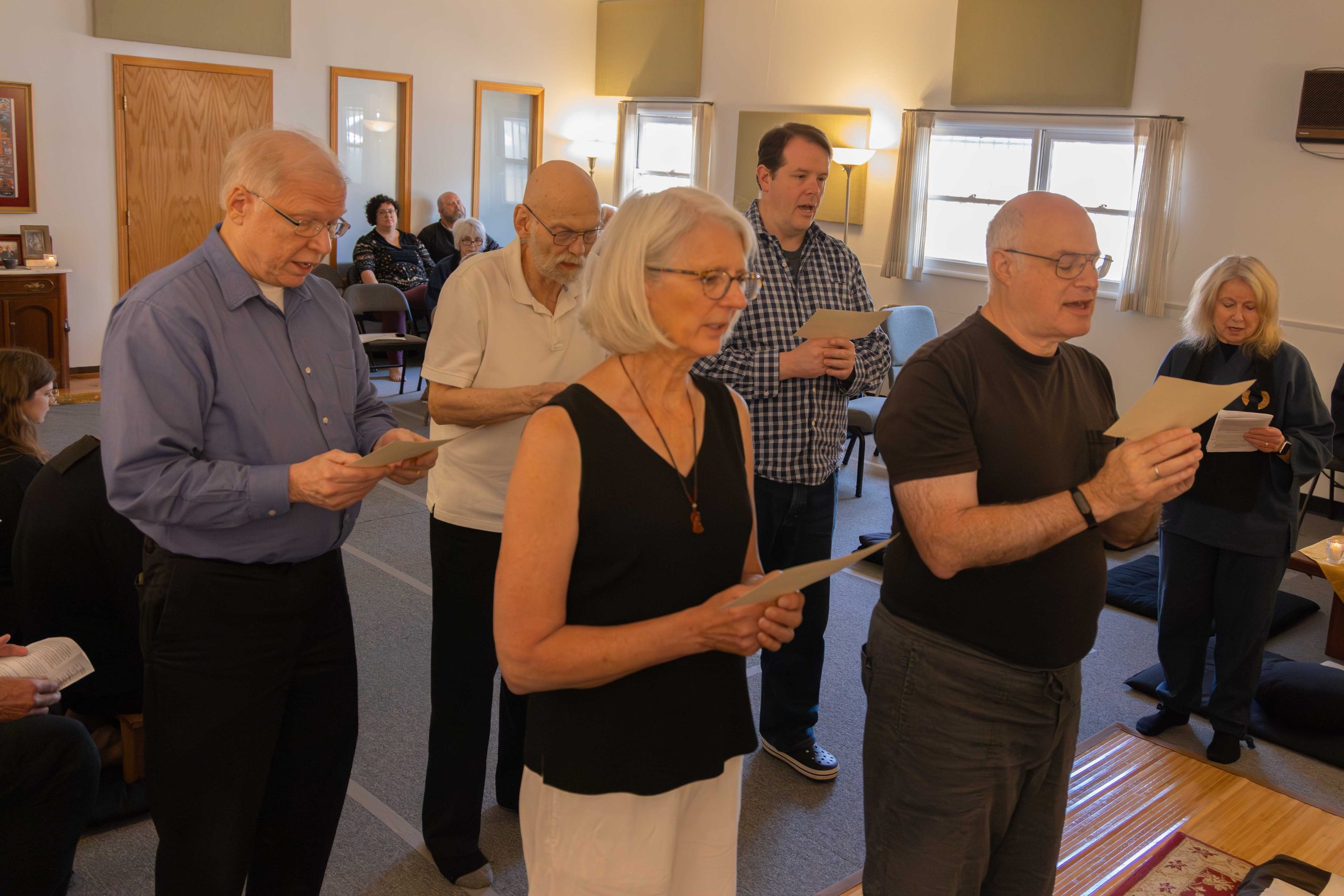
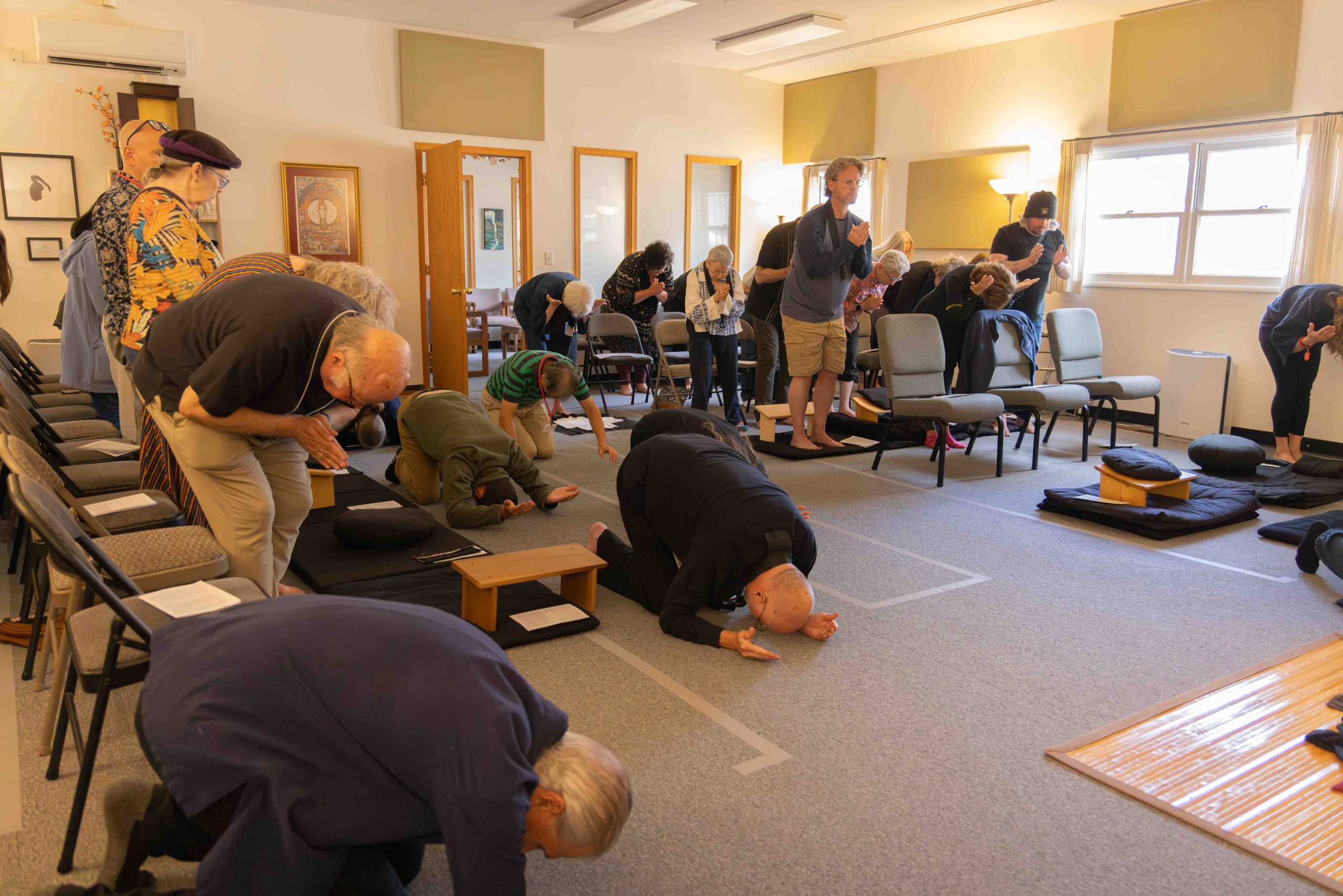
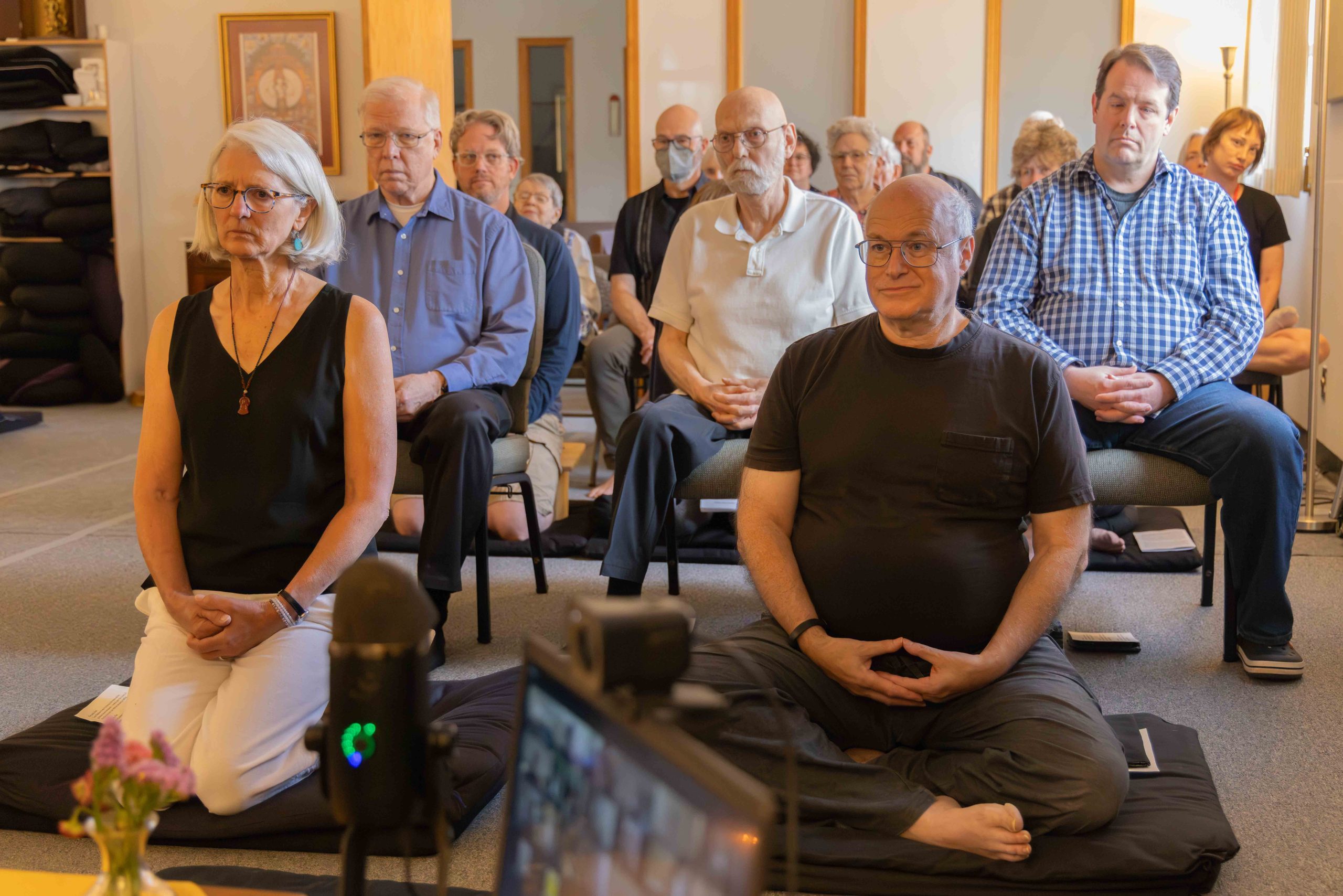
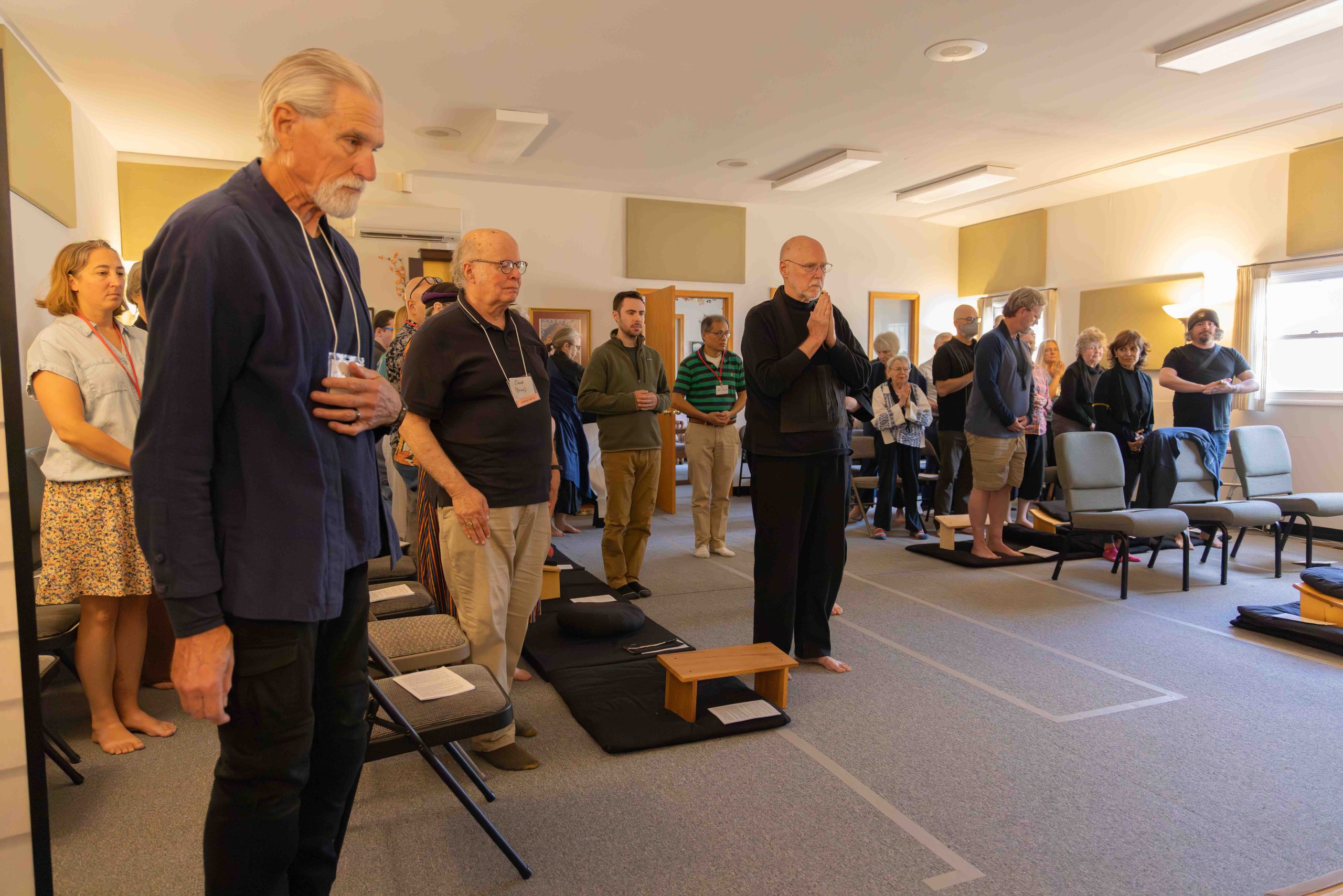
On Sunday, April 19, Bright Way Zen held a Zaike Tokudo, or lay ordination, ceremony to honor four dedicated members. It comes less than a year after the Sangha’s previous Zaike Tokudo ceremony.

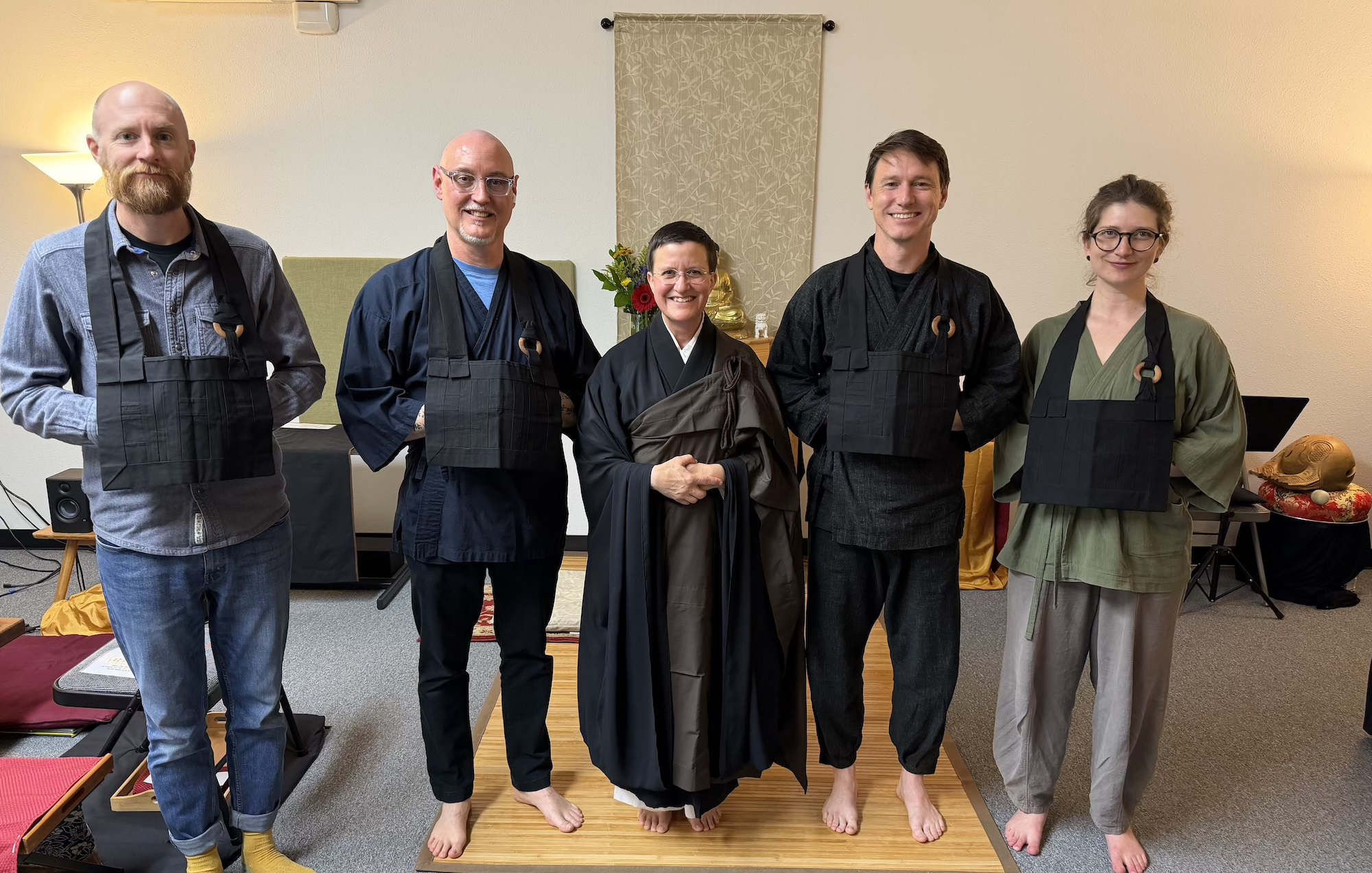
This year’s ordainees were Coral West, Mick Stukes, Greg Kulik, and James Gregg.

People who take the step of Zaike Tokudo have come to identify deeply with our lineage of Soto Zen, our Dharma Cloud lineage in particular, and the Bright Way Zen Sangha. Collectively, they are referred to as “Sangha Holders.”

During the ceremony, ordainees received a Dharma name, by which they will be known within the Sangha. All BWZ Sangha Holders have the same “family name” (which goes first), Dakyo (pronounced DA-kyo). Da means “arrive,” and kyo means “native place.” Then they have a personal Dharma Name, which was chosen by Domyo to reflect something unique she sees in each person that they can aspire to cultivate further with their ordination:

Coral: Soki, meaning Straightforward Function

Mick: Kyosen, meaning Respect River

Greg: Hokaku, meaning Letting-Go Crane

James: Guzan, meaning Foolish Mountain

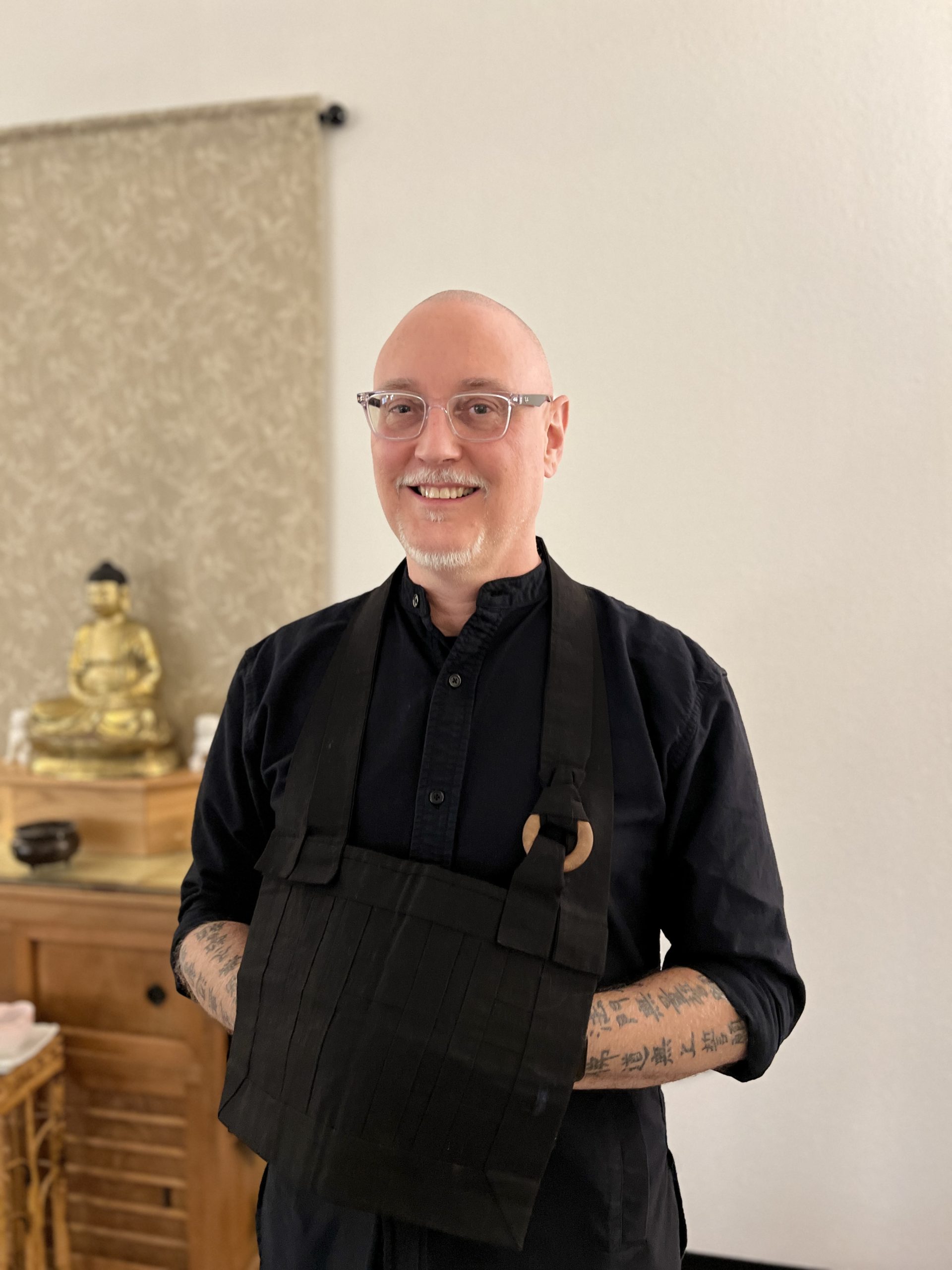
In preparation, ordainees were required to sew their own rakasu, a bib-like garment worn around the neck during meditation and ceremony. It is a miniature version of the Buddha’s patchwork robe. Each ring sewn into the four ordainee’s rakasu was provided by James. The rings are made of cedar from the trees surrounding Eiheiji, the monastery in Echizen that Dogen Zenji founded in 1244. James was able to pick them up on a visit to Japan last year.

It was wonderful to have Mick and Greg, who are normally Cloud Zendo members, travel to the Dirt Zendo for the ceremony. The ordainees were feted by many family, friends, and other Sangha members in both the Dirt and Cloud Zendos.

Congrats to all of you on this step!

Click the photos to enlarge!

A proud day for Bright Way Zen: The Zaike Tokudo ceremony

Sunday, July 27, was a very special day at Bright Way Zen. For the first time in eight years, the Sangha held a Zaike Tokudo, or lay ordination, ceremony to honor five long-time members. Zaike Tokudo literally means “staying at home to accomplish the way,” and is the lay corollary of “Shukke Tokudo,” or monastic ordination.

We had a record-breaking number of members (and their families) who witnessed the ceremony: About 45 in the Dirt Zendo, and 26 in the Cloud Zendo.

People who take the step of Zaike Tokudo have come to identify deeply with our lineage of Soto Zen, our Dharma Cloud lineage in particular, and the Bright Way Zen Sangha. Collectively, they are referred to as “Sangha Holders.”

In the Zaike Tokudo ceremony, in addition to re-taking the 16 bodhisattva precepts, ordinees made these five vows:

I vow to walk the path of the Buddha; living an ethical life and becoming enlightened.
I vow to study the Dharma; working to see the true nature of all things and all beings I encounter.
I vow to support the Sangha; helping myself and all beings attain peace and liberation.
I vow to live a life of generosity; benefitting the world in whatever ways I can.
I vow to live a life of stability; honoring commitments with patience and tolerance, remaining steadfast in practice and relationships.

During the ceremony, ordinees also received a Dharma name. Going forward, they will be known by their Dharma name within the Sangha. All BWZ Sangha Holders have the same “family name” (which goes first), Dakyo (pronounced DA-kyo). Da means “arrive,” and kyo means “native place.” Then they have a personal Dharma Name, which was chosen by Domyo to reflect something unique she sees in each person that they can aspire to cultivate further with their ordination:

Jim – Dakyo Kanshin (pronounced KAN-shin): “Perfect Faith”
Joan – Dakyo Yuka (pronounced YU-ka): “Subtle Fruit”
Mark – Dakyo Anjo (pronounced AHN-jo): “Abundant Hermitage”
Bruce – Dakyo Etsujo (pronounced ET-su-jo): “Generous Joy”
Bob – Dakyo Kyugen (pronounced KYOO-gen): “Investigate Source”

It was a great honor to witness this ceremony. The inductees have spent years preparing, through intensive Sangha involvement, Dharma study, and sewing their rakusus, a square cloth garment that they now wear around their neck during zazen.

Congratulations to all the inductees!

Jukai Ceremony 2024

On Sunday June 1st, 2025, we held a Jukai ceremony. This is our annual ceremony where people who have practiced with Bright Way Zen for at least 6 months or so, and who have studied the Bodhisattva Precepts, can choose to formally become Zen Buddhists. We say they “receive” the precepts, and vow to make them a part of their life aspirations.
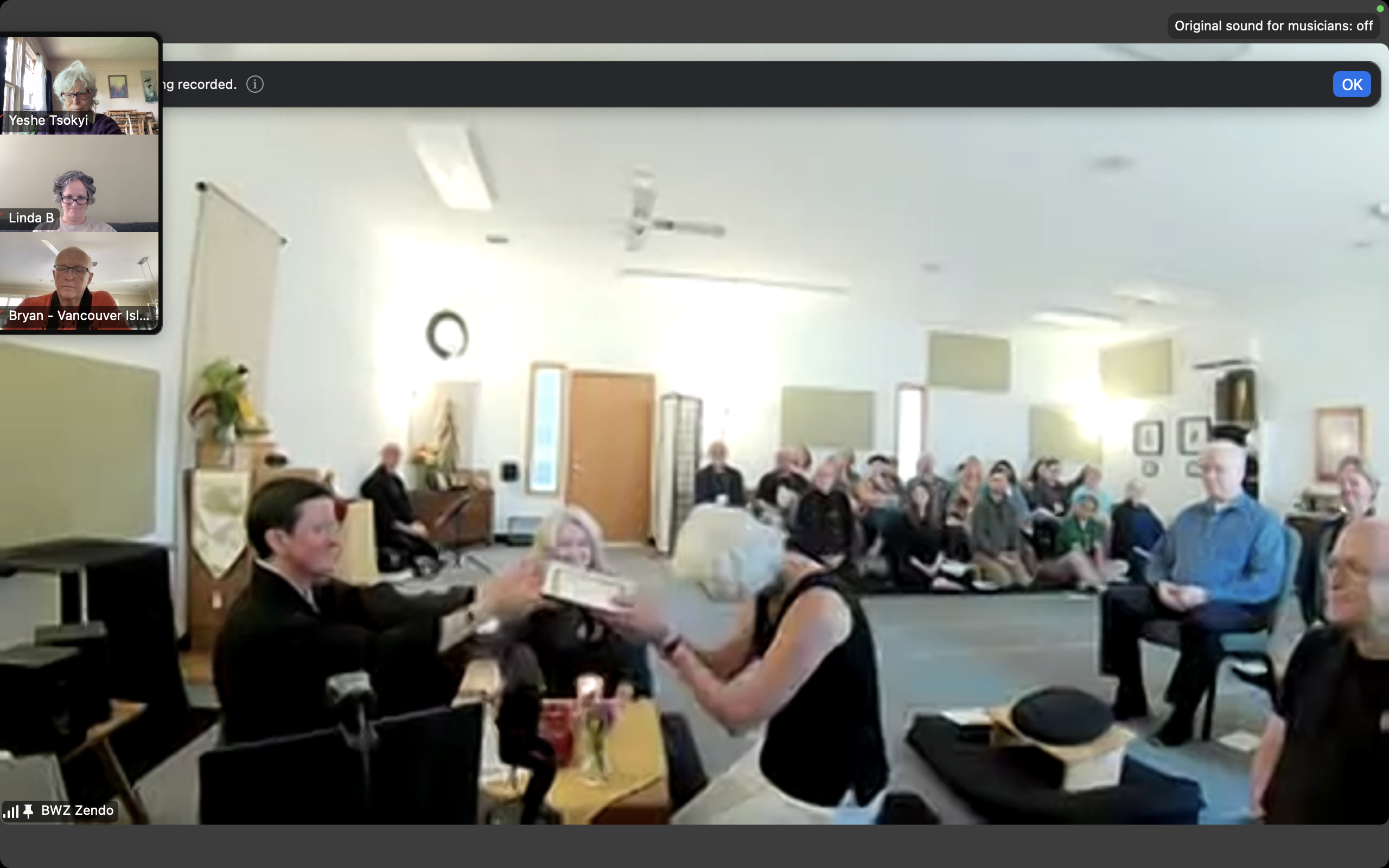
 
 
On June 1st, Domyo gave the precepts to ten people – five in the Dirt Zendo, and five in the Cloud Zendo. Congratulations to (see the group photo):
 
L-R and top to bottom in Cloud Zendo: John (TX), Jeff (VA), Charles (CO), Matt (VA), and Cenwyn (MO)
L-R in the Dirt Zendo: AJ, Scott, Dan, Clark, Jill

Sejiki Ceremony 2024

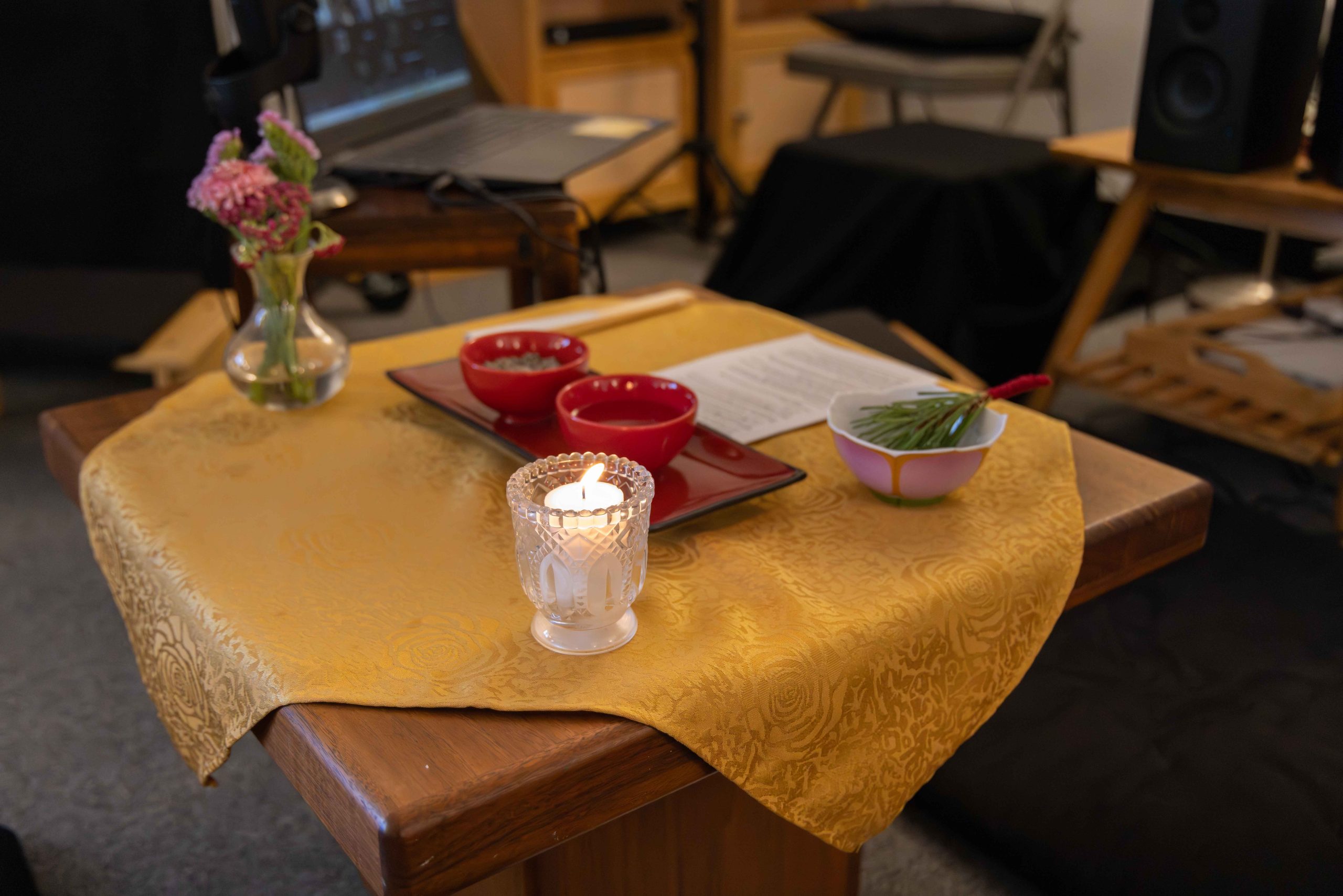
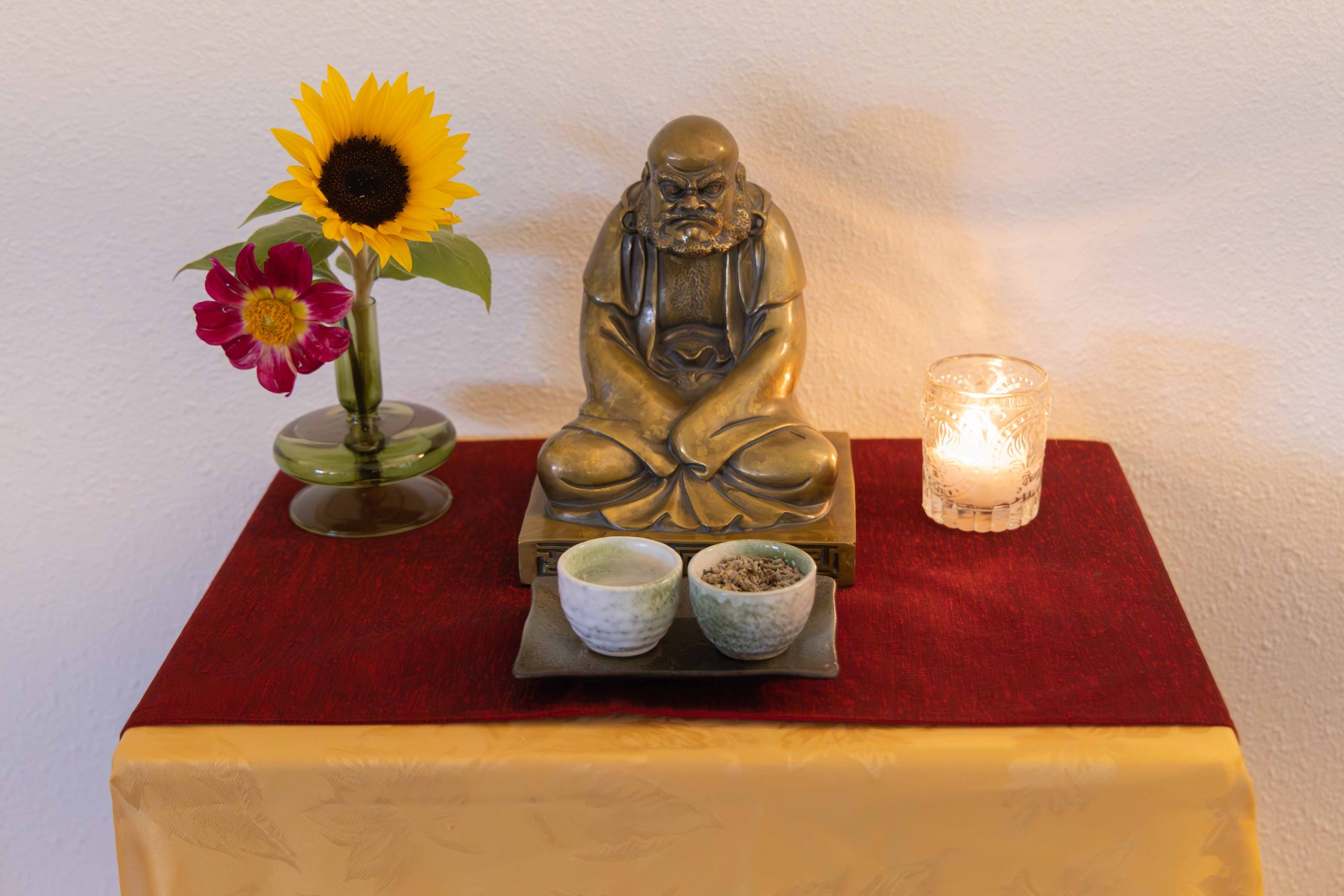
Bright Way Zen held its annual Sejiki ceremony, also known as the Festival of the Hungry Ghosts, this past Sunday, October 27th, 2024. Sejiki, which is heavily rooted in mythology, is a ceremony in which offerings are made to Gakis- being stuck in the “hungry ghost” realm due to past harmful karma, such as grasping, selfishness, and stinginess. “Ghosts” may symbolize emotions such as pain and fear, or represent real people. Traditionally, Sejiki is also a time to remember those who have recently passed, so a merit list is read aloud during the ceremony in remembrance.

For the ceremony, an altar is constructed and adorned with offerings such as sweets, flowers, and other snacks brought in by Sangha members, and Cloud participants are also invited to set up an altar of their own in a similar fashion. Buddha and Bodhisattva statues and images are covered so as not to scare off the ghosts, who are not ready to receive the teachings of the Dharma. The ceremony begins with music played by a trio of Sangha members and consists of a chanting program, the recitation of the merit list, and a procession towards and around the altar, in which each participant has a chance to bow and make an offering of crushed lavender. The ceremony concludes with music as a farewell to the ghosts.

This ceremony holds space for us to reflect on unresolved karma in our lives. Through Sejiki and the support of the Sangha, we can offer our attention and patience to the aspects of ourselves we may tend to ignore or reject. The ceremony is an opportunity to acknowledge and embrace our feelings of loss, grief, anger, and sadness with compassion and understanding, if only for a few moments.

Article by Ashlea Vedder. Learn more about the Sejiki Ceremony here

Jukai Ceremony 2024

Jukai Ceremony 2024

 
On Sunday June 2nd, 14 people received the bodhisattva precepts in our annual Jukai ceremony, formally becoming Zen Buddhists in our lineage by publicly vowing to live by the precepts as best they can. Congrats and welcome!
 
Six people received the precepts in the Dirt Zendo (Jen, Yoly, Nathalie, Isaac, Courtney, and Eric) and eight people received the precepts in the Cloud Zendo: Aslea (CA), Simon (UK), Rachel (TX), Jessica (WA), Deni (KS), Arelan (WA), Eva (UK), and Cassie (NV). It was particularly moving to witness family or friends placing the wagesa over Cloud preceptees’ heads as Domyo’s proxy.
 
Congrats to all our new Buddhists!
 
Click to enlarge the photos below:

2024 BWZ Wesak Festival

Last weekend, the Sangha celebrated Wesak which commemorates the birth of Shakyamuni Buddha. 

To begin the ceremony, we set up a special altar and place a small baby Buddha statue on it. The statue depicts a baby Buddha standing on a lotus. One of his hands points to the sky while the other hand points toward the earth. We put the statue in a bowl and fill the bowl with sweet tea, then we ladle the tea over the Buddha statue. Next, we created a bower, which is a structure that we decorate with all kinds of flowers until the underlying structure is no longer visible—it becomes just one big canopy of flowers. During the procession, when you approach the Baby Buddha altar, you make a bow. Then, you take a ladle full of the sweet tea and pour it over the top of the Buddha’s head to mimic the rain of sweet tea from the myth that flowed down from the sky upon his birth. 

Ceremonies exist to help us access our emotions. In our Wesak ceremony, we reenact the mythological scene of the baby Buddha, who, immediately upon birth, stands up, takes seven steps, and then makes a proclamation about how this is his last birth. He states that he is a Buddha and will attain enlightenment. The phrase for this that we tend to use in our lineage is, “I alone am the world-honored one.” Then, we say that sweet tea rained from the sky, and there were many flowers. Learn more about Wesak by listening to or reading Domyo’s podcast.

Click to enlarge the photos: